
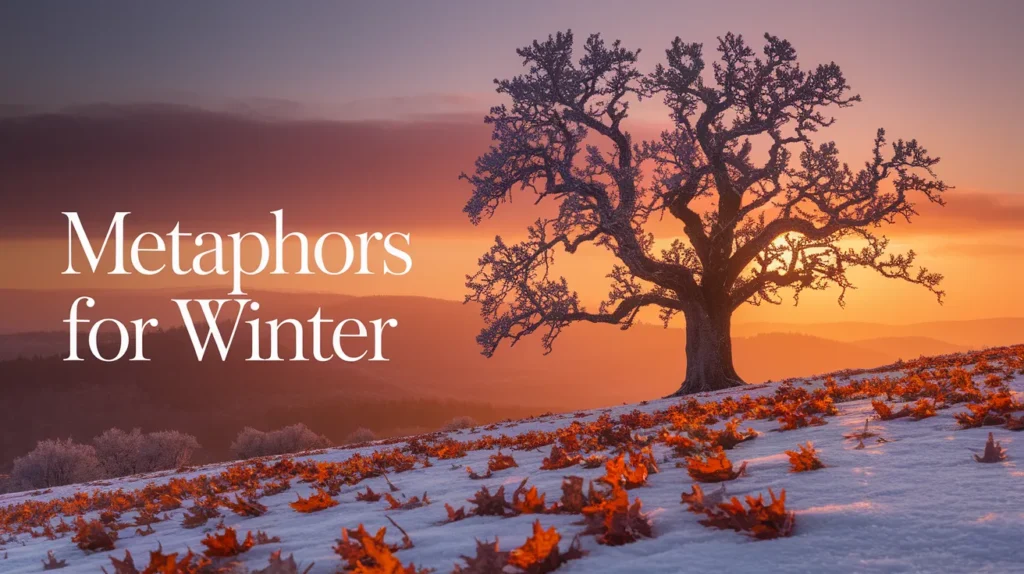
The first frost arrives quietly, like a whisper brushing against the edges of dawn. Windows bloom with icy lace, breath turns visible, and the world slows to a hush that feels almost sacred. Winter is not just a season—it’s a mood, a story, a feeling wrapped in layers of silence and snow. And what better way to capture its essence than through metaphors?
Metaphors for winter allow us to translate the chill of the air, the stillness of landscapes, and the introspective calm of the season into vivid language. They help writers, poets, and everyday storytellers express emotions that are often difficult to describe directly. Whether you’re crafting a novel, writing a social media caption, or simply reflecting on a quiet evening, winter metaphors bring depth and beauty to your words.
In this article, we’ll explore powerful metaphors for winter, learn how to use them effectively, and even practice creating your own. Let’s step into the snowy world of figurative language and discover how winter can transform your writing.
The Beauty of Metaphors for Winter in Writing
Winter metaphors transform ordinary descriptions into something magical. Instead of saying “it’s cold,” you might say, “the air is a silent blade.” Suddenly, the reader doesn’t just understand the cold—they feel it.
These metaphors enhance imagery, evoke emotion, and create atmosphere. They’re especially useful in storytelling, poetry, and even journaling, where mood matters as much as meaning.
Think of winter as a canvas. Metaphors are the brushstrokes that paint its depth.
Why Winter Is Perfect for Figurative Language
Winter is rich with contrasts—light and darkness, warmth and cold, stillness and storm. This duality makes it ideal for metaphors.
The season often symbolizes:
- Endings and beginnings
- Isolation and reflection
- Harshness and beauty
Because of this emotional range, winter metaphors can express everything from loneliness to hope.
Common Themes in Winter Metaphors
Before diving into examples, it helps to recognize recurring themes:
- Silence: “A world wrapped in cotton”
- Coldness: “A frozen heart”
- Stillness: “Time paused beneath snow”
- Transformation: “Nature in quiet rebirth”
These themes give you a foundation for creating your own metaphors.
Metaphor Idea 1: Winter as a Sleeping World
Meaning and Explanation
This metaphor compares winter to sleep, suggesting rest, stillness, and renewal. It highlights how nature pauses before awakening again.
Example Sentence
“The forest lay asleep under a blanket of snow, dreaming of spring.”
Alternative Ways to Express It
- “The earth is in hibernation.”
- “Nature rests beneath a white quilt.”
- “The land breathes slowly in winter’s sleep.”
Sensory & Emotional Details
You can evoke soft silence, muted colors, and a sense of calm. Imagine the crunch of snow underfoot breaking the stillness.
Mini Storytelling
Picture a small village at dawn. Smoke curls from chimneys, but the streets are empty. It feels as though the entire world is holding its breath—resting, waiting.
Metaphor Idea 2: Winter as a Harsh Teacher
Meaning and Explanation
Winter can symbolize challenge and resilience. Like a strict teacher, it tests endurance and strength.
Example Sentence
“Winter is a stern teacher, demanding patience from all who endure it.”
Alternative Ways to Express It
- “The season drills resilience into the soul.”
- “Cold winds lecture the unprepared.”
- “Frost writes lessons on every surface.”
Sensory & Emotional Details
Think biting wind, numb fingers, and the sharp sting of cold air. Emotionally, it can feel challenging yet strengthening.
Real-Life Reflection
For many people, winter teaches slowing down, conserving energy, and appreciating warmth—both physical and emotional.
Metaphor Idea 3: Winter as a Blank Page
Meaning and Explanation
Fresh snowfall resembles a blank canvas or page, symbolizing new beginnings and possibilities.
Example Sentence
“The snow-covered field stretched like an untouched page, waiting for a story.”
Alternative Ways to Express It
- “Winter writes silence across the land.”
- “The world resets under snow.”
- “A clean slate of white horizons.”
Sensory & Emotional Details
Visual purity, soft brightness, and quiet anticipation dominate this metaphor.
Cultural Reference
This idea often appears in literature where winter marks a turning point—a pause before transformation.
How to Create Your Own Winter Metaphors
Creating metaphors isn’t complicated—it’s about observation and imagination.
Start by asking:
- What does winter feel like?
- What does it remind you of?
- What emotions does it evoke?
Then connect those feelings to something unexpected.
For example: Cold → Isolation → “Winter is a lonely echo.”
Using Sensory Details to Strengthen Metaphors
Great metaphors appeal to the senses:
- Sight: “Silver frost glistening like shattered glass”
- Sound: “Snowfall whispering secrets”
- Touch: “Cold biting like tiny teeth”
The more senses you engage, the more vivid your metaphor becomes.
Emotional Layers in Winter Comparisons
Winter metaphors often carry emotional weight. They can reflect:
- Loneliness (“an empty room of ice”)
- Peace (“a quiet lullaby of snow”)
- Hope (“a hidden seed beneath frost”)
Adding emotion makes your writing more relatable and powerful.
Winter Metaphors in Literature and Culture
Writers have long used winter to symbolize deeper meanings. In many stories, winter represents hardship before growth.
For example:
- A frozen landscape may mirror a character’s emotional numbness
- A thaw might symbolize healing or change
These metaphors resonate because they reflect real human experiences.
Interactive Exercise: Create Your Own Winter Metaphor
Try this simple exercise:
- Write down three winter-related words (e.g., snow, frost, wind)
- Write three emotions (e.g., loneliness, peace, hope)
- Combine them creatively
Example: “Hope flickers like a candle in winter’s wind.”
Creative Writing Prompts for Winter Metaphors
- Describe a winter morning using only metaphors
- Write a short paragraph where winter represents a feeling
- Compare winter to a person or character
These prompts help you practice and develop your unique voice.
Using Winter Metaphors in Social Media
Metaphors can make your captions stand out:
- “Walking through a snow globe today ❄️”
- “Winter wrapped the world in silence”
- “Cold air, warm thoughts”
They add personality and emotion to even simple posts.
Tips for Making Metaphors More Vivid
- Avoid clichés like “cold as ice”
- Be specific and original
- Combine unexpected ideas
- Keep it simple but meaningful
Strong metaphors are clear yet imaginative.
Common Mistakes to Avoid in Winter Metaphors
- Overcomplicating the comparison
- Mixing too many metaphors at once
- Using unclear or confusing imagery
Clarity is key—your reader should feel the metaphor instantly.
Bonus Tips for Everyday Use of Winter Metaphors
- Use them in journaling to express emotions
- Add them to poetry or storytelling
- Incorporate them into speeches or presentations
- Even use them in conversations for creative expression
They’re not just for writers—they’re for anyone who wants to communicate beautifully.
FAQs
1. What is a metaphor for winter?
A metaphor for winter is a figurative comparison that describes the season in a creative, non-literal way, such as “winter is a sleeping giant.”
2. Why are winter metaphors important?
They help convey emotions, create vivid imagery, and make writing more engaging and expressive.
3. Can beginners use metaphors effectively?
Yes! Start simple and focus on clear comparisons. Practice makes it easier over time.
4. What are some easy winter metaphors?
Examples include “a blanket of snow,” “frozen silence,” and “a world at rest.”
5. How can I improve my metaphor writing skills?
Read widely, observe nature, practice regularly, and experiment with different ideas and emotions.
Conclusion
Winter is more than just a season—it’s a story waiting to be told. Through metaphors, we can capture its stillness, its harshness, and its quiet beauty in ways that resonate deeply with readers.
Whether you see winter as a sleeping world, a strict teacher, or a blank page, each metaphor reveals a different layer of meaning. By practicing and experimenting, you’ll not only improve your writing but also deepen your connection to the world around you.
So the next time frost traces patterns on your window or snow falls in silence, pause for a moment. Look closer. Listen carefully. And let your words turn winter into something unforgettable.