
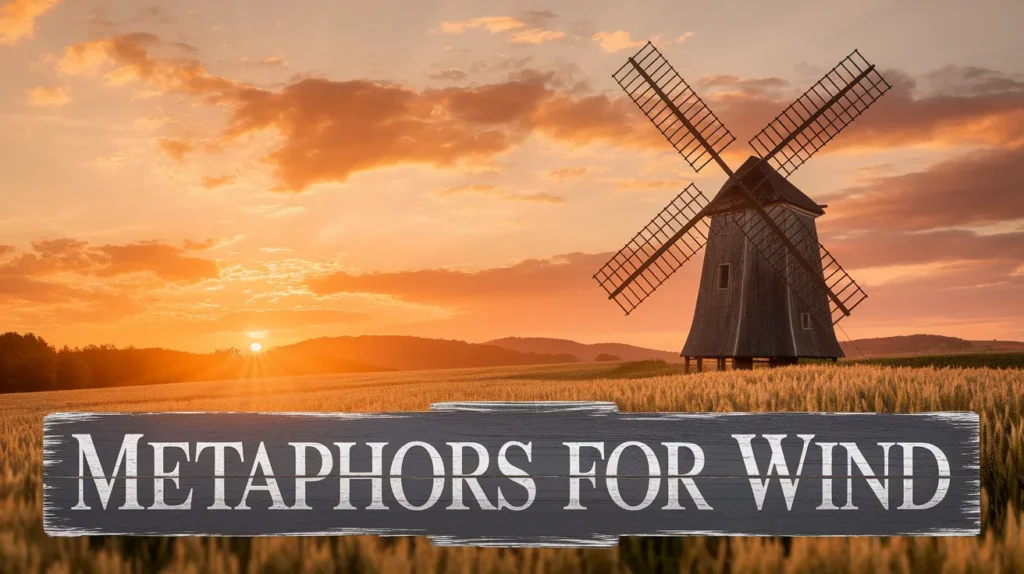
The wind arrived before the rain that afternoon—whispering through half-open windows, tugging at curtains like a curious child, and carrying with it the scent of distant earth. It brushed past skin like an unseen hand, playful one moment and restless the next. You couldn’t see it, yet you felt it—alive, shifting, and impossible to hold.
That’s the beauty of wind—and the challenge of writing about it. Metaphors for wind help us give shape to something invisible. They allow writers, poets, and everyday storytellers to transform a passing breeze into a character, a force, a memory, or even an emotion.
Whether you’re crafting poetry, enhancing prose, or simply trying to express a fleeting feeling, mastering wind metaphors can elevate your language from ordinary to evocative. In this article, you’ll explore vivid metaphors for wind, learn how to use them effectively, and discover creative ways to bring your writing to life.
The Power of Wind Metaphors in Writing
Wind is more than just moving air—it’s emotion in motion. By using metaphors, we turn wind into something relatable: a whisper, a dancer, a messenger. This adds depth and resonance to your writing.
Wind metaphors are especially powerful because they:
- Capture mood (calm, chaos, mystery)
- Reflect inner emotions
- Build atmosphere in storytelling
When used well, they make readers feel the scene instead of just seeing it.
Whispering Breeze: A Gentle Voice of Nature
Meaning & Explanation: A “whispering breeze” suggests softness, intimacy, and quiet movement. It often symbolizes calmness or secrecy.
Example Sentence: The evening breeze whispered through the trees, carrying forgotten lullabies.
Alternative Expressions:
- Murmuring wind
- Soft-spoken air
- Hushed currents
Sensory Detail: Cool against your skin, barely audible—like a secret shared just for you.
The Wind as a Restless Wanderer
Meaning & Explanation: This metaphor portrays wind as a traveler—never still, always searching.
Example Scenario: The wind wandered through the empty streets, as if looking for someone it once knew.
Alternative Ways:
- A roaming spirit
- A drifting soul
- A nomadic force
Mini Storytelling: Imagine an old village where stories say the wind carries the voices of those who left. Each gust feels like a memory passing by.
Howling Wind: Nature’s Wild Cry
Meaning & Explanation: “Howling wind” represents intensity, danger, or emotional turmoil.
Example Sentence: The wind howled like a wounded animal in the night.
Alternative Expressions:
- Screaming gale
- Roaring storm
- Crying tempest
Emotional Tone: Fear, urgency, chaos—perfect for dramatic scenes.
The Wind as an Invisible Painter
Meaning & Explanation: Wind shapes the environment—rippling water, bending grass, sculpting dunes.
Example Sentence: The wind painted waves across the golden field.
Alternative Ways:
- Nature’s brushstroke
- A silent artist
- An unseen sculptor
Real-Life Connection: Think of desert dunes constantly reshaped by wind—art that never stays the same.
Dancing Wind: Movement and Grace
Meaning & Explanation: This metaphor highlights elegance and fluid motion.
Example Sentence: The wind danced through her hair like a joyful partner.
Alternative Expressions:
- Twirling breeze
- Swaying air
- Spiraling gust
Sensory Detail: Light, rhythmic, playful—like music you can’t hear but can feel.
Wind as a Messenger of Change
Meaning & Explanation: Wind often signals transitions—weather shifts, seasons changing.
Example Sentence: The wind carried the promise of winter in its icy breath.
Alternative Ways:
- Harbinger of change
- Seasonal courier
- A herald of transformation
Cultural Note: In many traditions, wind symbolizes messages from distant lands or even spiritual realms.
The Breath of the Earth
Meaning & Explanation: This metaphor connects wind to life itself.
Example Sentence: The wind was the earth’s breath, steady and eternal.
Alternative Expressions:
- Planet’s sigh
- Nature’s inhale
- Living air
Emotional Layer: Comforting, grounding—suggests unity between humans and nature.
Wind as a Mischievous Child
Meaning & Explanation: Playful, unpredictable, sometimes disruptive.
Example Sentence: The wind tugged at her scarf like a teasing child.
Alternative Ways:
- Playful trickster
- Laughing spirit
- Impish gust
Mini Storytelling: Picture children chasing leaves on a windy day—only the wind is the one starting the game.
Storm Wind as a Furious Warrior
Meaning & Explanation: Powerful, aggressive, unstoppable.
Example Sentence: The storm wind charged like a warrior across the plains.
Alternative Expressions:
- Raging fighter
- Relentless force
- Battling gust
Use Case: Perfect for epic storytelling or intense emotional scenes.
Wind as a Silent Thief
Meaning & Explanation: Wind can take things unnoticed—heat, leaves, even sounds.
Example Sentence: The wind stole the warmth from the evening air.
Alternative Ways:
- Sneaky taker
- Invisible pickpocket
- Quiet remover
Sensory Note: You notice its effect only after it’s gone.
The Wind as a Storyteller
Meaning & Explanation: Wind carries sounds, echoes, and memories.
Example Sentence: The wind told stories through the rustling leaves.
Alternative Expressions:
- Whispering narrator
- Voice of the past
- Echo bearer
Literary Feel: Adds mystery and nostalgia to your writing.
Wind as a Guiding Force
Meaning & Explanation: Represents direction, fate, or destiny.
Example Sentence: The wind guided the sailor toward unknown shores.
Alternative Ways:
- Invisible compass
- Path-shaper
- Directional spirit
Real-Life Example: Ancient sailors relied on wind for navigation—literally trusting it with their journey.
Wind as a Mirror of Emotion
Meaning & Explanation: Wind reflects inner feelings—calm breeze vs. violent storm.
Example Sentence: Her thoughts churned like a stormy wind.
Alternative Expressions:
- Emotional echo
- Mood reflection
- Inner turbulence
Writing Tip: Use this to connect external setting with internal conflict.
Creative Exercise: Craft Your Own Wind Metaphors
Try this:
- Think of an emotion (joy, anger, loneliness).
- Imagine how wind would behave if it felt that emotion.
- Turn it into a metaphor.
Prompt: “The wind felt like ______ because it ______.”
Example: The wind felt like heartbreak because it came in sudden, empty gusts.
Bonus Tips for Using Wind Metaphors Effectively
- Match tone to context: Gentle metaphors for calm scenes, intense ones for conflict.
- Avoid overuse: One strong metaphor is better than many weak ones.
- Engage senses: Add sound, touch, and movement.
- Use in social media: Short metaphors make great captions (e.g., “The wind whispered secrets only I could hear.”).
- Mix with similes: Combine styles for variety.
Wind Metaphors in Literature and Culture
Writers have long used wind to symbolize freedom, fate, and change. In poetry and folklore, wind often represents unseen forces shaping human lives. From ancient myths to modern novels, it remains a timeless literary tool.
Using Wind Metaphors in Everyday Life
You don’t have to be a poet to use metaphors. Try them in:
- Journaling
- Conversations
- Social media captions
- Storytelling
They make your language more expressive and memorable.
Expanding Your Vocabulary with Wind Imagery
Build a word bank:
- Breeze, gust, gale, draft
- Rustle, howl, whisper
- Drift, swirl, sweep
Pair these with emotions or actions to create endless metaphor possibilities.
Common Mistakes to Avoid
- Using clichés without variation
- Mixing conflicting metaphors
- Overcomplicating simple ideas
Keep it vivid but clear.
FAQs
1. What is a metaphor for wind?
A metaphor for wind describes it by comparing it to something else, like calling it a “whisper” or “dancer” to add meaning and imagery.
2. Why are wind metaphors useful in writing?
They help make descriptions more vivid, emotional, and engaging by turning an invisible force into something relatable.
3. Can wind metaphors be used in everyday language?
Yes, they work well in conversations, journaling, and even social media captions.
4. What’s the difference between a metaphor and a simile for wind?
A metaphor directly compares (e.g., the wind is a whisper), while a simile uses “like” or “as” (e.g., the wind is like a whisper).
5. How can I create my own wind metaphors?
Think of wind’s qualities (movement, sound, feeling) and match them with emotions or objects that share those traits.
Conclusion
Wind may be invisible, but through metaphors, it becomes alive—whispering, dancing, raging, and telling stories of its own. By learning to describe wind creatively, you unlock a powerful tool for expression that adds depth, emotion, and beauty to your writing.
So next time you feel the wind brush past you, pause for a moment. Ask yourself:
What does it remind me of?
Because in that fleeting sensation lies the beginning of your next unforgettable metaphor.