
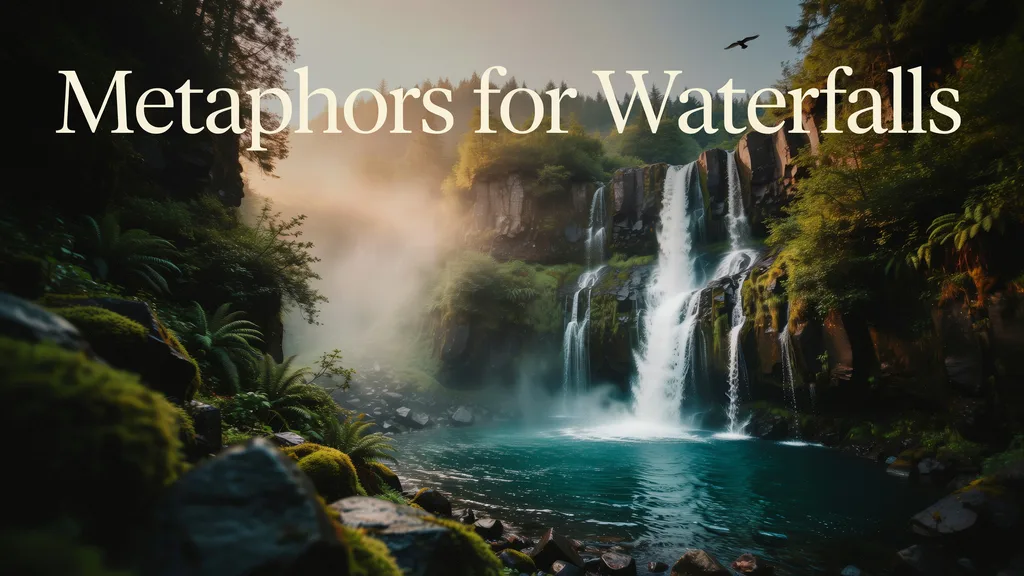
Imagine standing at the edge of a forest trail just after dawn. Mist hangs in the air like a silver veil, and a distant roar grows louder with every step. Suddenly, the trees part, revealing a waterfall tumbling down rugged cliffs. The water sparkles in the sunlight, dancing between shadow and light. For a moment, it feels as though nature itself is speaking. Waterfalls have fascinated people for centuries.
They symbolize movement, transformation, power, freedom, and even deep emotions. Because of their beauty and energy, writers, poets, and storytellers often use metaphors for waterfalls to create vivid imagery and deeper meaning. Whether you’re crafting a poem, writing a novel, creating social media captions, or simply appreciating figurative language, waterfall metaphors can add richness and emotional depth to your words.
In this article, we’ll explore creative metaphors for waterfalls, their meanings, examples, practical applications, and writing tips. You’ll also find exercises, storytelling ideas, and inspiration to help you use these powerful comparisons in your own writing.
Why Waterfall Metaphors Are So Powerful
A waterfall is more than flowing water. It represents unstoppable movement, natural beauty, and transformation. Because waterfalls evoke strong sensory experiences—the roar, the mist, the sight of rushing water—they make excellent sources for metaphorical language.
Writers use waterfall metaphors to describe:
- Emotions
- Time
- Creativity
- Change
- Energy
- Freedom
- Grief
- Joy
- Nature’s power
A well-crafted waterfall metaphor helps readers feel an experience instead of merely understanding it.
Understanding the Concept of Metaphors for Waterfalls
A metaphor directly compares one thing to another without using words like “as” or “like.”
For example:
“The waterfall was a silver curtain draped across the mountain.”
The waterfall is not literally a curtain, but the comparison creates a vivid image.
Waterfall metaphors transform ordinary descriptions into memorable scenes that engage readers emotionally and visually.
Waterfall as Nature’s Symphony
One of the most beautiful waterfall metaphors compares it to music.
Meaning
The constant rushing sound resembles an orchestra performing a grand composition.
Example
“The waterfall was nature’s symphony, echoing through the valley.”
Alternative Expressions
- Nature’s orchestra
- Earth’s melody
- The mountain’s song
- A river’s concerto
Emotional Detail
Readers can almost hear the rhythm of crashing water and imagine an unseen conductor guiding every note.
This metaphor works wonderfully in travel writing and poetry.
Waterfall as a Silver Curtain
This classic image appears frequently in literature.
Meaning
The falling water resembles a shimmering curtain hanging from the sky.
Example
“A silver curtain descended from the cliffs, hiding secrets beneath its mist.”
Alternative Expressions
- Crystal drapery
- Liquid veil
- Glittering tapestry
- Diamond curtain
Mini Story
A traveler arrives at a hidden waterfall after hours of hiking. Through the misty “curtain,” she discovers a secluded pool untouched by the outside world.
The metaphor creates mystery and elegance.
Waterfall as Earth’s Tears
Many writers use waterfalls to symbolize sorrow or emotional release.
Meaning
The falling water resembles tears streaming down a face.
Example
“The waterfall was Earth’s tears, mourning the passage of time.”
Alternative Expressions
- Nature’s sorrow
- The mountain’s grief
- The valley’s lament
- Tears of the wilderness
Cultural Reference
Many cultures associate flowing water with purification, healing, and emotional renewal. This metaphor captures both sadness and release.
Waterfall as a Ribbon of Light
When sunlight strikes flowing water, it often appears luminous.
Meaning
The waterfall resembles a glowing ribbon unfurling from the sky.
Example
“A ribbon of light wound down the mountainside.”
Alternative Expressions
- Liquid sunlight
- Shimmering thread
- Stream of silver
- Golden cascade
Sensory Detail
Imagine sunlight bouncing from every droplet, turning ordinary water into a dazzling spectacle.
Waterfall as Time Itself
Water never stops flowing, making waterfalls excellent symbols of time.
Meaning
The waterfall represents life’s continuous movement.
Example
“The waterfall was time itself, rushing forward without pause.”
Alternative Expressions
- River of moments
- Cascade of years
- Current of history
- Flowing clock
Real-Life Connection
Standing before a waterfall often reminds people how quickly life passes and how impossible it is to stop change.
Creative Waterfall Metaphors for Writers
Writers constantly search for fresh imagery. Here are some imaginative waterfall metaphors:
- A staircase for clouds
- The mountain’s flowing hair
- A liquid comet
- Nature’s white fire
- A river leaping from the sky
- The heartbeat of the forest
- A glass ladder
- A roaring silk scarf
- A crystal highway
- The earth’s exhale
Each metaphor highlights a different aspect of the waterfall’s appearance or motion.
Example 1: The Waterfall as a Living Dragon
This metaphor emphasizes power and movement.
Meaning
The waterfall becomes a mythical creature charging down a mountainside.
Example Sentence
“The waterfall was a silver dragon plunging from the cliffs with unstoppable force.”
Alternative Expressions
- Roaring dragon
- Water serpent
- Mythic beast
- Sky-born creature
Writing Tip
Use this metaphor in fantasy stories, adventure novels, or dramatic descriptions.
Emotional Impact
It creates awe, excitement, and a sense of danger.
Example 2: The Waterfall as a Highway of Dreams
This metaphor highlights imagination and possibility.
Meaning
The flowing water becomes a pathway carrying hopes and aspirations.
Example Sentence
“The waterfall was a highway of dreams, racing toward distant horizons.”
Alternative Expressions
- River of possibilities
- Pathway of hope
- Stream of ambition
- Current of destiny
Mini Story
A young artist sits beside a waterfall, watching the water rush toward unknown places. Inspired, she decides to pursue her lifelong dream despite her fears.
This metaphor connects beautifully with themes of growth and aspiration.
Example 3: The Waterfall as a Giant Hourglass
This metaphor focuses on time and impermanence.
Meaning
The waterfall resembles sand slipping through an enormous hourglass.
Example Sentence
“The waterfall was a giant hourglass, measuring the passing years.”
Alternative Expressions
- Clock of nature
- Cascade of moments
- River of memories
- Flowing calendar
Sensory Detail
Each drop becomes a reminder that moments are precious and fleeting.
Using Waterfall Metaphors in Poetry
Poetry thrives on vivid imagery.
Consider these poetic examples:
- “The waterfall stitched silver threads across the mountain.”
- “A liquid choir sang among the stones.”
- “The cliff wore a veil of crystal rain.”
- “The valley listened to the waterfall’s endless sermon.”
Poetic waterfall metaphors help create atmosphere, rhythm, and emotional resonance.
Waterfall Metaphors in Literature and Storytelling
Throughout literature, waterfalls often symbolize transformation.
A character may stand beside a waterfall during a major life decision. The rushing water reflects change, uncertainty, or renewal.
Storytellers frequently use waterfalls to represent:
- New beginnings
- Emotional breakthroughs
- Spiritual journeys
- Personal growth
- Freedom from the past
Because waterfalls are dynamic rather than static, they naturally mirror character development.
Interactive Exercise: Create Your Own Waterfall Metaphor
Try these prompts:
Prompt 1
If a waterfall represented an emotion, what would it be?
Example:
“The waterfall was excitement spilling over the edge of possibility.”
Prompt 2
If a waterfall represented a person, who would it be?
Example:
“The waterfall was a wise storyteller sharing ancient secrets.”
Prompt 3
If a waterfall represented a dream, what kind of dream would it be?
Example:
“The waterfall was a dream escaping the clouds.”
Challenge yourself to write three original waterfall metaphors.
Bonus Tips for Using Waterfall Metaphors in Writing and Social Media
For Creative Writing
Focus on sensory details:
- Sound
- Sight
- Touch
- Emotion
Example:
“The waterfall thundered like a thousand forgotten memories returning home.”
For Poetry
Combine metaphors with symbolism.
Example:
“The waterfall carried yesterday’s worries into tomorrow’s hope.”
For Social Media Captions
Keep metaphors short and memorable.
Examples:
- “A waterfall of possibilities.”
- “Chasing nature’s silver ribbons.”
- “Standing beneath Earth’s symphony.”
- “Where dreams flow freely.”
For Journaling
Use waterfall metaphors to describe emotions and personal experiences.
This approach often makes reflection more meaningful and expressive.
Common Mistakes to Avoid When Creating Waterfall Metaphors
Even beautiful metaphors can lose their impact if overused.
Avoid:
Clichés
Try creating original images rather than repeating familiar comparisons.
Mixed Metaphors
Stay consistent with one image.
Incorrect:
“The waterfall was a dragon playing a violin while blooming like a flower.”
Overcomplication
Simple metaphors are often more powerful.
Instead of forcing multiple comparisons, choose one strong image.
Lack of Context
Ensure the metaphor fits the mood and purpose of your writing.
How Waterfall Imagery Enhances Emotional Writing
Waterfalls naturally evoke emotion because they engage multiple senses.
Readers can:
- Hear the roar
- Feel the mist
- See the sparkle
- Sense the movement
This sensory richness makes waterfall metaphors especially effective in:
- Memoirs
- Fiction
- Travel writing
- Inspirational content
- Nature essays
When readers experience a scene through vivid imagery, they form stronger emotional connections to the story.
FAQs
1. What is a metaphor for a waterfall?
A metaphor for a waterfall is a figurative comparison that describes a waterfall as something else, such as a silver curtain, nature’s symphony, or Earth’s tears, to create vivid imagery and deeper meaning.
2. Why are waterfalls commonly used in metaphors?
Waterfalls symbolize movement, power, beauty, change, emotion, and the passage of time, making them rich sources of figurative language.
3. Can waterfall metaphors be used in everyday writing?
Yes. They work well in creative writing, journaling, speeches, social media captions, poetry, and storytelling.
4. How can I create an original waterfall metaphor?
Observe the waterfall’s appearance, sound, motion, or emotional effect, then connect those qualities to another object, feeling, or idea.
5. What emotions do waterfall metaphors often represent?
They commonly symbolize freedom, hope, renewal, grief, joy, transformation, passion, and perseverance.
Conclusion
Waterfalls have inspired human imagination for generations. Their beauty, movement, and power make them ideal subjects for figurative language. Whether portrayed as a silver curtain, a living dragon, a giant hourglass, or nature’s symphony, waterfall metaphors transform simple descriptions into unforgettable images. The best metaphors do more than compare—they reveal meaning.
They help readers see familiar things from fresh perspectives and feel deeper emotional connections. By experimenting with waterfall imagery, practicing creative exercises, and incorporating sensory details, you can enrich your writing and create memorable expressions that flow as naturally as the waterfalls that inspire them. The next time you hear rushing water or see a cascade tumbling down a cliff, pause for a moment and ask yourself:
What story is this waterfall telling?
The answer might become your next great metaphor.