
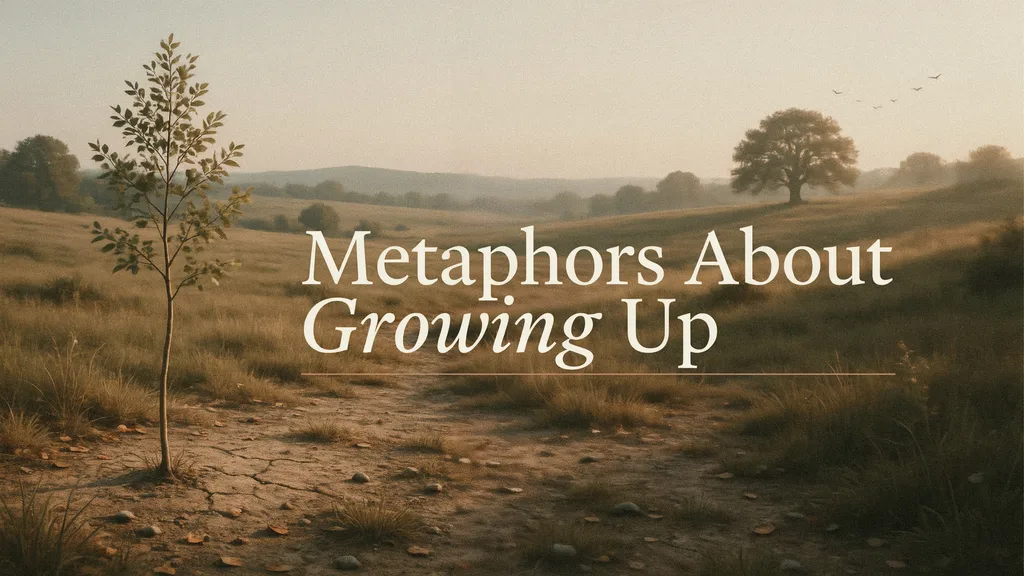
The Quiet Sound of Becoming
Imagine standing beneath a towering oak tree on a warm afternoon. Its branches stretch confidently toward the sky, but years ago, it was only a tiny acorn hidden beneath the soil. Growing up often feels the same way. We rarely notice the changes while they’re happening, yet one day we look back and realize how far we’ve come. Childhood, adolescence, and adulthood are filled with lessons, challenges, victories, and transformations.
Because these experiences can be difficult to describe directly, writers, poets, teachers, and storytellers often use metaphors about growing up to express the emotional and personal journey of becoming who we are. Metaphors help us understand complex feelings by comparing them to familiar images, objects, or experiences. They make abstract ideas feel tangible and memorable.
Whether you’re a student, writer, parent, educator, or someone reflecting on life’s changes, learning these metaphors can enrich your communication and deepen your understanding of personal growth. In this guide, we’ll explore meaningful metaphors for growing up, their interpretations, practical uses, creative exercises, and tips for incorporating them into writing and everyday conversations.
What Are Metaphors About Growing Up?
A metaphor is a figure of speech that compares one thing to another without using words like “as” or “like.” When discussing growing up, metaphors transform personal development into vivid images that readers can easily visualize and connect with emotionally.
For example, saying “Growing up is climbing a mountain” suggests that maturity involves effort, obstacles, and rewarding achievements.
These comparisons make experiences more relatable and memorable while adding depth and beauty to language.
Why Metaphors Matter When Describing Personal Growth
Growing up is one of the most universal human experiences. Yet everyone’s journey is unique.
Metaphors help us:
- Express emotions clearly
- Understand life transitions
- Reflect on personal development
- Create stronger storytelling
- Add creativity to writing
- Connect with readers on a deeper level
Many great works of literature use metaphors to portray growth, from ancient myths to modern novels. They help us see our lives through fresh perspectives.
Growing Up as a Tree Reaching Toward the Sky
One of the most powerful metaphors about growing up is the image of a tree.
A tree begins as a fragile seed. Over time, it develops roots, withstands storms, and stretches upward toward sunlight.
Meaning
This metaphor emphasizes gradual growth, resilience, patience, and strength.
Example Sentence
“Through every challenge she faced, she grew like a tree reaching toward the sky.”
Alternative Expressions
- A seed becoming a forest giant
- Roots deepening beneath the earth
- Branches expanding with experience
Emotional Detail
This metaphor evokes feelings of stability, hope, and endurance.
Imagine a child learning to ride a bicycle, failing repeatedly, then eventually racing down the street with confidence. Every attempt becomes another ring in the tree’s trunk.
Growing Up as Crossing a Bridge
A bridge connects one place to another. Similarly, growing up connects childhood and adulthood.
Meaning
The metaphor symbolizes transition, movement, and progress.
Example Sentence
“Graduation felt like crossing a bridge into an unfamiliar but exciting future.”
Alternative Expressions
- Walking toward a new horizon
- Stepping into a new chapter
- Moving from one shore to another
Sensory Detail
Picture wooden planks creaking beneath your feet while a fresh breeze blows from the other side. The destination is uncertain, but adventure awaits.
Growing Up as a Butterfly Emerging from a Cocoon
Nature provides some of the most beautiful metaphors for growth.
Meaning
This metaphor highlights transformation and self-discovery.
Example Sentence
“After years of self-doubt, she emerged from her cocoon and embraced her true identity.”
Alternative Expressions
- Unfolding hidden wings
- Breaking free from limitations
- Transforming into something new
Emotional Detail
The image inspires hope and courage because transformation often requires patience and vulnerability.
Famous Literary Examples of Growing Up Metaphors
Many beloved stories use metaphors to illustrate maturity.
In fairy tales, heroes often leave home and travel through forests, mountains, or magical lands. These journeys symbolize emotional growth and self-discovery.
In mythology, young heroes face trials before returning wiser and stronger. Their adventures mirror the challenges people face while growing up.
Modern novels frequently use roads, seasons, and changing landscapes as symbols of development.
These literary traditions demonstrate how deeply growth metaphors resonate across cultures and generations.
The River Metaphor: Flowing Through Life
A river never remains the same. It twists, turns, widens, narrows, and continues moving forward.
Meaning
Growing up involves continuous change and adaptation.
Example Sentence
“His life flowed like a river, carrying him through unexpected bends and discoveries.”
Alternative Expressions
- Moving with the current
- Navigating life’s waters
- Following the winding stream
Emotional Detail
The sound of rushing water creates a sense of movement and possibility.
The Climbing Mountain Metaphor
Mountains symbolize challenges, persistence, and achievement.
Meaning
Growing up requires overcoming obstacles and reaching new heights.
Example Sentence
“Every lesson learned became another step up the mountain.”
Alternative Expressions
- Reaching the summit
- Scaling new heights
- Climbing toward wisdom
Real-Life Example
Learning a difficult skill, earning a degree, or starting a career often feels exactly like climbing a mountain—exhausting at times but deeply rewarding.
Three Powerful Metaphors About Growing Up Explained
Let’s explore three standout metaphors in greater detail.
Growing Up Is a Garden
A garden requires care, patience, and attention.
Meaning: Personal growth depends on consistent effort.
Example: “Her talents blossomed in the garden of experience.”
Alternative: Blooming flowers, nurturing roots, fertile soil.
Emotional Connection: Gardens remind us that growth cannot be rushed.
Growing Up Is Writing a Story
Life unfolds one chapter at a time.
Meaning: Every experience contributes to who we become.
Example: “His teenage years were only one chapter in a much larger story.”
Alternative: Turning pages, beginning a new chapter, rewriting the ending.
Growing Up Is Forging Steel
Steel becomes stronger through intense heat.
Meaning: Difficult experiences build character.
Example: “The hardships forged her into a resilient adult.”
Alternative: Tempering metal, refining gold, shaping stone.
Mini Story: The Kite That Learned to Fly
A young child once received a bright red kite. At first, it struggled to rise above the ground. Gusts pushed it sideways, and tangled strings slowed its progress.
Years later, the child understood that the kite mirrored life itself. The winds represented challenges. The string symbolized guidance from parents and mentors. Flying high represented independence.
Growing up wasn’t about escaping the string entirely. It was about learning how to soar while appreciating the support that made flight possible.
This simple metaphor resonates because it reflects both freedom and connection.
How to Use Growing Up Metaphors in Creative Writing
Metaphors can make essays, stories, poems, and social media posts more engaging.
Consider these techniques:
- Use nature imagery for emotional depth.
- Connect metaphors to character development.
- Keep comparisons consistent.
- Appeal to multiple senses.
- Balance creativity with clarity.
Instead of saying “He matured,” you might write:
“He shed old fears the way autumn trees release their leaves.”
The second version creates a stronger image and emotional response.
Interactive Exercise: Create Your Own Growth Metaphor
Try completing these prompts:
Prompt One
Growing up is a __________ because __________.
Example:
“Growing up is a lighthouse because it helps us navigate life’s storms.”
Prompt Two
If your life were a journey, what landscape would represent your current stage?
- Forest
- River
- Desert
- Mountain
- Ocean
Explain why you chose it.
Prompt Three
Write three sentences describing a recent challenge using only metaphorical language.
This exercise strengthens creativity and self-reflection.
Using Metaphors About Growing Up on Social Media
Metaphors work exceptionally well in captions, blogs, and personal reflections.
Examples:
- “Still growing roots while reaching for the sun.”
- “A work in progress, one chapter at a time.”
- “Learning to navigate the river instead of fighting the current.”
- “Every storm teaches the tree how to stand taller.”
These concise images often resonate more than direct statements.
Common Mistakes When Using Growth Metaphors
Even strong metaphors can lose effectiveness if used incorrectly.
Avoid:
Mixed Metaphors
Combining unrelated comparisons can confuse readers.
Overcomplicated Images
Simple metaphors are often more memorable.
Excessive Repetition
Using the same metaphor repeatedly may reduce its impact.
Lack of Context
Ensure the metaphor supports your message clearly.
A well-chosen metaphor should illuminate meaning rather than obscure it.
Bonus Tips for Writers, Students, and Content Creators
Want your metaphors to stand out?
Observe Nature
Many powerful growth metaphors come from trees, rivers, seasons, and weather.
Keep a Metaphor Journal
Record interesting comparisons whenever inspiration strikes.
Read Poetry
Poets are masters of metaphorical language.
Connect Emotion and Imagery
The strongest metaphors create both visual and emotional responses.
Experiment Regularly
Practice transforming ordinary experiences into vivid comparisons.
For example:
Instead of “I learned a lot this year,” try:
“This year planted seeds that will continue growing for decades.”
Why Growing Up Metaphors Resonate Across Cultures
Regardless of language or location, people experience change, learning, and development.
That’s why images such as:
- Trees growing
- Rivers flowing
- Roads stretching forward
- Butterflies transforming
- Mountains rising
appear in stories worldwide.
These symbols tap into shared human experiences and help us understand life’s journey more deeply.
FAQs
What are metaphors about growing up?
Metaphors about growing up are figurative comparisons that describe personal development through images such as trees, rivers, mountains, gardens, and journeys.
Why are metaphors useful for describing maturity?
They make complex emotions and experiences easier to understand, visualize, and remember.
What is a good metaphor for becoming an adult?
A common metaphor is “crossing a bridge,” which symbolizes moving from childhood into adulthood.
How can students use growth metaphors in writing?
Students can use metaphors to make essays, narratives, and reflections more engaging and emotionally impactful.
What is the most popular metaphor about growing up?
The tree metaphor is among the most popular because it represents gradual development, resilience, and strength.
Conclusion
Growing up is one of life’s most remarkable journeys, and metaphors give us a powerful way to describe it. Whether we imagine ourselves as trees reaching toward sunlight, rivers flowing through changing landscapes, butterflies emerging from cocoons, or climbers ascending mountains, these comparisons help transform ordinary experiences into meaningful stories.
The beauty of metaphors about growing up lies in their ability to reveal deeper truths. They remind us that growth is rarely instant, progress often comes through challenges, and every stage of life contributes to who we become. By using these metaphors in writing, conversations, and self-reflection, we can better understand our own journeys and connect more deeply with others.