
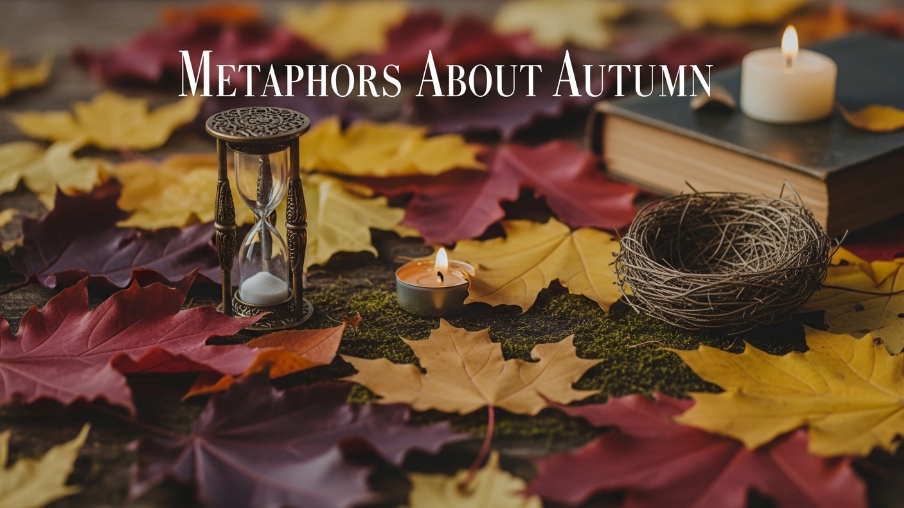
The first cool breeze of autumn never arrives quietly. It slips in like a soft confession through open windows, brushing against skin that still remembers summer heat. Somewhere in the distance, leaves begin their slow transformation—green surrendering to gold, then copper, then a deep, burning red that looks almost like memory itself. Streets start to crunch underfoot. The air smells faintly of woodsmoke and endings that don’t feel sad, only necessary.
Autumn has always been more than a season. It is a language nature speaks when it wants us to slow down and notice change. And one of the most powerful ways writers, poets, and everyday storytellers capture this feeling is through metaphors. Metaphors about autumn allow us to describe the season not just as weather, but as emotion, transition, and reflection. They turn falling leaves into thoughts, harvests into gratitude, and fading light into gentle reminders of time passing.
In writing, metaphors are important because they help readers feel instead of just understand. They transform simple descriptions into vivid emotional experiences. Whether you are a student, blogger, poet, or social media storyteller, autumn metaphors can make your language more expressive, atmospheric, and memorable. Let’s step into this world of imagery and discover how autumn becomes a mirror for life itself.
Understanding Metaphors About Autumn in Figurative Language
Metaphors about autumn are comparisons that describe autumn without using “like” or “as.” Instead of saying “autumn is like change,” we say “autumn is change unfolding in color.”
These metaphors give abstract ideas a physical shape. Autumn becomes a character—sometimes gentle, sometimes nostalgic, sometimes wise.
For example:
- “Autumn is the year’s final poem.”
- “The trees are artists repainting the world in slow motion.”
Such expressions turn seasonal observation into emotional storytelling.
In literature, autumn often represents maturity, reflection, or quiet endings. Writers use it to explore themes of aging, memory, and transition. Think of it as a bridge between brightness and stillness.
Why Metaphors About Autumn Matter in Creative Writing
Autumn metaphors matter because they help writers connect deeply with readers’ emotions. A simple sentence like “the leaves are falling” is factual, but “the trees are letting go of their memories” creates emotional depth.
This kind of figurative language:
- Enhances storytelling
- Builds atmosphere
- Evokes nostalgia and reflection
- Strengthens imagery in poetry and prose
In everyday communication, autumn metaphors can also make captions, essays, and speeches more engaging. They allow ordinary moments—like walking through falling leaves—to feel poetic.
Even in cultural storytelling, autumn is often used to symbolize life’s middle stage: not beginning, not ending, but a meaningful pause in between.
Sensory Language and the Beauty of Autumn Metaphors
Autumn metaphors are powerful because they engage the senses. You don’t just read them—you almost hear the crunch of leaves or feel the coolness of wind through them.
Consider this:
- “The wind hums through branches like a forgotten lullaby.”
- “The sky wears a soft gray sweater of clouds.”
These descriptions combine sight, sound, and touch into emotional imagery.
Sensory metaphors are especially effective because they anchor abstract emotions in physical experience. When readers can feel autumn, they can also feel the meaning behind it—whether it’s nostalgia, peace, or quiet transformation.
Metaphor 1: Autumn as a Golden Farewell
One of the most common and powerful metaphors about autumn is autumn as a golden farewell.
Meaning & Explanation
This metaphor presents autumn as a gentle goodbye—not harsh or sudden, but warm and glowing. The “golden” element suggests beauty in endings.
Example Sentence
“Autumn is a golden farewell whispered by the trees as they release their final leaves.”
Alternative Expressions
- Autumn is nature’s soft goodbye
- Autumn is a golden curtain closing the year
- Autumn is a farewell painted in amber light
Sensory & Emotional Detail
Imagine standing under a tree where leaves fall like slow confetti. The sunlight filters through them, turning everything into honey-colored warmth. It doesn’t feel like loss—it feels like gratitude.
Mini Story
An old man sits on a bench in the park every October. He watches leaves fall the way others watch fireworks. To him, each leaf is a memory saying goodbye without regret. He smiles, because he has learned what autumn teaches best: endings can also be beautiful arrivals of peace.
Metaphor 2: Autumn as Nature’s Quilt of Change
Another vivid metaphor is autumn as a quilt stitched from changing colors.
Meaning & Explanation
Here, autumn is imagined as a handmade quilt, each leaf a patch of color carefully sewn into the landscape. It represents unity in transformation.
Example Sentence
“Autumn spreads a quilt of crimson, gold, and rust over the sleeping earth.”
Alternative Expressions
- Autumn is a tapestry of transformation
- Autumn is a patchwork of fading light
- Autumn is a woven blanket of seasons
Sensory & Emotional Detail
Picture fields, forests, and hills all covered in layered colors. It feels warm despite the cool air—like the earth is being gently tucked in for rest.
Cultural Reference
In many cultures, quilts represent family history and memory. Similarly, autumn’s colors feel like inherited stories stitched across generations of trees.
Interactive Prompt
Try describing your neighborhood or school during autumn as a “quilt.” What colors, shapes, and textures would you include?
Metaphor 3: Autumn as a Whispering Library of Leaves
One of the most poetic metaphors is autumn as a library where leaves whisper stories.
Meaning & Explanation
This metaphor turns falling leaves into pages of books and rustling trees into storytellers. Autumn becomes a place of quiet reflection and memory.
Example Sentence
“Autumn is a whispering library where every falling leaf tells a forgotten story.”
Alternative Expressions
- Autumn is a library of winds
- Autumn is a collection of fading tales
- Autumn is a book written in rust and gold
Sensory & Emotional Detail
Walking through a forest in autumn feels like entering a silent archive. Each step sounds like turning a page. The wind carries voices that feel almost familiar but just out of reach.
Mini Story
A young girl collects fallen leaves and presses them into her notebook. She believes each leaf holds a secret from the tree it came from. Years later, she becomes a writer, still trying to translate those whispered stories into words.
Autumn Metaphors in Literature and Cultural Traditions
Throughout literature, autumn has symbolized maturity, reflection, and transformation. Poets often use it to describe the later stages of life or emotional transitions.
In many traditions:
- Autumn represents harvest and gratitude
- It symbolizes preparation for rest
- It reflects wisdom gained over time
Writers across cultures see autumn as a time when nature becomes introspective. The world slows down, allowing deeper thought.
Even in modern storytelling, autumn is often used in films and novels to show emotional turning points—breakups, realizations, or peaceful acceptance.
Autumn Metaphors in Everyday Life and Conversation
You don’t need to be a poet to use autumn metaphors. They naturally appear in everyday speech and writing.
Examples:
- “My thoughts are like falling leaves today.”
- “This phase of life feels like autumn—quiet but meaningful.”
People often use autumn imagery to describe emotional states such as calmness, nostalgia, or transition.
Even social media captions benefit from these metaphors. A simple photo of a park becomes more powerful when described as “walking through a painting of change.”
Using Autumn Metaphors in Poetry and Creative Writing
Poets love autumn because it naturally supports emotional depth.
To use autumn metaphors effectively:
- Focus on emotion, not just scenery
- Combine sensory details with abstract ideas
- Avoid overused phrases unless you add a new twist
- Let nature reflect human experience
Example: Instead of saying “leaves fall,” say: “The trees loosen their thoughts into the wind.”
This transforms observation into meaning.
Mini Story: A Walk Through an Autumn Metaphor
A writer walks through a quiet lane lined with maple trees. Each step feels slower than the last. Leaves swirl around like unfinished sentences. The air is cool, but not cold—like a memory just beginning to fade.
He thinks of his life as a book with changing chapters. Summer was loud and full of noise. Winter will be still and silent. But autumn—autumn is where reflection lives.
He stops and watches a single leaf fall. It spins once, twice, then lands softly.
And in that moment, he realizes: he is not just walking through autumn.
He is inside it.
Common Mistakes When Using Autumn Metaphors
Writers sometimes overuse autumn imagery until it loses meaning.
Common mistakes include:
- Repeating clichés without originality
- Overloading sentences with too many metaphors
- Ignoring emotional connection
- Using autumn imagery without purpose
Good metaphors should feel fresh, not forced.
Interactive Exercise: Create Your Own Autumn Metaphors
Try this simple exercise:
- Think of autumn
- Choose one emotion (peace, sadness, nostalgia, joy)
- Combine them into a metaphor
Examples:
- Autumn is patience wearing golden leaves
- Autumn is a soft pause in the music of time
- Autumn is a painter who never uses the same color twice
Now try writing your own three metaphors. Focus on emotion rather than description.
Tips for Using Autumn Metaphors in Social Media and Daily Writing
If you want your writing or captions to stand out:
- Keep metaphors short and impactful
- Pair them with strong visuals
- Use emotional words like “whisper,” “fade,” or “glow”
- Match metaphor with context (photo or story)
Example caption: “Autumn is proof that letting go can still be beautiful.”
Emotional Impact of Autumn Metaphors
Autumn metaphors work because they mirror human emotion. Just like trees release leaves, people release phases of life.
They help us:
- Accept change
- Appreciate beauty in endings
- Reflect on growth
- Find calm in transition
This emotional resonance is why autumn remains one of the most beloved symbols in literature and art.
Conclusion
Metaphors about autumn remind us that change is not something to fear but something to observe with quiet wonder. Through golden farewells, stitched landscapes, and whispering leaves, autumn becomes more than a season—it becomes a reflection of life itself.
It teaches that endings are not abrupt losses but gradual transformations. That beauty often appears in fading light. And that every falling leaf carries a story worth noticing. When we use autumn metaphors in writing, we don’t just describe the world—we translate it into emotion.
FAQs
1. What are metaphors about autumn?
They are figurative expressions that describe autumn using symbolic or imaginative comparisons rather than literal descriptions.
2. Why are autumn metaphors popular in writing?
Because autumn naturally represents change, reflection, and emotion, making it ideal for expressive language.
3. Can I use autumn metaphors in social media captions?
Yes, they are perfect for creating aesthetic, emotional, and engaging captions.
4. What emotions do autumn metaphors usually express?
They often express nostalgia, peace, reflection, and gentle sadness.
5. How can I create my own autumn metaphor?
Combine an autumn image (leaves, wind, colors) with an emotion or abstract idea.