
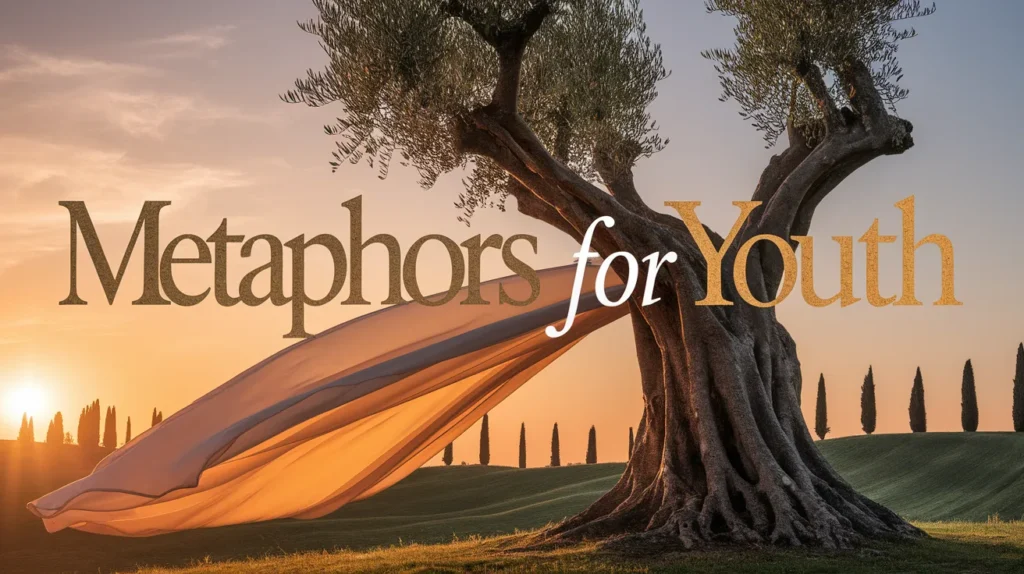
There’s a moment just before sunrise when the world feels like it’s holding its breath—soft, golden, full of possibility. That fragile, glowing hush mirrors youth: a time when everything seems within reach, when dreams feel louder than doubts, and every step forward carries both wonder and uncertainty.
Youth is not just an age; it’s a feeling, a rhythm, a vivid chapter of becoming. Metaphors for youth help us capture this fleeting yet powerful stage of life. They turn abstract emotions into something we can see, touch, and feel.
Whether you’re a writer, a student, or simply someone reflecting on life, these metaphors give language to the beauty, chaos, and transformation that define youth. In this article, we’ll explore creative metaphors, practical ways to use them, and interactive exercises to bring your writing to life.
The Meaning Behind Metaphors for Youth
Metaphors for youth are comparisons that describe young age using vivid imagery. Instead of saying “youth is energetic,” you might say “youth is a wildfire racing across an open field.” These comparisons deepen emotional impact and make writing memorable.
They matter because youth is complex—full of contradictions like innocence and rebellion, hope and confusion. Metaphors help express these layered experiences in a way plain language often cannot.
Why Youth Is a Powerful Literary Theme
Youth has always fascinated storytellers because it represents beginnings. It’s the phase of first love, first failure, first discovery. From ancient poetry to modern novels, youth is portrayed as both beautiful and temporary—like something slipping through your fingers even as you try to hold it.
Writers use metaphors to preserve this fleeting magic.
How Metaphors Capture the Essence of Being Young
Metaphors don’t just describe youth—they embody it. A single image can reveal energy, vulnerability, rebellion, or hope. For example:
- Youth as a storm → unpredictable and intense
- Youth as a seed → full of potential
- Youth as a flame → bright but fragile
Each metaphor highlights a different dimension.
Metaphor Example 1: Youth as a Rising Sun
Meaning and Explanation
Comparing youth to a rising sun emphasizes beginnings, warmth, and promise. Just like the morning sun signals a new day, youth represents the start of life’s journey.
Example Scenario
“As she stepped into university, her dreams stretched wide—she was a rising sun breaking through the horizon.”
Alternative Expressions
- Youth is the dawn of life
- Youth is morning light
- Youth is a golden sunrise
Sensory Details
Think of soft golden light, cool morning air, and the quiet anticipation of a new day.
Mini Storytelling
Imagine a teenager in a small town watching the sunrise before leaving for the city. That moment captures youth perfectly—hopeful, uncertain, glowing.
Metaphor Example 2: Youth as a Wild River
Meaning and Explanation
A wild river symbolizes movement, unpredictability, and energy. Youth often flows fast, changing direction without warning.
Example Sentence
“His youth rushed like a wild river, carving paths through every obstacle in its way.”
Alternative Ways to Express
- Youth is a rushing stream
- Youth is a roaring current
- Youth is untamed water
Emotional Layer
This metaphor carries excitement but also danger—youth can overwhelm as much as it inspires.
Metaphor Example 3: Youth as a Blank Canvas
Meaning and Explanation
This metaphor highlights potential and creativity. Youth is a time when life has not yet been fully shaped.
Example Scenario
“She saw her future as a blank canvas, waiting for bold colors and fearless strokes.”
Alternatives
- Youth is an unwritten story
- Youth is an empty page
- Youth is a fresh sketch
Sensory Detail
Imagine the smell of paint, the texture of canvas, and the thrill of creating something new.
Exploring Nature-Inspired Metaphors for Youth
Nature provides endless inspiration:
- Youth is springtime → renewal and growth
- Youth is a blooming flower → beauty and fragility
- Youth is a storm → power and chaos
These metaphors feel universal because nature mirrors human life cycles.
Emotional Metaphors That Reflect Youthful Energy
Youth is not just physical—it’s emotional intensity:
- Youth is a spark → quick and bright
- Youth is a heartbeat racing → excitement and anxiety
- Youth is a song → expressive and evolving
Such metaphors capture inner experiences rather than external imagery.
Cultural and Literary References to Youth Metaphors
Across cultures, youth is often described symbolically:
- In poetry, youth is spring
- In storytelling, youth is a journey
- In philosophy, youth is a fleeting illusion
These recurring metaphors show how deeply humans connect youth with transformation.
How to Create Your Own Metaphors for Youth
To craft original metaphors:
- Think of qualities of youth (energy, growth, change)
- Match them with something vivid (fire, wind, ocean)
- Build a comparison that feels natural
Example: “Youth is a kite dancing wildly in the wind—free, yet tethered.”
Writing Exercise: Build Your Own Youth Metaphor
Try this:
- Step 1: List 5 traits of youth (e.g., fearless, curious)
- Step 2: Match each with an image (e.g., eagle, flame)
- Step 3: Write a sentence
Example prompt: “Youth is like ______ because ______.”
Creative Prompts for Using Youth Metaphors
- Describe your teenage years using one metaphor
- Write a short paragraph where youth is a season
- Compare youth and old age using opposite metaphors
These exercises sharpen creativity and emotional expression.
Using Youth Metaphors in Social Media and Daily Life
Metaphors aren’t just for literature—they work beautifully in captions, speeches, and conversations.
Examples:
- “Still chasing dreams like a wildfire.”
- “Living my sunrise years.”
They make simple messages more memorable and impactful.
Common Mistakes to Avoid When Using Metaphors
- Overusing clichés like “youth is a flower” without adding originality
- Mixing metaphors (e.g., “youth is a river burning bright”)
- Making comparisons too complicated
Keep metaphors clear, vivid, and consistent.
Bonus Tips for Powerful Metaphorical Writing
- Use sensory details (sight, sound, smell)
- Keep it simple but meaningful
- Connect metaphors to emotions
- Read poetry to find inspiration
Good metaphors don’t just describe—they make readers feel.
The Lasting Impact of Youthful Imagery in Writing
Metaphors for youth stay with readers because they tap into universal experiences. Everyone has been young—or remembers being young. These comparisons act like emotional bridges, connecting writer and reader across time.
FAQs
What is a metaphor for youth?
A metaphor for youth is a figurative comparison that describes youth using imagery, such as “youth is a sunrise” or “youth is a wild river.”
Why are metaphors important in describing youth?
They help express complex emotions and experiences in a vivid and relatable way.
Can I create my own metaphors for youth?
Yes, and it’s encouraged. Personal metaphors often feel more authentic and creative.
What are common themes in youth metaphors?
Growth, energy, change, hope, and unpredictability are the most common themes.
How can I improve my metaphor writing skills?
Practice regularly, observe nature and emotions, and read literature for inspiration.
Conclusion
Youth is fleeting, but words can preserve its magic. Through metaphors, we transform moments into images, emotions into stories, and memories into something timeless.
Whether you see youth as a rising sun, a wild river, or a blank canvas, each metaphor reveals a different truth about what it means to be young. So write boldly. Experiment freely. Let your metaphors carry the spirit of youth—vivid, untamed, and unforgettable.