
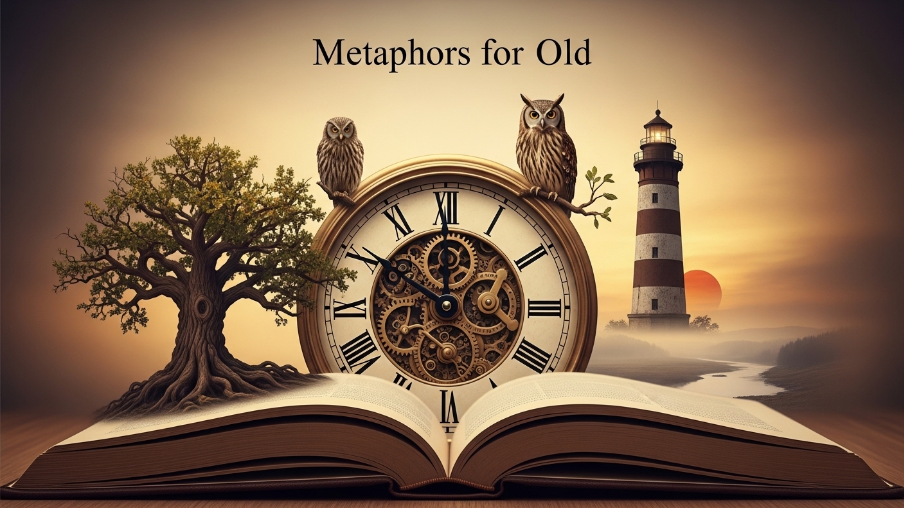
The grandfather clock in the corner ticked softly, its hands moving with the patience of centuries. Dust danced through beams of sunlight, and the scent of old books lingered in the air. Everything in the room seemed to whisper stories from another era. We often encounter things that are old—people, places, traditions, memories, and objects—but describing them with ordinary words can feel limiting.
This is where metaphors for old become powerful. A metaphor transforms age from a simple number into something vivid, emotional, and memorable. Instead of saying something is old, we can call it a weathered oak, a fading photograph, or a candle burned low. These images add depth, beauty, and meaning to our writing and conversations.
Whether you’re a student, writer, poet, content creator, or simply someone who loves expressive language, understanding metaphors for age can enrich your communication. In this article, you’ll discover creative metaphors, their meanings, practical examples, writing tips, and exercises that help you master the art of describing oldness with imagination.
Understanding Metaphors for Old
A metaphor is a figure of speech that describes one thing as another to highlight shared qualities. When we use metaphors for old, we’re comparing age to something familiar and visual.
For example:
“The house was a sleeping giant.”
This metaphor suggests the house is old, massive, and filled with history.
Metaphors allow readers to experience age emotionally rather than simply understand it intellectually. Instead of hearing that something is old, they can feel its history and significance.
Why Writers Use Metaphors for Age
Age is more than years passing on a calendar. It carries wisdom, memories, wear, resilience, and change.
Writers use metaphors because they:
- Create vivid imagery.
- Make descriptions memorable.
- Add emotional depth.
- Help readers connect with characters and settings.
- Transform ordinary language into artistic expression.
Think about classic literature. Ancient castles aren’t merely old; they’re often portrayed as silent guardians or forgotten kings standing against time.
The Weathered Oak Metaphor
One of the most common metaphors for old is comparing age to a weathered oak tree.
Meaning
An oak tree survives storms, seasons, and decades. It symbolizes strength, endurance, and wisdom.
Example
“My grandfather stood in the garden like a weathered oak, strong despite the years.”
Alternative Expressions
- Ancient cedar
- Rooted giant
- Forest elder
Sensory Detail
Imagine rough bark beneath your fingertips and branches stretching across generations of sunlight and rain.
This metaphor works beautifully for elderly people who have accumulated experience and resilience.
Old as a Fading Photograph
Photographs often represent memories frozen in time.
Meaning
A fading photograph symbolizes age, nostalgia, and the gradual softening of details.
Example
“The town was a fading photograph from another century.”
Alternative Expressions
- Sepia memory
- Timeworn picture
- Vintage snapshot
Emotional Impact
This metaphor evokes warmth, longing, and remembrance.
Many family albums contain pictures whose colors have faded, yet their emotional value remains priceless. That same feeling can be transferred into writing.
The Candle Burned Low
Candles naturally diminish over time.
Meaning
This metaphor suggests advanced age and the passage of life.
Example
“He was a candle burned low, glowing softly with wisdom.”
Alternative Expressions
- Final ember
- Gentle flame
- Dimming lantern
Emotional Detail
The image feels peaceful rather than sad, emphasizing life’s accumulated wisdom.
Old Buildings as Sleeping Giants
Historic buildings often inspire rich metaphors.
Meaning
A sleeping giant suggests age, power, and hidden stories.
Example
“The castle sat atop the hill like a sleeping giant.”
Alternative Expressions
- Silent guardian
- Stone elder
- Forgotten monarch
Mini Story
Imagine walking through an abandoned mansion. Every creaking floorboard seems to tell a story. Though quiet now, it once hosted celebrations, conversations, and generations of families.
That’s the power of this metaphor.
Time as an Artist
Another creative approach is to describe aging through the work of time itself.
Meaning
Time becomes an artist carving wrinkles, shaping experiences, and painting memories.
Example
“Time had sculpted her face into a masterpiece.”
Alternative Expressions
- Time’s brushstroke
- Sculpted by years
- Painted by experience
This metaphor emphasizes beauty rather than decline.
The Ancient River Comparison
Rivers symbolize continuous movement through time.
Meaning
An old person or object becomes like a river that has traveled a long journey.
Example
“His wisdom flowed like an ancient river.”
Alternative Expressions
- Endless stream
- Timeless current
- Historic waterway
The metaphor highlights accumulated experiences gathered throughout life.
Using Nature Metaphors for Old
Nature provides countless comparisons for age.
Examples include:
- Autumn leaf
- Mountain peak
- Ancient forest
- Moss-covered stone
- Winter tree
Each carries unique emotional tones.
An autumn leaf may suggest graceful aging, while a mountain represents endurance and permanence.
Nature metaphors are especially useful in poetry and descriptive writing.
Literary References and Metaphors of Age
Many famous writers have used metaphorical language to describe aging.
In mythology and folklore, old characters are often portrayed as:
- Wise owls
- Ancient trees
- Eternal mountains
- Keepers of time
These symbols appear across cultures because they connect age with wisdom and endurance.
For example, many fantasy stories portray ancient beings as living forests or towering mountains that have witnessed centuries of history.
Positive Metaphors for Old
Not every metaphor about age should focus on decline.
Positive metaphors celebrate experience and wisdom.
Examples:
- A library of memories
- A treasure chest of stories
- A lighthouse in a storm
- A seasoned captain
- A guiding star
Example Sentence
“My grandmother is a library of memories, each story richer than the last.”
These metaphors honor aging rather than fear it.
Negative Metaphors for Old
Sometimes writers need to express deterioration or neglect.
Examples include:
- Rusting machine
- Crumbling wall
- Broken clock
- Withered flower
- Forgotten relic
Example Sentence
“The abandoned factory was a rusting machine left behind by progress.”
Use these carefully, especially when describing people, as they can create harsh or insensitive imagery.
How to Create Your Own Metaphors for Old
Creating original metaphors is easier than many people think.
Follow these steps:
- Identify qualities of age.
- Think of objects sharing those qualities.
- Connect them creatively.
- Refine the image.
For example:
Age = experience + endurance.
Object = lighthouse.
Metaphor:
“She was a lighthouse weathering every storm.”
The best metaphors feel natural and emotionally meaningful.
Interactive Exercise: Build Your Own Age Metaphor
Try this creative exercise.
Fill in the blank:
“The old tree was a __________.”
Possible answers:
- Wise teacher
- Living history book
- Silent witness
- Ancient guardian
Now create three of your own.
Questions to consider:
- What memories does it hold?
- What emotions does it evoke?
- What visual image appears in your mind?
This practice strengthens both creativity and descriptive writing skills.
Bonus Tips for Using Metaphors in Writing and Social Media
Metaphors aren’t only for novels and poetry.
You can use them in:
Blog Posts
“This tradition is an ancient river still flowing through modern life.”
Social Media Captions
“Another birthday, another ring added to the tree.”
Speeches
“Our community is a sturdy oak rooted in generations of resilience.”
Storytelling
Metaphors instantly make stories more memorable and emotionally engaging.
Keep them concise, relatable, and relevant to your audience.
Common Mistakes When Using Metaphors for Old
Even strong metaphors can lose impact if misused.
Avoid:
Mixed Metaphors
Incorrect:
“He was an old river climbing a mountain.”
The images clash and confuse readers.
Overused Comparisons
Phrases repeated too often may feel stale.
Excessive Complexity
A metaphor should clarify, not puzzle.
Insensitive Descriptions
When describing people, focus on dignity and humanity rather than stereotypes.
Good metaphors illuminate rather than diminish.
Bringing Metaphors for Old into Everyday Life
Metaphors aren’t limited to creative writing.
Use them in:
- Journaling
- Conversations
- Presentations
- Personal reflections
- Educational projects
Instead of saying a family tradition is old, describe it as:
“A bridge connecting generations.”
Instead of calling a treasured object old, call it:
“A keeper of forgotten stories.”
These small shifts make language richer and more meaningful.
FAQs
What are metaphors for old?
Metaphors for old are figurative comparisons that describe age using vivid imagery, such as a weathered oak, fading photograph, or ancient river.
Why are metaphors for old useful in writing?
They make descriptions more engaging, emotional, and memorable by helping readers visualize and feel the effects of age.
What is a positive metaphor for an elderly person?
A positive example is “a lighthouse in a storm,” which symbolizes guidance, wisdom, and resilience.
Can metaphors for old be used in everyday conversation?
Yes. They can make conversations more expressive and meaningful, especially when sharing memories or describing experiences.
How can I create my own metaphor for old?
Identify qualities associated with age—such as wisdom, endurance, or history—and compare them to something that shares those characteristics, like a tree, river, mountain, or book.
Conclusion
Age is one of life’s most universal experiences, yet it can be described in countless imaginative ways. Metaphors for old transform simple observations into rich, emotional imagery. A weathered oak speaks of resilience, a fading photograph evokes nostalgia, and an ancient river suggests wisdom gathered through time.
These comparisons help writers paint vivid scenes, create memorable characters, and connect with readers on a deeper level. The next time you encounter something old—a person, a place, a tradition, or even a cherished memory—look beyond the years themselves. Search for the story hidden beneath the surface.
Perhaps it’s a lighthouse guiding future generations, a library filled with untold tales, or a mountain standing proudly against the winds of time. The right metaphor doesn’t just describe age; it reveals the beauty, history, and meaning that age carries within it.