
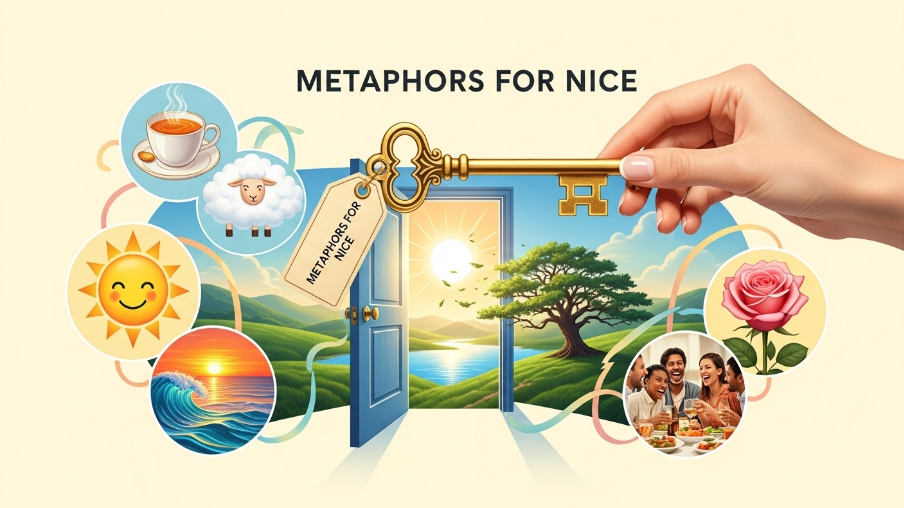
Have you ever met someone whose presence felt like sunshine after a week of rain? Maybe it was a teacher who encouraged you when you doubted yourself, a friend who listened without judgment, or a stranger whose simple act of kindness brightened your entire day. Some people are so pleasant, caring, and gentle that the word nice feels too small to capture who they are.
That is where metaphors come in. Metaphors transform ordinary descriptions into vivid images that help readers and listeners truly feel what we mean. Instead of simply saying someone is nice, we can compare them to a lighthouse, a warm blanket, or a blooming garden. These figurative expressions add color, emotion, and depth to our writing and conversations.
In this guide, you’ll discover powerful metaphors for nice, learn their meanings, explore creative examples, and find practical ways to use them in storytelling, social media, everyday communication, and creative writing. Whether you’re a student, writer, teacher, or language enthusiast, these metaphors can help you express kindness in unforgettable ways.
Understanding Metaphors for Nice
A metaphor is a figure of speech that describes one thing as another to highlight shared qualities. When discussing kindness, friendliness, or warmth, metaphors help us paint emotional pictures.
Instead of saying:
“Sarah is nice.”
You might say:
“Sarah is a ray of sunshine.”
The second sentence instantly creates a stronger image and emotional connection.
Metaphors for nice are useful because they:
- Make writing more engaging.
- Create memorable descriptions.
- Evoke emotions in readers.
- Improve storytelling and communication.
- Add creativity to everyday language.
Why Describing Niceness Creatively Matters
Kindness is one of humanity’s most admired qualities. Yet many people rely on the same words repeatedly—nice, kind, pleasant, friendly, sweet.
Creative metaphors bring these qualities to life.
Imagine reading:
“The nurse was nice.”
Now compare it to:
“The nurse was a steady lighthouse guiding worried families through a storm.”
The second description feels more vivid, emotional, and memorable.
Whether you’re writing stories, speeches, poems, or social media posts, metaphors can elevate your message dramatically.
A Ray of Sunshine
One of the most common metaphors for a nice person is a ray of sunshine.
Meaning
This metaphor suggests someone brings happiness, positivity, and warmth wherever they go.
Example
“Whenever Emma enters the room, she’s a ray of sunshine that brightens everyone’s mood.”
Alternative Expressions
- A beam of light
- A sunny day
- A golden sunrise
Sensory Detail
Imagine the gentle warmth of morning sunlight touching your skin after a cold night. That comforting feeling mirrors the effect a genuinely kind person can have.
A Warm Blanket on a Cold Day
This metaphor emphasizes comfort and emotional security.
Meaning
A nice person makes others feel safe, accepted, and cared for.
Example
“Grandma was a warm blanket on a cold day, always ready with comforting words.”
Alternative Expressions
- A cozy fireplace
- A soft pillow
- A comforting shelter
Mini Story
After moving to a new city, Jake felt lonely and overwhelmed. Then he met a neighbor who regularly invited him for tea and conversation. Her kindness became a warm blanket during a difficult season of life.
A Lighthouse in the Storm
Kind people often guide others through challenging situations.
Meaning
This metaphor highlights reliability, support, and wisdom.
Example
“During the crisis, Marcus became a lighthouse in the storm for his entire team.”
Alternative Expressions
- A guiding star
- A beacon of hope
- A steady compass
This metaphor frequently appears in literature and motivational speeches because it symbolizes guidance during uncertainty.
A Blooming Garden
Gardens represent growth, beauty, and nurturing care.
Meaning
A nice person helps others flourish and feel valued.
Example
“Her kindness was a blooming garden where friendships flourished.”
Alternative Expressions
- A field of flowers
- A thriving orchard
- A flourishing meadow
Emotional Detail
Like walking through a fragrant garden filled with colorful blossoms, spending time with kind people often leaves us refreshed and inspired.
A Gentle Breeze
Some nice people are not loud or dramatic. Their kindness is subtle yet meaningful.
Meaning
This metaphor represents calmness, peace, and gentle influence.
Example
“His encouraging words were a gentle breeze on a stressful day.”
Alternative Expressions
- A soft whisper
- A calm river
- A drifting cloud
Writers often use this metaphor when describing quiet kindness.
A Cup of Hot Chocolate
Warm beverages often symbolize comfort and happiness.
Meaning
A nice person provides emotional warmth and reassurance.
Example
“Talking to her felt like a cup of hot chocolate after a long winter walk.”
Alternative Expressions
- A warm cup of tea
- A comforting meal
- A sweet dessert
This metaphor appeals strongly to the senses, making it particularly effective in descriptive writing.
A Bridge Between Hearts
Nice people frequently connect others.
Meaning
This metaphor highlights understanding, empathy, and relationship-building.
Example
“She became a bridge between hearts, helping old friends reconnect.”
Alternative Expressions
- A connection point
- A pathway of understanding
- A thread of friendship
In communities and workplaces, people who build harmony often fit this metaphor perfectly.
A Safe Harbor
Ships seek harbors during storms, making this a powerful metaphor for kindness.
Meaning
A nice person provides safety and stability.
Example
“For struggling students, the teacher was a safe harbor.”
Alternative Expressions
- A shelter
- A refuge
- A sanctuary
This image is commonly used in poetry and inspirational writing.
Three Powerful Metaphors Explained in Depth
Let’s explore three especially effective metaphors for nice people and how to use them creatively.
The Lighthouse
Meaning
A lighthouse offers guidance, hope, and protection.
Example Scenario
A mentor helping young professionals navigate career challenges.
Alternative Expressions
- Beacon of hope
- Guiding light
- Northern star
Writing Tip
Use this metaphor when emphasizing reliability and wisdom.
The Sunshine
Meaning
Sunshine symbolizes happiness and positivity.
Example Scenario
A cheerful friend who improves everyone’s mood.
Alternative Expressions
- Golden light
- Bright morning
- Sunny spirit
Emotional Effect
Readers immediately associate sunshine with warmth and joy.
The Garden
Meaning
Gardens symbolize growth and nurturing.
Example Scenario
A parent supporting a child’s development.
Alternative Expressions
- Flower bed
- Orchard
- Green oasis
Storytelling Benefit
This metaphor works beautifully when describing long-term kindness and care.
Using Metaphors for Nice in Creative Writing
Metaphors can transform ordinary scenes into memorable moments.
Instead of writing:
“The teacher was nice.”
Try:
“The teacher was a lighthouse whose encouragement guided students through waves of self-doubt.”
The revised sentence provides imagery, emotion, and depth.
Writers often use metaphors to:
- Build character descriptions.
- Create emotional scenes.
- Strengthen poetry.
- Enhance speeches.
- Improve personal essays.
Metaphors for Nice in Literature and Culture
Throughout history, writers and storytellers have compared kind people to sources of light, warmth, and protection.
Ancient myths often portrayed benevolent characters as guiding stars. Fairy tales featured magical helpers who acted as lanterns in dark forests. Modern novels frequently describe compassionate individuals using imagery connected to sunshine, gardens, and calm waters.
These recurring symbols reveal a universal truth: kindness is often experienced as something that brings comfort, direction, and hope.
Interactive Exercise: Create Your Own Metaphors
Try these simple activities to strengthen your metaphor skills.
Exercise 1
Think of someone you consider kind.
Complete this sentence:
“My friend is a __________ because __________.”
Example:
“My friend is a campfire because she makes everyone feel welcome.”
Exercise 2
Choose one of these objects:
- Tree
- River
- Candle
- Book
- Mountain
Describe how it could symbolize kindness.
Exercise 3
Write three alternative metaphors for the word nice without using light or warmth imagery.
This challenge encourages creativity and originality.
Bonus Tips for Using Metaphors Effectively
Strong metaphors are memorable, but they work best when used thoughtfully.
In Writing
- Match the metaphor to the character.
- Avoid overusing clichés.
- Include sensory details.
On Social Media
Instead of posting:
“She’s so nice.”
Try:
“She’s the sunshine hidden inside cloudy days.”
In Daily Conversations
Creative compliments feel more meaningful.
Example:
“You’re the bridge that keeps this family connected.”
People often remember vivid praise longer than ordinary compliments.
Common Mistakes When Using Metaphors
Even beautiful metaphors can lose impact if used incorrectly.
Avoid:
Mixing Metaphors
Incorrect:
“He’s a lighthouse planting seeds of sunshine.”
Too many images can confuse readers.
Overcomplicating Descriptions
Simple metaphors are often strongest.
Using Generic Comparisons
Try creating fresh images rather than relying exclusively on common phrases.
Originality makes writing stand out.
Building Your Own Collection of Kindness Metaphors
Great writers collect imagery from everyday life.
Look around and ask:
- What makes people feel safe?
- What brings comfort?
- What inspires growth?
- What creates warmth?
Possible answers may include:
- Campfires
- Libraries
- Rainbows
- Trees
- Rivers
- Candles
- Gardens
Over time, you’ll develop a personal library of metaphors that enrich your writing.
FAQs
What are metaphors for nice?
Metaphors for nice are figurative comparisons that describe kindness, warmth, friendliness, or goodness through vivid imagery such as sunshine, gardens, or lighthouses.
Why use metaphors instead of simply saying someone is nice?
Metaphors create stronger emotional connections and help readers visualize qualities more clearly than simple adjectives.
What is the best metaphor for a kind person?
A “ray of sunshine” is one of the most popular metaphors because it represents warmth, positivity, and happiness.
Can metaphors for nice be used in professional writing?
Yes. Thoughtful metaphors can enhance speeches, presentations, personal essays, and leadership communication when used appropriately.
How can I create my own metaphors for kindness?
Think about objects, places, or experiences that make people feel supported, safe, happy, or valued, then connect those qualities to the person you’re describing.
Conclusion
Metaphors for nice allow us to move beyond ordinary descriptions and capture the true beauty of kindness. Whether someone is a ray of sunshine, a warm blanket, a lighthouse in the storm, or a blooming garden, these comparisons transform simple observations into memorable images that resonate with readers and listeners alike.
By learning to use metaphors creatively, you can enrich your storytelling, strengthen your writing, and express appreciation in more meaningful ways. The next time you encounter a genuinely kind person, challenge yourself to look beyond the word nice.
You may discover that they are a safe harbor, a guiding star, or perhaps a gentle breeze that quietly makes the world a better place.