
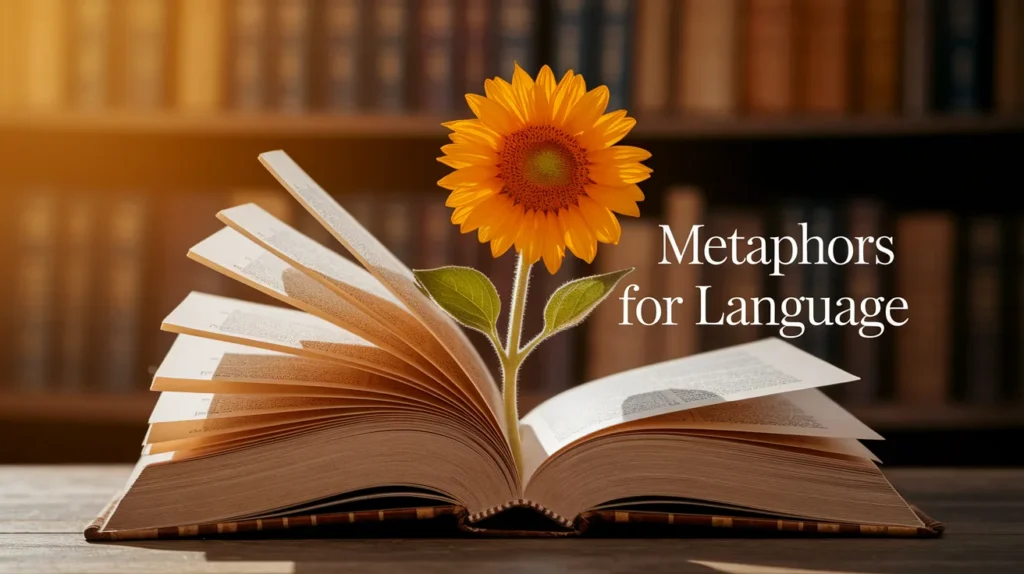
The first time a child whispers a new word, something magical happens. A sound becomes a bridge. A tiny collection of syllables suddenly carries emotion, memory, and meaning from one heart to another. Language is never just vocabulary scribbled in dictionaries or grammar rules buried in textbooks. It breathes. It dances. It stretches across cultures like threads woven into a giant human tapestry.
That is why metaphors for language matter so deeply. Metaphors transform abstract ideas into vivid pictures we can feel and remember. Instead of saying “language is important,” we might say language is a key that unlocks hidden doors. Suddenly, the concept glows with life. Writers, teachers, poets, marketers, and storytellers all rely on figurative language to make communication unforgettable.
In this article, you’ll explore powerful metaphors for language, discover their meanings, see practical examples, and learn how to use them creatively in writing, conversations, social media captions, and storytelling. Along the way, you’ll encounter mini narratives, literary inspirations, and engaging exercises designed to sharpen your imagination. By the end, words themselves may feel less like tools and more like living companions.
Why Metaphors for Language Matter
Metaphors help people understand complex emotions and ideas through familiar imagery. Since language itself is invisible, comparing it to something tangible makes it easier to grasp. A metaphor can turn a dry explanation into an emotional experience.
Imagine describing language as “a river.” Immediately, you picture movement, connection, depth, and flow. That image conveys far more than a technical definition ever could.
Writers often use metaphors for language because they:
- Create emotional resonance
- Improve memory and understanding
- Add beauty and rhythm to communication
- Encourage creativity and imagination
- Make speeches, essays, and stories more engaging
From ancient poetry to modern advertising, metaphorical language shapes the way humans connect with each other.
Language as a Bridge Between Worlds
One of the most common and beautiful metaphors is this: language is a bridge.
A bridge connects distant places. In the same way, language connects people separated by geography, culture, or experience.
Picture two strangers sitting on a train. One speaks softly in broken phrases, the other responds with patience and smiles. Slowly, awkward silence becomes laughter. The bridge forms plank by plank through shared words.
Meaning and Explanation
This metaphor emphasizes communication, understanding, and unity. It suggests that language helps overcome barriers.
Example Sentence
“Her gentle words became a bridge between generations.”
Alternative Expressions
- Language is a pathway
- Words are stepping stones
- Communication is a connecting thread
Emotional or Sensory Detail
The metaphor often evokes warmth, trust, and human closeness, much like crossing a wooden bridge toward light after a storm.
Language as a Living Organism
Another compelling metaphor is: language is a living creature.
Languages grow, adapt, evolve, and sometimes disappear. New slang appears overnight. Old phrases fade like autumn leaves. This constant transformation mirrors biological life.
Consider how the English spoken during Shakespeare’s era differs from modern English. Language breathes alongside society.
Meaning and Explanation
This metaphor highlights evolution and adaptability.
Example Sentence
“Modern slang proves that language is alive and constantly changing.”
Alternative Ways to Express It
- Language breathes
- Words evolve like species
- Vocabulary grows like branches on a tree
Real-Life Example
Social media platforms have accelerated linguistic evolution. Terms like “viral,” “ghosting,” and “doomscrolling” emerged rapidly and entered everyday conversations almost instantly.
Language as Music
Some people hear language before they fully understand it. The rhythm of Italian may sound like opera, while Arabic may feel like poetry flowing through the air. This gives rise to the metaphor: language is music.
Writers and speakers often pay attention to cadence, repetition, pauses, and harmony.
Meaning and Explanation
This metaphor emphasizes rhythm, emotion, and beauty.
Example Sentence
“The poet’s language moved like soft piano notes across the page.”
Alternative Expressions
- Words are melodies
- Speech is a symphony
- Conversation is jazz improvisation
Literary Reference
Writers like Maya Angelou and Pablo Neruda crafted language with musical elegance, using rhythm to stir emotion deeply within readers.
Language as a Mirror of Society
Language reflects culture, history, values, and collective memory. That is why many scholars describe it as a mirror.
Words reveal what societies cherish or fear. Even slang exposes generational identity.
Meaning and Explanation
This metaphor suggests reflection and representation.
Example Sentence
“Language acts as a mirror, revealing society’s changing beliefs.”
Alternative Expressions
- Words reflect culture
- Language is society’s reflection
- Speech captures the spirit of an era
Mini Storytelling
During difficult historical periods, communities often create coded language, songs, or sayings to preserve hope. These expressions become mirrors of resilience and survival.
Language as a Toolbox
Teachers frequently compare language to a toolbox filled with useful instruments. Every word serves a different purpose.
A hammer cannot replace a paintbrush, and a dramatic metaphor cannot always replace a simple sentence. Skilled communicators choose the right linguistic tool for the situation.
Meaning and Explanation
This metaphor focuses on utility and versatility.
Example Sentence
“A strong vocabulary gives writers a larger toolbox for expression.”
Alternative Ways to Say It
- Words are instruments
- Language provides communication tools
- Grammar is a toolkit for clarity
Practical Insight
Professionals often adapt their “tools” depending on audience. A scientist explains concepts differently to children than to colleagues.
Language as a Garden
Perhaps one of the most poetic metaphors is: language is a garden.
Words are planted like seeds. Conversations bloom into relationships. Careless speech can create weeds, while thoughtful communication cultivates beauty.
Meaning and Explanation
This metaphor emphasizes growth, nurturing, and creativity.
Example Sentence
“She planted kindness through the garden of her language.”
Alternative Expressions
- Vocabulary blossoms
- Ideas bloom through words
- Conversations grow like flowers
Sensory Detail
This metaphor often evokes colors, fragrance, sunlight, and organic movement, making communication feel alive and fertile.
Language as a Key
Language can unlock opportunities, emotions, cultures, and hidden knowledge. This gives rise to the metaphor: language is a key.
A single sentence can open a friendship, a career path, or a lifelong dream.
Meaning and Explanation
This metaphor highlights access and empowerment.
Example Sentence
“Learning Spanish became the key to new adventures abroad.”
Alternative Expressions
- Words unlock doors
- Communication opens pathways
- Language reveals hidden worlds
Real-Life Connection
Many immigrants describe learning a new language as receiving access to an entirely different reality.
Language as Fire
Words can warm hearts or burn bridges. This duality makes language as fire a powerful metaphor.
A passionate speech can inspire revolutions. Hurtful comments can leave emotional scars for years.
Meaning and Explanation
This metaphor emphasizes power, intensity, and danger.
Example Sentence
“His speech spread through the crowd like wildfire.”
Alternative Ways to Express It
- Words spark emotion
- Language ignites change
- Speech burns with passion
Cultural Reference
Historic speeches by figures like Martin Luther King Jr. demonstrate how language can ignite social transformation.
Language as an Ocean
Some languages feel endless, layered, and mysterious. Vocabulary stretches beyond the horizon, filled with hidden meanings beneath the surface.
Meaning and Explanation
This metaphor emphasizes depth and complexity.
Example Sentence
“Poetry invites readers into the deep ocean of language.”
Alternative Expressions
- Words flow like tides
- Meaning swims beneath the surface
- Communication contains hidden currents
Emotional Detail
The ocean metaphor often creates feelings of wonder, curiosity, and exploration.
Language as Currency
In social interactions, words hold value. Compliments, promises, and persuasive speeches can influence decisions and relationships. Thus, many people compare language to money or currency.
Meaning and Explanation
This metaphor highlights exchange and influence.
Example Sentence
“In politics, language often functions as social currency.”
Alternative Expressions
- Words carry value
- Communication is an investment
- Speech purchases trust
Practical Insight
Businesses carefully craft brand messaging because language shapes customer perception and loyalty.
Language as a Map
Words guide people through unfamiliar territory, both literally and emotionally.
Meaning and Explanation
This metaphor suggests direction and discovery.
Example Sentence
“Stories became maps leading readers through grief and healing.”
Alternative Expressions
- Language guides the journey
- Words chart experiences
- Communication navigates emotions
Mini Narrative
A teacher once described literature as “a map left behind by travelers of the human experience.” Her students never forgot it.
Language as a Window
A window allows people to see beyond themselves. Similarly, language offers glimpses into other cultures and perspectives.
Meaning and Explanation
This metaphor emphasizes insight and understanding.
Example Sentence
“Foreign languages provide windows into different cultures.”
Alternative Expressions
- Words open perspectives
- Communication reveals new views
- Language frames the world differently
Cultural Reference
Reading translated novels from authors like Haruki Murakami allows readers to experience unfamiliar emotional landscapes.
Three Creative Metaphors for Language You Can Use
Here are three especially vivid metaphors for language that work beautifully in essays, poetry, speeches, or creative writing.
Language Is a Lantern
Meaning
Language illuminates confusion and guides people through darkness.
Example Sentence
“Her comforting words were a lantern during difficult times.”
Alternative Expressions
- Words shine light
- Communication brightens uncertainty
- Speech illuminates truth
Emotional Detail
This metaphor evokes candlelight, safety, and hope during storms or loneliness.
Language Is a Thread
Meaning
Words weave people, memories, and cultures together.
Example Sentence
“Family stories became threads stitching generations together.”
Alternative Expressions
- Communication weaves connections
- Words stitch relationships
- Language binds communities
Mini Storytelling
Grandparents passing down lullabies and sayings preserve cultural identity through linguistic threads.
Language Is a Compass
Meaning
Language provides direction and moral orientation.
Example Sentence
“Wise advice acted as a compass for the confused teenager.”
Alternative Expressions
- Words guide decisions
- Communication points the way
- Language directs human understanding
Emotional Layer
This metaphor often carries feelings of guidance, trust, and personal growth.
How Writers Use Metaphors for Language Effectively
Strong writers avoid random metaphors. Instead, they choose imagery that deepens meaning naturally.
Here are a few useful strategies:
- Match the metaphor to the emotional tone
- Keep imagery consistent within a paragraph
- Avoid overloading sentences with too many comparisons
- Use sensory language for vivid impact
- Connect metaphors to universal human experiences
For example, a romance novel may compare language to music or flowers, while a political essay might use metaphors involving fire or bridges.
Interactive Exercise: Create Your Own Language Metaphor
Try completing these prompts:
- Language is like __________ because __________.
- Words can feel like __________ during difficult moments.
- Communication between friends resembles __________.
Now expand one answer into a short paragraph with sensory details.
Example
“Language is like rain because it nourishes dry hearts after seasons of silence.”
This exercise helps strengthen creativity and figurative thinking.
Bonus Tips for Using Metaphors in Daily Life
Metaphors are not limited to novels or poetry. They can improve everyday communication too.
In Writing
- Use metaphors in introductions to grab attention
- Add emotional depth to essays and blogs
- Create memorable descriptions in storytelling
On Social Media
Short metaphorical captions often perform well because they feel emotional and shareable.
Examples:
- “Words are seeds—plant them gently.”
- “Language is the heartbeat of connection.”
- “Some conversations become bridges we never forget.”
In Conversations
Metaphors help explain difficult emotions or abstract ideas clearly.
Instead of saying “I feel confused,” someone might say, “My thoughts feel like tangled wires.”
Common Mistakes When Using Figurative Language
Even beautiful metaphors can become confusing if misused.
Avoid these common problems:
Mixed Metaphors
Combining unrelated images can weaken clarity.
Example: “Her words planted a fire that sailed across the room.”
Overused Comparisons
Some metaphors lose impact because they appear too frequently.
Excessive Complexity
A metaphor should clarify meaning, not confuse readers.
Good figurative language feels natural and emotionally precise.
The Emotional Power of Metaphors for Language
Metaphors do more than decorate sentences. They shape human perception itself.
When someone says “words cut deeper than knives,” the brain responds emotionally because it imagines physical pain connected to speech.
Scientists and psychologists often note that metaphorical thinking influences memory, empathy, and emotional understanding. In many ways, metaphors are not ornaments attached to language—they are part of how humans think.
That is why ancient myths, sacred texts, speeches, and songs rely so heavily on figurative language. Metaphors transform ordinary communication into something unforgettable.
FAQs
What are metaphors for language?
Metaphors for language are figurative comparisons that describe language using vivid imagery, such as “language is a bridge” or “words are music.”
Why are metaphors important in communication?
Metaphors make ideas more memorable, emotional, and easier to understand by connecting abstract concepts to familiar experiences.
What is the best metaphor for language?
There is no single best metaphor. Popular examples include language as a bridge, garden, key, ocean, or music depending on the context.
How can students use metaphors effectively?
Students can use metaphors to improve essays, creative writing, speeches, and storytelling by adding vivid imagery and emotional depth.
Are metaphors only used in literature?
No. Metaphors appear in daily conversation, advertising, education, politics, social media, and even scientific explanations.
Conclusion
Language is far more than a collection of words arranged into sentences. It is a bridge connecting strangers, a lantern guiding lost hearts, a garden blooming with emotion, and an ocean filled with hidden depths. Through metaphors, we learn not only how to describe language, but how to feel its power more deeply.
Whether you are a writer searching for poetic expression, a student exploring figurative language examples, or simply someone fascinated by communication, metaphors can transform ordinary speech into something vivid and unforgettable. They remind us that words are alive—that every conversation carries the potential to heal, inspire, illuminate, and connect.