
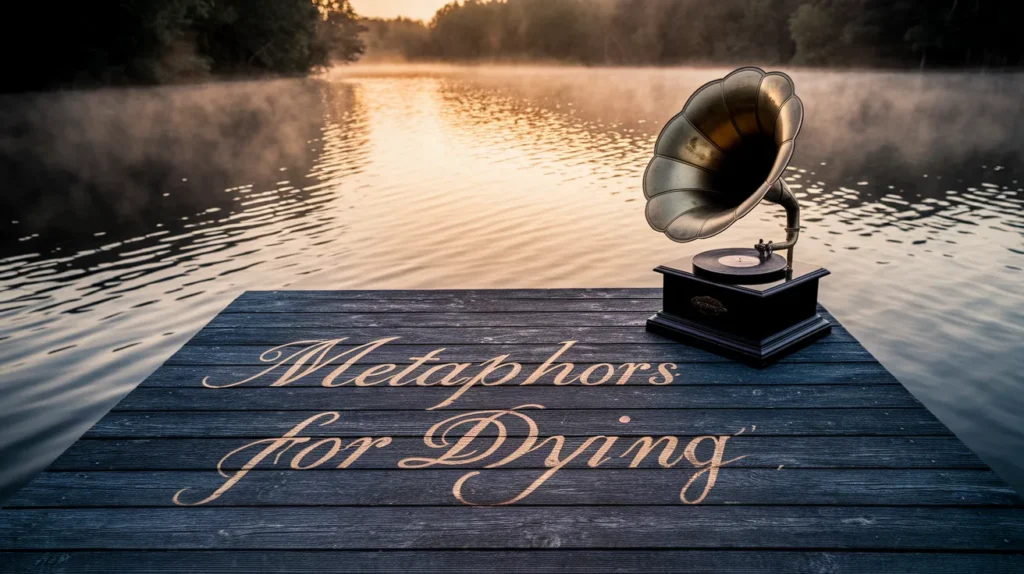
The room was quiet—so quiet that even the ticking clock seemed to soften its voice. A faint breeze slipped through the curtain, brushing against stillness, as if the world itself paused in reverence.
In moments like these, language often falters. How do we speak of something so profound, so final, yet so deeply human? This is where metaphors step in—offering us softer, more meaningful ways to understand and express the idea of dying.
Metaphors for dying are not just poetic tools; they are bridges. They help us navigate grief, express compassion, and communicate delicate emotions when direct words feel too harsh or inadequate. Whether used in writing, conversation, or personal reflection, these metaphors allow us to approach mortality with gentleness, dignity, and even a touch of beauty.
In this article, we’ll explore a rich collection of metaphors for dying, understand their meanings, and learn how to use them thoughtfully in everyday life and creative expression.
Understanding Metaphors for Dying and Their Emotional Power
Metaphors for dying transform a difficult concept into something more approachable. Instead of saying “he died,” one might say “he drifted into eternal sleep” or “she crossed the final horizon.” These expressions soften the emotional impact while preserving the gravity of the moment.
They are especially useful in literature, eulogies, storytelling, and even social media, where tone matters deeply. By framing death in symbolic or natural imagery, metaphors help us process loss and communicate empathy more effectively.
Why Gentle Language Matters When Talking About Death
Words shape our emotions. Harsh or clinical language can feel cold, while softer metaphors provide comfort. For example, saying “passed away” instead of “died” creates emotional distance that can ease grief.
Gentle metaphors also respect cultural sensitivities and personal beliefs. In many traditions, death is seen not as an end, but as a transition—making metaphorical language especially meaningful.
Common Themes in Metaphors for Dying
Many metaphors draw from universal experiences:
- Nature (sunset, seasons)
- Journeys (crossing, traveling)
- Sleep and rest
- Transformation (butterfly, fading light)
These themes resonate because they mirror cycles we already understand.
Metaphors Inspired by Nature and Seasons
Nature offers some of the most comforting metaphors for dying.
- “Like leaves falling in autumn”
- “A sunset slipping below the horizon”
- “A candle gently flickering out”
These images suggest continuity and natural cycles rather than abrupt endings.
Journey-Based Metaphors for Life’s Final Passage
Journey metaphors frame death as movement rather than loss.
- “He embarked on his final journey”
- “She crossed to the other side”
- “He reached the end of the road”
These metaphors imply purpose, direction, and even peace.
Sleep and Rest Metaphors for Dying
Sleep-based metaphors are among the most widely used.
- “Eternal rest”
- “Fell into a deep sleep”
- “Laid to rest”
They suggest calmness, relief, and release from suffering.
Light and Darkness as Symbolic Expressions
Light imagery is powerful and deeply symbolic.
- “Her light faded”
- “The flame went out”
- “He slipped into the night”
These metaphors emphasize transition rather than disappearance.
Spiritual and Cultural Metaphors Across Traditions
Different cultures interpret death uniquely:
- “Returned to the Creator”
- “Joined the ancestors”
- “Entered eternal peace”
These metaphors reflect belief systems and provide spiritual comfort.
Example 1: “A Candle Flickering Out”
Meaning: Life slowly coming to a peaceful end Explanation: This metaphor compares life to a candle, suggesting fragility and warmth. As the flame dims, it symbolizes the gradual fading of life.
Example Sentence: “By dawn, his life was like a candle flickering out—soft, quiet, and serene.”
Alternative Expressions:
- “A fading flame”
- “A light dimming into silence”
- “A glow gently disappearing”
Sensory Details: Warm wax, soft golden light, the hush of a still room.
Mini Storytelling: In many old homes, candles marked both beginnings and endings. A grandmother once whispered, “We don’t blow out the candle—we let it rest.”
Example 2: “Crossing the Final Horizon”
Meaning: Transition into the unknown or afterlife Explanation: This metaphor uses the imagery of travel and exploration, suggesting that death is a continuation rather than a stop.
Example Sentence: “She smiled softly, as if she could already see the shore she was about to reach.”
Alternative Expressions:
- “Sailing beyond the horizon”
- “Crossing into the next world”
- “Stepping beyond the veil”
Emotional Tone: Hopeful, peaceful, expansive.
Cultural Reference: Ancient sailors often believed the horizon was a gateway to another realm—a powerful symbol of mystery and possibility.
Example 3: “Falling Leaves in Autumn”
Meaning: Natural and inevitable end of life Explanation: Just as leaves fall in autumn, life follows a natural cycle of growth and release.
Example Sentence: “He passed like autumn leaves—gracefully, without resistance.”
Alternative Expressions:
- “A season coming to its close”
- “Drifting like leaves in the wind”
- “Returning to the earth”
Sensory Details: Crisp air, golden hues, the soft rustle of falling leaves.
Creative Writing Prompts Using Death Metaphors
Try these exercises to deepen your understanding:
- Write a short paragraph describing a character’s passing using only nature-based metaphors.
- Create your own metaphor inspired by water (river, ocean, rain).
- Rewrite a simple sentence like “He died peacefully” using three different metaphors.
These exercises help build emotional nuance and creativity.
How to Use Metaphors for Dying in Storytelling
When writing stories:
- Match the metaphor to the tone (gentle vs dramatic)
- Consider the character’s beliefs and personality
- Avoid overusing clichés—add originality
For example, a fantasy story might use “returned to the stars,” while a modern drama might say “slipped quietly into the night.”
Using Death Metaphors in Social Media and Messages
In digital communication, sensitivity is key.
Instead of:
- “He died yesterday”
Try:
- “He passed peacefully surrounded by loved ones”
Short, compassionate metaphors can make messages more respectful and heartfelt.
Mistakes to Avoid When Using Metaphors for Dying
- Avoid overly dramatic or insensitive imagery
- Don’t mix conflicting metaphors
- Be mindful of audience and context
For instance, humor-based metaphors may not be appropriate in serious situations.
Bonus Tips for Crafting Unique Metaphors
- Draw from personal experiences
- Use sensory details (sound, light, texture)
- Combine themes (journey + nature, light + rest)
Example: “Her life folded gently into twilight, like a traveler resting beneath a fading sky.”
The Healing Power of Metaphorical Language
Metaphors don’t just beautify language—they heal. They allow us to process grief, honor memories, and find meaning in loss.
In literature, authors often use metaphor to soften tragedy. In real life, people use it to express what cannot be said directly.
Bringing Comfort Through Words and Imagery
When chosen carefully, metaphors can comfort both the speaker and the listener. They provide a shared language of empathy, allowing us to connect during difficult times.
Even a simple phrase like “at peace now” can carry immense emotional weight.
FAQs
1. Why are metaphors used to describe death?
Metaphors make difficult topics easier to understand and express. They soften emotional impact and provide comfort.
2. Are metaphors for dying culturally different?
Yes, different cultures use unique metaphors based on beliefs, traditions, and spiritual views.
3. Can metaphors for dying be used in everyday conversation?
Absolutely, especially in sensitive contexts like condolences or storytelling.
4. What is the most common metaphor for dying?
“Passing away” and “eternal rest” are among the most widely used.
5. How can I create my own metaphor for dying?
Think about natural cycles, journeys, or light imagery, and connect them to the idea of transition.
Conclusion
Death is one of life’s most profound realities, yet it is also one of the hardest to articulate. Metaphors for dying offer us a gentle vocabulary—a way to speak of endings without harshness, to honor life without fear, and to find meaning in the inevitable.
Whether you are a writer, a speaker, or simply someone seeking the right words, these metaphors can guide you. They remind us that even in loss, there is poetry. Even in endings, there is grace.
And perhaps, in choosing softer words, we don’t just describe death—we transform it into something we can understand, accept, and even, in some small way, find peace within.