
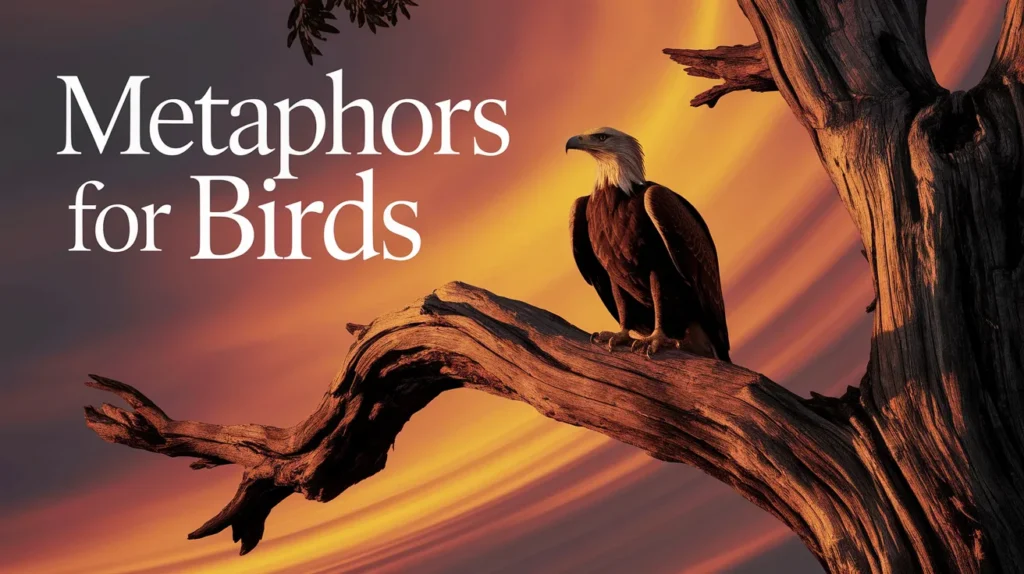
At dawn, when the sky blushes pink and gold, a single bird slices through the quiet air—its wings whispering secrets of distance, longing, and possibility. You watch it rise, and suddenly, it’s not just a bird anymore. It becomes a thought, a dream, a memory escaping the boundaries of your mind. That is the magic of metaphors for birds—they transform simple creatures into powerful symbols of human emotion and imagination.
Metaphors are more than decorative language; they are bridges between the visible world and our inner landscapes. Birds, in particular, offer rich imagery because they exist between earth and sky, freedom and fragility, presence and departure. Learning to use bird metaphors effectively can elevate your writing, deepen emotional resonance, and help you express ideas that plain language struggles to capture.
In this guide, you’ll explore vivid metaphors, creative techniques, and practical exercises—all designed to help you master the art of describing life through the language of wings.
Understanding Metaphors for Birds in Figurative Language
Bird metaphors use avian imagery to represent abstract ideas like freedom, hope, fear, or change. Instead of saying “she felt free,” you might write, “she soared like a bird escaping a cage.”
These metaphors work because birds naturally symbolize movement, perspective, and transformation. Across cultures, they represent the soul, messages from beyond, or journeys between worlds.
When you use bird metaphors, you’re not just describing—you’re inviting readers to feel.
Why Bird Metaphors Add Depth and Emotion to Writing
Birds carry emotional weight. A soaring eagle suggests power; a caged bird suggests restriction; a migrating flock suggests change.
Using bird metaphors:
- Adds vivid imagery
- Creates emotional connection
- Enhances storytelling
- Makes abstract ideas relatable
Think of how often literature uses birds to express longing or freedom. These images linger in the reader’s mind because they feel alive.
Types of Bird Metaphors: Freedom, Fear, and Flight
Bird metaphors often fall into symbolic categories:
- Freedom: “Her spirit was a bird in open sky.”
- Fear: “His thoughts fluttered like trapped sparrows.”
- Hope: “A songbird in winter.”
- Change: “Like migrating geese, they moved on.”
Recognizing these patterns helps you craft metaphors intentionally rather than randomly.
Example 1: The Bird as a Symbol of Freedom
Meaning & Explanation: Birds often represent freedom because they can fly beyond human limitations. This metaphor is ideal for expressing independence, escape, or liberation.
Example Sentence: After years of struggle, she felt like a bird finally released into endless sky.
Alternative Expressions:
- A kite cut loose from its string
- A wind unchained
- A cloud drifting without borders
Sensory/Emotional Detail: Imagine the rush of wind, the openness of sky, the absence of weight—freedom feels light and limitless.
Mini Storytelling: Think of someone leaving a restrictive job or environment. Their first deep breath outside that life mirrors a bird’s first flight after captivity.
Using Bird Imagery to Express Human Emotions
Birds can mirror emotional states beautifully:
- Joy → chirping birds at sunrise
- Anxiety → fluttering wings in a cage
- Loneliness → a single bird on a wire
- Hope → a bird singing in the rain
The key is matching the bird’s behavior with the emotion you want to convey.
Example 2: The Caged Bird as a Metaphor for Limitation
Meaning & Explanation: A caged bird represents restriction, suppressed potential, or lack of freedom.
Example Sentence: His dreams beat against his chest like a caged bird longing for escape.
Alternative Ways to Express It:
- A locked door with no key
- A voice trapped in silence
- A river blocked by a dam
Sensory/Emotional Detail: Hear the frantic fluttering, feel the tight space, sense the desperation—it’s not just restriction, it’s tension.
Cultural Reference: The “caged bird” metaphor appears in poetry and memoirs to symbolize oppression and resilience, making it deeply powerful.
Bird Metaphors in Literature and Storytelling
Writers have long used bird imagery:
- Birds as messengers of fate
- Birds as symbols of souls
- Birds representing transformation
From ancient myths to modern novels, birds often signal something beyond the ordinary—an emotional or spiritual shift.
Example 3: The Bird as a Messenger of Hope
Meaning & Explanation: Birds often symbolize hope because they appear after storms, sing at dawn, and migrate toward better conditions.
Example Sentence: In her darkest days, hope perched quietly like a bird waiting to sing.
Alternative Expressions:
- A candle in the dark
- A star breaking through clouds
- A seed pushing through soil
Sensory/Emotional Detail: Soft chirping, gentle presence—hope is quiet but persistent.
Real-Life Reflection: After difficult times, small positive signs—like a kind word or a new opportunity—feel like that hopeful bird returning.
Creative Ways to Use Bird Metaphors in Writing
To make your metaphors stand out:
- Combine bird imagery with other senses
- Avoid clichés by adding unique context
- Use specific bird types (hawk vs sparrow)
- Blend metaphor with action
Instead of “free as a bird,” try: “She rose like a falcon catching its first thermal wind.”
Common Mistakes to Avoid When Using Bird Comparisons
- Overusing clichés
- Mixing metaphors (confusing imagery)
- Using vague descriptions
- Forcing symbolism where it doesn’t fit
Strong metaphors feel natural and precise, not decorative or excessive.
How to Create Original Bird Metaphors
Follow this simple process:
- Identify the emotion or idea
- Choose a bird behavior (flying, nesting, singing)
- Add a sensory detail
- Shape it into a vivid comparison
Example: Emotion → Anxiety Behavior → Fluttering Metaphor → “Her thoughts fluttered like startled pigeons in a crowded square.”
Interactive Exercise: Craft Your Own Bird Metaphors
Try these prompts:
- Describe happiness using a bird metaphor
- Write a sentence about fear using wings or flight
- Compare your current mood to a bird
Challenge: Write a short paragraph where a bird metaphor reflects a life change.
Bird Metaphors for Social Media and Daily Expression
Short, poetic metaphors work great for captions:
- “Let your dreams take flight.”
- “Not all cages are visible.”
- “Be the bird that sings after the storm.”
They’re memorable, shareable, and emotionally engaging.
Bonus Tips for Using Bird Metaphors Effectively
- Keep them concise
- Match tone with context
- Use them sparingly for impact
- Combine with storytelling
A single strong metaphor often works better than many weak ones.
Cultural and Symbolic Meanings of Birds Around the World
Different cultures interpret birds uniquely:
- Doves → peace
- Eagles → strength
- Owls → wisdom
- Ravens → mystery or transformation
Understanding these meanings adds depth and cultural richness to your metaphors.
Final Thoughts: Let Your Words Take Flight
Bird metaphors remind us that language, like wings, is meant to lift us beyond the ordinary. Whether you’re writing poetry, storytelling, or even social media captions, these metaphors can transform simple ideas into unforgettable imagery.
So next time you see a bird crossing the sky, pause—and ask yourself: what feeling is taking flight within you?
FAQs
1. What is a metaphor for birds?
A metaphor for birds uses bird imagery to represent ideas like freedom, hope, or emotion without using “like” or “as.”
2. Why are birds commonly used in metaphors?
Because they symbolize movement, freedom, and perspective, making them ideal for expressing abstract concepts.
3. How can I make bird metaphors more original?
Use specific bird behaviors, sensory details, and unique contexts instead of common phrases.
4. Are bird metaphors suitable for all types of writing?
Yes, they work in poetry, storytelling, essays, and even social media when used appropriately.
5. Can bird metaphors be negative?
Absolutely. They can represent fear, restriction, or loss—like a caged or injured bird.
Conclusion
Metaphors for birds are more than stylistic flourishes—they are powerful tools that help you express the inexpressible. They capture the essence of freedom, the ache of limitation, and the quiet strength of hope.
By learning to craft and use them effectively, you give your writing wings. Now it’s your turn: let your imagination soar, let your words glide, and let every sentence carry the echo of flight.