
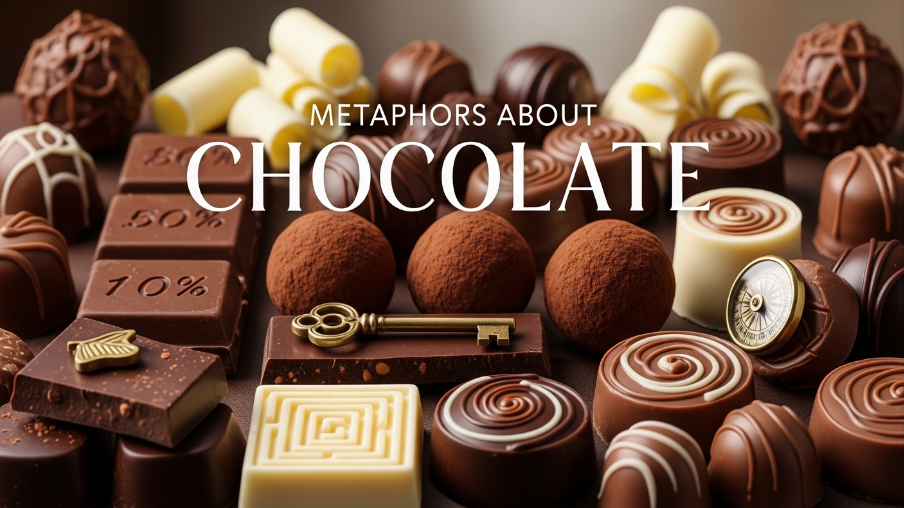
A square of chocolate slowly melts between warm fingers, leaving behind a glossy trail that smells like childhood evenings, comfort after long days, and quiet celebrations no one announces out loud. In that moment, chocolate stops being just a sweet—it becomes a memory you can taste. It becomes language without words.
Metaphors about chocolate are powerful tools in writing and speech because they transform something familiar into something emotionally rich. Instead of simply saying “I feel good,” a writer might say “I feel like chocolate on a cold day,” instantly evoking warmth, comfort, and indulgence. These metaphors help readers feel rather than just understand.
In this article, we’ll explore creative and meaningful metaphors about chocolate, their emotional depth, real-life uses, and how you can use them in writing, captions, storytelling, or even everyday conversation. Think of this as a guided tasting—not of chocolate itself, but of imagination.
What Metaphors About Chocolate Reveal About Emotion and Language
Chocolate metaphors reveal how humans naturally connect taste with feeling. When people describe emotions using chocolate, they often mean comfort, pleasure, nostalgia, or indulgence.
Chocolate becomes a bridge between the senses and the heart. It turns abstract emotions into something tangible. For example, sadness might be “a bitter chocolate left too long in the sun,” while happiness could be “a creamy truffle melting into laughter.”
Writers use these metaphors because they are instantly relatable. Almost everyone has experienced chocolate in some form, so the emotional translation is quick and universal. This makes chocolate an especially rich symbol in poetry, storytelling, and everyday expression.
Why Chocolate Metaphors Are Powerful in Writing and Expression
Chocolate metaphors work because they engage multiple senses at once—taste, smell, texture, and emotion. Unlike abstract descriptions, they create a sensory shortcut.
When a reader encounters a phrase like “her words were dark chocolate—strong, slightly bitter, unforgettable,” they don’t just understand the meaning; they experience it.
These metaphors are especially useful in:
- Creative writing and poetry
- Advertising and branding
- Personal journaling
- Social media storytelling
Chocolate also carries emotional duality—it can be sweet or bitter, comforting or overwhelming. That flexibility makes it a perfect metaphorical tool.
Chocolate as a Metaphor for Love and Affection
Chocolate is often associated with romance, making it a natural metaphor for love. It represents sweetness, warmth, and emotional richness.
Love described through chocolate can take many forms:
- Milk chocolate love: soft, comforting, innocent
- Dark chocolate love: intense, deep, slightly mysterious
- White chocolate love: gentle, playful, lighthearted
In literature, chocolate often symbolizes romantic indulgence—something you savor slowly, not rush through. A relationship described as “a box of handcrafted chocolates” suggests variety, surprise, and emotional depth.
In everyday life, gifting chocolate often replaces words, silently saying “I care about you.”
Chocolate as a Symbol of Comfort and Healing
Chocolate frequently appears in emotional contexts as a healing metaphor. It represents comfort after sadness, exhaustion, or stress.
Think of phrases like:
- “Chocolate is a blanket for the soul.”
- “A bite of chocolate after a long day feels like forgiveness.”
This metaphor works because chocolate triggers pleasure chemicals in the brain, reinforcing its association with emotional relief.
In storytelling, characters often turn to chocolate during heartbreak, loneliness, or reflection. It becomes a quiet companion during emotional recovery, symbolizing small joys that help people heal.
Chocolate Metaphors in Literature and Popular Culture
Chocolate has appeared in literature, films, and cultural storytelling for decades. One of the most famous references is the idea that life is unpredictable and varied—like a box of chocolates.
In novels and poetry, chocolate often represents indulgence, temptation, or emotional warmth. Writers use it to contrast bitterness and sweetness in human experience.
In modern culture, chocolate is used in branding and advertising to evoke luxury and emotional satisfaction. It represents not just food, but experience—something rich, layered, and desirable.
From classic romance novels to modern social media captions, chocolate continues to be a universal emotional symbol.
Example 1: Chocolate is a Hug You Can Taste
This metaphor transforms chocolate into physical affection.
Meaning/Explanation: It suggests that chocolate provides emotional warmth and comfort similar to a hug. It emphasizes safety, care, and emotional softness.
Example sentence or scenario: After a stressful exam, she sat by the window with a cup of hot cocoa, thinking, “This is a hug I can taste.”
Alternative expressions:
- Chocolate is edible comfort
- A warm hug wrapped in sweetness
- A bite-sized embrace
Sensory/emotional detail: The warmth of melted chocolate mirrors emotional security, wrapping the mind in calmness like a soft blanket on a cold evening.
Mini storytelling element: A child returning home after a rainy school day is handed warm chocolate milk. No words are needed—the drink itself becomes reassurance, a silent hug from home.
Example 2: Chocolate is a Midnight Secret
Meaning/Explanation: Chocolate here symbolizes indulgence and hidden pleasure. It reflects moments of privacy, desire, or emotional escape.
Example sentence or scenario: She opened the fridge at midnight, smiling at the hidden bar of chocolate, treating it like a secret she wasn’t supposed to tell anyone about.
Alternative expressions:
- Chocolate is a quiet rebellion
- A sweet secret in the dark
- Midnight indulgence wrapped in cocoa
Sensory/emotional detail: The quiet crunch of chocolate in a silent kitchen feels intimate, almost forbidden, enhancing its emotional intensity.
Mini storytelling element: A writer struggling with inspiration finds clarity at midnight, pairing thoughts with chocolate squares, each bite unlocking a new idea. The chocolate becomes a companion to imagination in solitude.
Example 3: Chocolate is Liquid Memory
Meaning/Explanation: This metaphor connects chocolate with nostalgia and memory recall, especially in liquid form like hot cocoa.
Example sentence or scenario: The first sip of hot chocolate sent her back to winter mornings at her grandmother’s house—warm, slow, unforgettable.
Alternative expressions:
- Chocolate melts into memory
- Cocoa carries the past
- Sweet liquid nostalgia
Sensory/emotional detail: Steam rising from a cup carries more than aroma—it carries time itself, dissolving boundaries between past and present.
Mini storytelling element: An old café serves hot chocolate that tastes identical to one a man had as a child. Suddenly, he is not in the café anymore—he is ten years old again, sitting by a foggy window.
Sensory Language in Chocolate Metaphors
Chocolate metaphors thrive on sensory detail. Writers often describe:
- Texture (silky, smooth, crunchy)
- Aroma (rich cocoa scent, warm sweetness)
- Sound (snap of a chocolate bar)
- Temperature (melting, warm, cooling)
By engaging senses, metaphors become immersive. Instead of telling readers about emotion, you allow them to taste it.
Using Chocolate Metaphors in Creative Writing
Chocolate metaphors can elevate storytelling by making descriptions more vivid and relatable. They are especially effective in:
- Romance scenes
- Emotional reflections
- Childhood memories
- Food-centered narratives
Tip: Avoid overuse. One strong metaphor per paragraph is more powerful than repeated comparisons.
Try blending chocolate metaphors with other sensory elements:
- “Her voice was like chocolate dipped in rainlight.”
- “The moment felt like melted cocoa and silence.”
Chocolate Metaphors for Social Media Captions
Chocolate metaphors work beautifully in short captions because they are emotional and aesthetic.
Examples:
- “Sweet like chocolate, strong like midnight cocoa.”
- “Life tastes better when it melts slowly.”
- “Happiness is homemade… and covered in chocolate.”
These phrases perform well because they are:
- Relatable
- Emotionally expressive
- Visually evocative
Cultural Symbolism of Chocolate Across the World
Chocolate carries different meanings across cultures. In some traditions, it represents celebration and luxury. In others, it symbolizes warmth, hospitality, or love offerings.
Historically, cocoa was considered sacred in ancient civilizations. Today, it continues to symbolize comfort and indulgence in global culture.
This cultural richness makes chocolate metaphors even more powerful—they carry layers of historical and emotional meaning.
Interactive Exercise: Create Your Own Chocolate Metaphor
Try this creative exercise:
- Think of an emotion (joy, sadness, nostalgia, excitement).
- Choose a type of chocolate (dark, milk, white, melted, frozen).
- Combine them into a metaphor.
Examples:
- “My excitement is a fizzy chocolate bar breaking in sunlight.”
- “Her sadness is bitter cocoa left too long in silence.”
Now try writing your own three metaphors. Focus on sensory detail and emotion.
Bonus Tips for Writers and Content Creators
- Use chocolate metaphors sparingly for impact
- Pair them with emotional moments, not random descriptions
- Match chocolate type with emotional tone
- Use sensory verbs like “melting,” “cracking,” or “dripping”
- Keep metaphors simple but vivid
For social media, shorter is stronger. For literature, expand with sensory storytelling.
Common Mistakes When Using Chocolate Metaphors
Writers often:
- Overuse chocolate imagery until it loses meaning
- Mix too many sensory comparisons in one sentence
- Use clichés without originality
Avoid saying the same idea repeatedly. Instead, explore new emotional angles—bitterness, melting, snapping, layering, or blending.
FAQs
1. What is a chocolate metaphor?
It is a figurative expression where chocolate represents emotions, experiences, or ideas.
2. Why is chocolate often used in metaphors?
Because it is universally relatable, sensory-rich, and emotionally symbolic.
3. Can chocolate metaphors be used in professional writing?
Yes, especially in marketing, branding, and creative content.
4. What emotions are commonly linked to chocolate metaphors?
Comfort, love, nostalgia, indulgence, and happiness.
5. How can I create better chocolate metaphors?
Use sensory detail, match chocolate types to emotions, and keep expressions simple yet vivid.
Conclusion
Chocolate metaphors are more than poetic comparisons—they are emotional translations. They turn feelings into flavor, memories into texture, and thoughts into warmth you can almost taste. Whether used in storytelling, captions, or creative writing, they add depth and sensory richness to language.
Like chocolate itself, these metaphors are best enjoyed slowly. Each one melts differently, revealing something personal beneath the surface.