
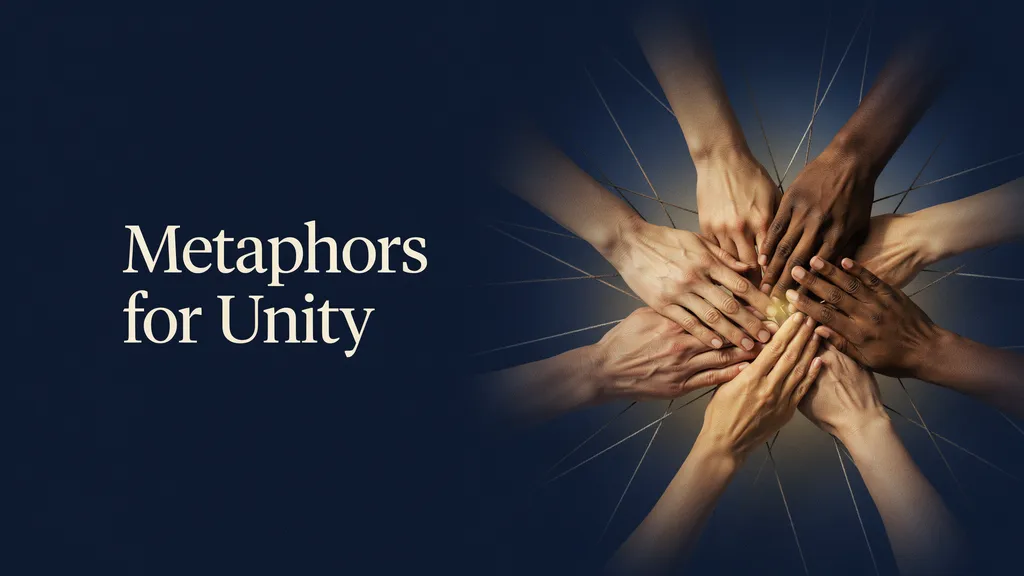
Introduction: The Invisible Thread That Connects Us
Imagine standing in a crowded town square during a festival. Music drifts through the air, laughter echoes from every corner, and hundreds of people move together like waves in a gentle sea. They come from different backgrounds, speak different languages, and carry different stories, yet for that moment, they share a common rhythm. That feeling is unity—an invisible force that binds individuals into something greater than themselves.
Unity is one of humanity’s most treasured values. It helps families stay strong, communities flourish, and nations overcome challenges. Yet unity can sometimes feel abstract or difficult to describe. This is where metaphors become powerful. They transform an idea into a vivid image, helping us see, feel, and understand it more deeply.
Metaphors for unity enrich writing, speeches, social media posts, and everyday conversations. They allow us to communicate cooperation, togetherness, and shared purpose in memorable ways. Whether you’re a student, writer, teacher, leader, or simply someone who appreciates beautiful language, these metaphors can help you express the strength of people standing together.
Understanding Metaphors for Unity
A metaphor is a figure of speech that compares one thing to another without using words such as “like” or “as.” Instead of saying people are working together, you might say they are “threads in the same tapestry.”
Metaphors for unity help us visualize connection, teamwork, harmony, and collective strength. They often draw inspiration from nature, art, architecture, music, and daily life.
By using metaphors, abstract concepts become concrete and emotionally meaningful. Readers don’t merely understand unity—they experience it.
Why Unity Metaphors Matter in Writing and Communication
Strong metaphors make ideas memorable. They paint pictures in the mind and evoke emotions that facts alone cannot.
When discussing teamwork, friendship, family, or community, unity metaphors:
- Create emotional connection
- Improve storytelling
- Make speeches more persuasive
- Enhance creative writing
- Help readers visualize relationships
Great leaders, poets, and storytellers throughout history have relied on metaphors to inspire people to work together toward common goals.
Unity as a Tapestry Woven from Many Threads
One of the most beautiful metaphors for unity is a tapestry made from countless threads.
Every thread has its own color, texture, and purpose. Alone, a single thread may seem insignificant. Together, they create a masterpiece.
Meaning and Explanation
This metaphor emphasizes diversity within togetherness. Individual differences become strengths that contribute to a larger picture.
Example Sentence
“Our community is a tapestry woven from many threads, each adding beauty and strength to the whole.”
Alternative Expressions
- A colorful mosaic
- A woven masterpiece
- An embroidered story
Sensory Details
Imagine vibrant colors intertwining under skilled hands, creating patterns that could never exist with only one thread.
Mini Story
Many multicultural cities resemble tapestries. People from different cultures contribute traditions, foods, music, and ideas that enrich the entire community.
Unity as a Symphony Orchestra
Picture dozens of musicians holding different instruments. Violins sing, drums pulse, and flutes dance through the melody.
Meaning and Explanation
Unity doesn’t require everyone to be identical. Like musicians in an orchestra, people contribute unique talents while following a shared purpose.
Example Sentence
“The team functioned as a symphony orchestra, each member playing a vital role in the final performance.”
Alternative Expressions
- A harmonious choir
- A musical ensemble
- A chorus of voices
Emotional Impact
This metaphor creates feelings of harmony, cooperation, and beauty emerging from coordinated effort.
Unity as a Strong Bridge
Bridges connect places that would otherwise remain separated.
Meaning and Explanation
A bridge symbolizes connection, understanding, and cooperation between individuals or groups.
Example Sentence
“Respect became the bridge that united people with different perspectives.”
Alternative Expressions
- A pathway of understanding
- A connection across divides
- A road linking hearts
Real-Life Example
Community projects often serve as bridges, bringing neighbors together around common goals despite differing opinions.
Nature-Inspired Metaphors for Unity
Nature offers endless examples of cooperation and interconnectedness.
Some powerful unity metaphors include:
- Roots of one tree
- Birds flying in formation
- Rivers joining the sea
- Bees working in a hive
- Branches growing from one trunk
These images remind us that collaboration exists throughout the natural world.
Unity as Roots Beneath a Tree
At first glance, a tree appears to stand alone. Yet beneath the soil lies a vast network of roots.
Meaning and Explanation
People may appear independent, but shared values and relationships connect them below the surface.
Example Sentence
“Our shared traditions are roots that keep us grounded and united.”
Alternative Expressions
- An underground network
- Shared foundations
- Common roots
Sensory Detail
Imagine roots stretching through cool earth, silently supporting the towering tree above.
Unity as a Lighthouse in the Storm
Storms challenge ships at sea, but a lighthouse offers guidance and hope.
Meaning and Explanation
During difficult times, unity provides stability and direction.
Example Sentence
“Their friendship became a lighthouse during the storm of uncertainty.”
Alternative Expressions
- A guiding beacon
- A shared light
- A source of direction
Literary Connection
Many stories use light as a symbol of hope and collective strength against adversity.
Family and Community Metaphors for Togetherness
Families and communities provide rich imagery for describing unity.
Popular examples include:
- Links in a chain
- Pieces of a puzzle
- Bricks in a wall
- Members of one team
- Branches of one tree
These metaphors emphasize belonging and cooperation.
Unity as Pieces of a Puzzle
A single puzzle piece reveals little. Together, the pieces form a complete image.
Meaning and Explanation
Each person contributes something valuable to a larger goal.
Example Sentence
“We are puzzle pieces that complete one another’s strengths.”
Alternative Expressions
- Parts of a whole
- Components of a design
- Pieces of a larger picture
Emotional Detail
This metaphor encourages appreciation for everyone’s unique contribution.
Cultural and Historical Symbols of Unity
Throughout history, cultures have celebrated unity through symbols and stories.
Ancient villages survived through cooperation. Civil rights movements succeeded because people stood together. Cultural festivals unite generations through shared traditions.
These examples demonstrate that unity has always been essential to human progress.
Three Creative Metaphors for Unity You Can Use Today
Below are three particularly effective metaphors that work well in speeches, essays, and creative writing.
A Circle Without End
Meaning
Represents inclusion, equality, and continuous connection.
Example
“Our friendship forms a circle without end.”
Alternative Phrases
- Endless ring
- Unbroken loop
- Eternal circle
A Flame Shared by Many Candles
Meaning
Shows how one source of inspiration can unite many people.
Example
“The movement became a flame shared by many candles.”
Alternative Phrases
- Shared light
- Collective spark
- Common fire
A River Formed by Many Streams
Meaning
Highlights strength gained through collective effort.
Example
“The organization grew into a river formed by many streams.”
Alternative Phrases
- Meeting waters
- Flowing together
- Joined currents
How to Use Unity Metaphors in Creative Writing
Writers can use unity metaphors to deepen emotional impact.
Consider:
- Character relationships
- Team achievements
- Community events
- Family stories
- Inspirational speeches
Rather than simply stating that people worked together, show their unity through imagery readers can visualize.
For example:
Instead of writing, “The villagers cooperated,” write, “The villagers became strands in the same rope, stronger together than apart.”
Interactive Exercise: Create Your Own Unity Metaphor
Try this simple exercise.
Step 1: Choose a subject.
Examples:
- Family
- Friends
- School
- Workplace
- Community
Step 2: Select an image from nature or everyday life.
Examples:
- Tree
- River
- Quilt
- Orchestra
- Garden
Step 3: Connect the two.
Example:
“My family is a garden where every flower contributes to the beauty of the landscape.”
Practice creating five unique metaphors and notice how each highlights a different aspect of togetherness.
Using Metaphors for Unity on Social Media
Short, vivid metaphors perform exceptionally well online.
Examples:
- “Together we’re threads in the same tapestry.”
- “Many voices, one song.”
- “Different roots, one tree.”
- “Many streams, one river.”
- “Individual stars, one constellation.”
These concise expressions are memorable, shareable, and emotionally engaging.
Bonus Tips for Making Unity Metaphors More Powerful
To strengthen your metaphors:
Use Sensory Details
Appeal to sight, sound, touch, smell, or emotion.
Stay Consistent
Avoid mixing unrelated metaphors in the same passage.
Match Your Audience
Choose images your readers can easily understand.
Show Instead of Tell
Let imagery reveal the meaning naturally.
Draw from Personal Experience
Authentic metaphors often resonate most deeply.
Common Mistakes When Using Unity Metaphors
Even strong metaphors can lose impact if overused.
Avoid:
- Clichés without fresh context
- Overly complicated comparisons
- Mixed imagery
- Excessive repetition
- Metaphors that distract from the message
The best metaphors feel natural and illuminate the idea rather than overshadowing it.
The Lasting Power of Unity in Literature and Life
From epic poems to modern speeches, unity remains a recurring theme because it reflects a fundamental human need. People thrive when connected to something larger than themselves.
Metaphors help us recognize these connections. They remind us that unity is not merely cooperation—it is a living, breathing force that shapes families, communities, and societies.
Whether expressed as roots beneath a tree, instruments in an orchestra, or streams feeding a river, unity becomes easier to understand when transformed into vivid imagery.
FAQs
What are metaphors for unity?
Metaphors for unity are figurative comparisons that represent togetherness, cooperation, and connection through symbolic images such as rivers, bridges, tapestries, or orchestras.
Why are unity metaphors important?
They help readers visualize abstract concepts, create emotional impact, and make communication more memorable and persuasive.
What is a simple metaphor for unity?
“A puzzle made of many pieces” is a simple and effective metaphor because it shows how individuals contribute to a complete whole.
Can unity metaphors be used in speeches?
Yes. They are especially effective in speeches because they inspire audiences and make messages easier to remember.
How can I create my own unity metaphor?
Choose a concept related to connection, such as teamwork or friendship, then compare it to an object or process that naturally involves cooperation, like a garden, bridge, orchestra, or river.
Conclusion
Unity is one of the most powerful forces in human experience, yet it often feels difficult to define. Metaphors bridge that gap by transforming an abstract idea into vivid images we can see, hear, and feel. Whether unity appears as a tapestry woven from many threads, a symphony of different instruments, roots beneath a mighty tree, or streams joining a river, each metaphor reveals a different facet of togetherness.
By using these metaphors in writing, speaking, social media, and everyday conversations, we communicate not only the idea of unity but also its beauty, strength, and emotional resonance. In a world that often highlights differences, these powerful images remind us that our greatest achievements are often created when we stand together as one.