
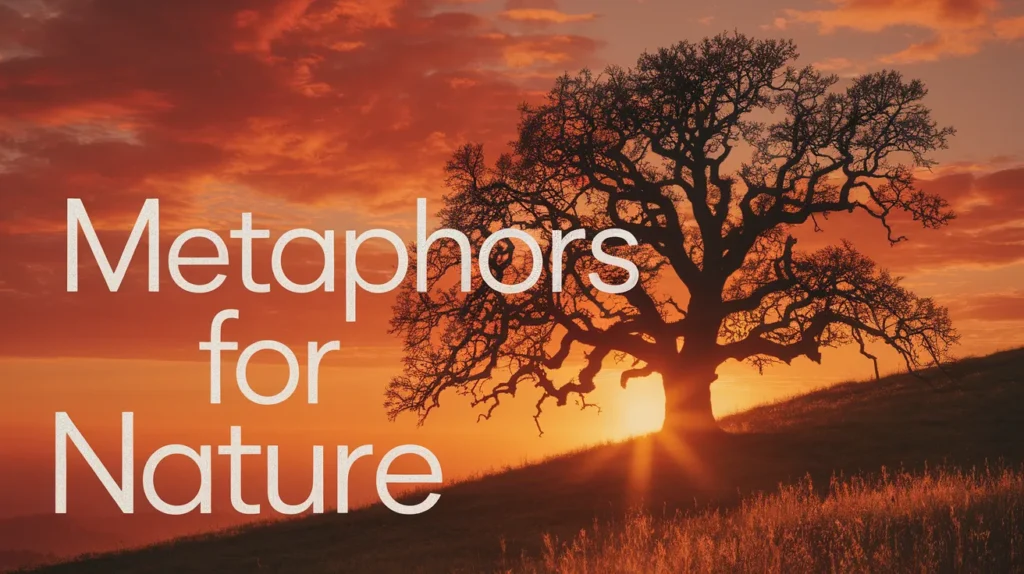
The first drop of rain tapped gently against the window like a whispered secret from the sky. Outside, the trees swayed in the evening breeze, their branches moving like dancers in a silent performance. Somewhere in the distance, thunder rolled like an ancient drumbeat, reminding us that nature is not just scenery—it is emotion, memory, power, and poetry woven together.
That is why metaphors for nature hold such a special place in writing and conversation. They help us describe the world in ways that feel vivid, emotional, and unforgettable. Instead of simply saying a river moves quickly, we might call it “a silver ribbon racing through the valley.” Rather than describing a storm as loud, we can paint it as “a roaring lion in the sky.” These comparisons transform ordinary descriptions into living images.
Nature metaphors appear everywhere—in literature, songs, movies, speeches, captions, and daily conversation. Writers use them to create mood, poets use them to express emotion, and everyday people use them to explain feelings that are difficult to describe directly. Whether you are a student, blogger, storyteller, social media creator, or simply someone who loves language, learning metaphors for nature can make your communication richer and more expressive.
In this guide, you will explore creative nature metaphors, meanings behind them, examples in context, writing tips, storytelling inspiration, and exercises to sharpen your creativity. By the end, you will not only understand metaphors better—you will begin to see the natural world itself as a giant book of beautiful comparisons.
Why Metaphors for Nature Matter in Writing
Nature has always been one of humanity’s greatest storytelling tools. Long before modern novels and films existed, people described life through forests, rivers, mountains, stars, and storms. A calm lake became a symbol of peace. Wildfire represented destruction or passion. Seasons reflected the cycles of human life.
Metaphors for nature matter because they connect emotions with imagery. Readers may forget plain descriptions, but they remember emotional pictures. Saying “her thoughts were chaotic” feels ordinary. Saying “her thoughts were a hurricane tearing through the coast of her mind” creates movement, sound, and emotion.
Nature metaphors also help writers:
- Create stronger imagery
- Add emotional depth
- Improve storytelling
- Make descriptions more memorable
- Build atmosphere and mood
- Connect readers to universal experiences
Even famous literary works depend heavily on nature symbolism. In many classic poems, roses symbolize love, oceans symbolize mystery, and storms symbolize conflict. These natural images help readers instantly feel the emotional tone of a scene.
Understanding the Meaning of Nature Metaphors
A metaphor compares two unrelated things without using “like” or “as.” Instead of saying the forest is “like” a cathedral, a metaphor says “the forest was a cathedral.” This direct comparison makes the image stronger.
Nature metaphors often borrow qualities from:
- Weather
- Animals
- Landscapes
- Oceans
- Trees and plants
- Celestial objects
- Seasons
For example:
- “Her voice was sunshine.”
- “The city was a concrete jungle.”
- “Hope is a seed waiting for rain.”
Each metaphor transfers meaning from nature onto another subject.
When used correctly, metaphors can turn simple writing into emotional storytelling. They invite readers to imagine, feel, and interpret rather than simply observe.
Forest Metaphors That Symbolize Mystery and Growth
Forests often symbolize transformation, hidden truths, wisdom, or confusion. Their twisting paths and layered shadows naturally mirror human emotions and life journeys.
Example 1: “The forest was a labyrinth of secrets.”
Meaning: This metaphor suggests mystery, uncertainty, and hidden discoveries.
Example Scenario: A traveler walks through dense woods where every trail seems unfamiliar and endless.
Alternative Expressions:
- The woods guarded ancient whispers.
- The trees held forgotten memories.
- The forest swallowed certainty.
Sensory Detail: Imagine damp earth beneath your feet, fog hanging between the trees, and distant birds echoing through the silence.
Mini storytelling can make this metaphor even more powerful. In fantasy novels and folklore, forests are often places where heroes discover hidden truths about themselves.
Ocean Metaphors for Emotions and Freedom
The ocean is one of the richest sources of metaphors in literature. Its depth, movement, and unpredictability mirror human emotion perfectly.
Example 2: “Her emotions were an untamed ocean.”
Meaning: This metaphor suggests overwhelming, powerful, and constantly shifting feelings.
Example Sentence: After hearing the news, her emotions became an untamed ocean crashing against the walls of her heart.
Alternative Ways to Express It:
- His anger rose like a tidal wave.
- Her calmness was a still sea at dawn.
- Grief pulled him under like a rip current.
Emotional Detail: The ocean can represent loneliness, peace, adventure, or fear depending on the context.
Writers often use ocean metaphors in love stories and reflective essays because water naturally reflects change and emotional depth.
Mountain Metaphors That Represent Strength
Mountains symbolize endurance, stability, determination, and obstacles. Their towering presence makes them ideal metaphors for resilience.
Example 3: “He stood like a mountain against hardship.”
Meaning: This metaphor emphasizes strength and unwavering courage.
Example Scenario: A father continues supporting his family during difficult times despite financial struggles.
Alternative Expressions:
- She carried courage like a mountain carries snow.
- Their hope stood taller than the cliffs.
- Determination became a stone peak against the storm.
Sensory and Emotional Detail: Picture icy wind, rocky cliffs, and a lone climber continuing upward despite exhaustion.
This type of metaphor appears often in motivational speeches and inspirational writing because mountains naturally symbolize challenges and triumph.
Seasonal Metaphors for Life and Change
The changing seasons beautifully mirror the cycles of human life.
- Spring often symbolizes beginnings and hope.
- Summer represents joy, energy, and abundance.
- Autumn reflects maturity and reflection.
- Winter symbolizes endings, silence, or rest.
For example:
- “Their friendship entered winter.”
- “She was living in the springtime of her dreams.”
- “His ideas bloomed like flowers after rain.”
Seasonal metaphors work especially well in emotional storytelling because readers instinctively connect seasons with moods and experiences.
A breakup story described through autumn leaves can feel far more emotional than a direct explanation. The falling leaves silently suggest loss and transition.
Flower Metaphors That Express Beauty and Fragility
Flowers are among the most common metaphors in poetry and romantic writing. They symbolize beauty, growth, innocence, vulnerability, and temporary moments.
A person might be described as:
- “A wildflower in a field of roses.”
- “A rose hiding its thorns.”
- “A sunflower turning toward hope.”
These metaphors carry emotional layers beyond physical appearance.
For example, a sunflower metaphor often suggests optimism because sunflowers naturally follow sunlight. A wilted flower may symbolize heartbreak or exhaustion.
Writers can deepen flower metaphors by including sensory imagery:
- The scent of roses drifting through warm air
- Petals trembling in the wind
- Bright colors glowing beneath sunlight
Such details make descriptions feel cinematic and immersive.
Storm Metaphors for Conflict and Intensity
Storms symbolize chaos, anger, fear, passion, or emotional tension.
Examples include:
- “Their argument became a thunderstorm.”
- “Jealousy flashed through him like lightning.”
- “Her anxiety was a tornado tearing through every thought.”
Storm metaphors create instant drama. Readers can almost hear thunder and feel rain pounding against windows.
In literature and movies, storms often appear during emotionally intense scenes. A stormy night may reflect a character’s inner conflict.
Bonus writing tip: Pair storm metaphors with sound imagery.
For example:
“His rage thundered across the room, shaking every fragile silence in its path.”
This layered imagery creates a stronger emotional effect.
River Metaphors That Reflect Time and Journey
Rivers symbolize movement, life, transition, and the unstoppable passage of time.
Common river metaphors include:
- “Life is a river.”
- “Memories flowed through her mind.”
- “Time swept him downstream.”
Rivers work beautifully in reflective or philosophical writing.
Imagine a grandmother sitting beside a flowing stream, remembering childhood summers. The river becomes more than water—it becomes memory itself.
Alternative expressions include:
- Streams of thought
- Currents of emotion
- Waterfalls of change
These metaphors naturally create movement within writing.
Sky Metaphors for Dreams and Possibilities
The sky often symbolizes freedom, imagination, spirituality, and limitless potential.
Examples include:
- “Her dreams stretched across the sky.”
- “Hope floated above them like clouds.”
- “His imagination became a universe without borders.”
Sky metaphors feel uplifting and expansive.
In inspirational speeches, phrases like “the sky is the limit” encourage ambition and creativity. Even social media captions frequently use sky imagery to express freedom and peace.
Sensory details can make these metaphors more memorable:
- Golden sunsets melting across clouds
- Stars flickering in midnight silence
- Pale blue horizons opening endlessly
These images create emotional warmth and wonder.
Animal Metaphors Found in Nature Writing
Animals provide vivid metaphors because their behaviors are easy to visualize.
Examples include:
- “He was a wolf among sheep.”
- “Her curiosity fluttered like a hummingbird.”
- “The crowd moved as one giant herd.”
Animal metaphors can symbolize:
- Strength
- Fear
- Independence
- Loyalty
- Wisdom
- Instinct
For example, owls often symbolize wisdom in literature, while foxes represent cleverness.
Writers should choose animals carefully because cultural meanings may differ. In some cultures, snakes symbolize danger, while in others they symbolize transformation and healing.
Nature Comparisons in Poetry and Literature
Some of the greatest literary works use nature metaphors to explore human emotions.
In romantic poetry, moonlight often symbolizes longing or beauty. In adventure stories, storms symbolize danger and transformation. Nature becomes a mirror reflecting human experience.
Shakespeare frequently used natural imagery. Modern novels, fantasy stories, and songs continue this tradition today.
Consider this poetic example:
“Her laughter was spring rain falling across a thirsty garden.”
The metaphor does more than describe laughter—it suggests healing, freshness, and emotional renewal.
Readers remember these images because they engage multiple senses at once.
How to Create Your Own Metaphors for Nature
Creating original metaphors is easier when you observe nature closely.
Here are simple steps:
Notice Natural Qualities
Ask yourself what qualities stand out.
- Is the river calm or violent?
- Is the wind gentle or sharp?
- Does the forest feel welcoming or mysterious?
Connect Emotion to Nature
Match emotions with natural imagery.
- Sadness may resemble rain.
- Excitement may resemble wildfire.
- Peace may resemble snowfall.
Avoid Overused Comparisons
Instead of “busy as a bee,” try something fresher.
Example:
“Her thoughts buzzed like trapped fireflies in a glass jar.”
This feels more unique and visual.
Use Multiple Senses
Include sound, texture, smell, or movement.
For instance:
“The meadow smelled like honey and sunlight.”
Even abstract emotions become more vivid through sensory language.
Creative Writing Exercises Using Nature Metaphors
Practicing metaphors helps develop stronger writing skills.
Exercise 1: Emotion and Weather
Choose an emotion and connect it to weather.
Example:
- Joy = sunrise
- Anxiety = hurricane
- Loneliness = winter fog
Write three sentences using those comparisons.
Exercise 2: Describe a Memory Through Nature
Think of a childhood memory.
Now describe it entirely through natural imagery.
Example prompt:
“My childhood was a garden where every summer bloomed endlessly.”
Exercise 3: Create a Character Metaphor
Describe a fictional character as a natural element.
Examples:
- A stubborn person as granite cliffs
- A cheerful person as spring sunlight
- A secretive person as midnight fog
These exercises improve creativity and emotional expression.
Bonus Tips for Using Nature Metaphors in Daily Life
Nature metaphors are not only for novels or poetry. They can improve everyday communication too.
Social Media Captions
Instead of writing:
“Feeling peaceful today.”
Try:
“My thoughts are drifting like clouds across a quiet sky.”
Journaling
Use nature metaphors to explore emotions.
Example:
“My stress felt like thunder trapped beneath my ribs.”
This can make journaling more therapeutic and expressive.
Public Speaking
Speakers often use natural imagery because audiences remember emotional pictures better than plain facts.
Example:
“Great ideas begin as tiny seeds before they become forests.”
Storytelling and Blogging
Nature metaphors make blog posts more engaging and cinematic.
Even travel writing becomes richer when landscapes reflect emotions.
Common Mistakes to Avoid with Nature Metaphors
While metaphors are powerful, overusing them can weaken writing.
Avoid Mixed Metaphors
Example:
“Her ideas blossomed into a roaring ocean.”
This combines unrelated images awkwardly.
Avoid Clichés
Phrases like “cold as ice” may feel repetitive.
Try more original imagery instead.
Keep the Tone Consistent
Gentle flower imagery may clash with violent storm metaphors unless the contrast is intentional.
Don’t Overload Every Sentence
Too many metaphors can overwhelm readers.
Use them strategically for emotional impact.
Strong writing balances plain language with vivid imagery.
Using Nature Metaphors for Emotional Healing and Reflection
Many people naturally use nature metaphors while processing emotions.
Someone grieving may say:
“I feel lost in a dark forest.”
Someone recovering might say:
“I’m finally seeing sunlight after the storm.”
These comparisons help people express difficult emotions gently and creatively.
Therapists, motivational speakers, and mindfulness writers often use natural imagery because it feels universal and comforting.
Nature itself can also inspire reflection. Sitting beside waves, watching rain, or walking through trees often sparks metaphorical thinking automatically.
This connection explains why journals, poems, and songs frequently return to forests, oceans, skies, and seasons.
The Lasting Beauty of Metaphors Inspired by Nature
Nature metaphors endure because the natural world constantly surrounds human experience. Storms resemble emotional turmoil. Rivers resemble time. Flowers resemble fragile beauty. Mountains resemble resilience.
These comparisons help us understand ourselves through the world around us.
A single metaphor can transform plain writing into something unforgettable:
“Hope is a candle glowing in the wilderness.”
That image lingers because it combines emotion, imagination, and sensory detail in one sentence.
The more closely you observe nature, the more powerful your metaphors become.
FAQs
What are metaphors for nature?
Metaphors for nature are comparisons that connect natural elements like forests, oceans, storms, or flowers with emotions, experiences, or ideas. They help make writing more vivid and emotional.
Why are nature metaphors important in writing?
Nature metaphors create imagery, improve emotional connection, and make descriptions more memorable. They help readers visualize and feel ideas more deeply.
What is an example of a nature metaphor?
An example is: “Her thoughts were a storm cloud ready to burst.” This compares emotional tension to a storm.
How can I create original metaphors for nature?
Observe natural elements carefully and connect their qualities to emotions or situations. Use sensory details and avoid overused clichés.
Are nature metaphors used in literature?
Yes. Nature metaphors appear in poetry, novels, songs, speeches, and films. Writers throughout history have used natural imagery to symbolize emotions and life experiences.
Conclusion
Nature has always spoken a language of symbols, emotions, and stories. Through metaphors, we translate that language into words that readers can feel deeply. A storm becomes anger, a river becomes time, a mountain becomes strength, and a flower becomes fragile beauty.
Learning metaphors for nature is more than a writing skill—it is a way of seeing the world with greater imagination and emotional awareness. These comparisons enrich storytelling, strengthen communication, and add poetic depth to everyday life.