
Fear is one of the most powerful emotions writers can express, and language plays a huge role in bringing that emotion to life. One of the most effective tools for doing this is the simile—a comparison that uses words like “as” or “like” to paint a clear picture in the reader’s mind.
When writers use powerful similes for scary situations, they transform simple descriptions into vivid, unforgettable scenes. Instead of merely saying something is frightening, similes allow readers to feel the tension, darkness, and suspense.
In literature, storytelling, and poetry, similes help readers visualize emotions and experiences more deeply. They connect abstract feelings—like fear or unease—to familiar images from nature, everyday life, or human behavior.
Many nature similes and figurative language examples draw on storms, shadows, or wild animals to create powerful imagery. This is why similes in literature are widely used in horror stories, suspense novels, and dramatic scenes.
By using well-crafted comparisons, writers can show fear as something creeping, chilling, or overwhelming. The right simile can make a scene more intense, emotional, and memorable. In this article, you will discover 30 powerful similes for scary moments, along with meanings, writing insights, and example sentences to help you use them effectively in your own writing.
What Is a Simile?
A simile is a figure of speech that compares two different things using the words “like” or “as.” It helps writers create vivid imagery and clearer descriptions by linking an unfamiliar feeling with something readers already understand.
Example: The abandoned house looked as silent as a grave.
In this example, the silence of the house is compared to a grave, creating a strong and eerie image.
1. As brave as a lion
Meaning: Extremely courageous and fearless.
Usage Insight: This simile is commonly used to describe someone who faces danger, fear, or difficulty with great courage.
Examples:
- The firefighter rushed into the burning building as brave as a lion.
- She stood up to the bully as brave as a lion.
- The soldier fought as brave as a lion on the battlefield.
- Even during surgery, he remained as brave as a lion.
- The young boy spoke on stage as brave as a lion.
2. As busy as a bee
Meaning: Very active and hardworking.
Usage Insight: Often used to describe someone who is constantly working or moving from one task to another.
Examples:
- She was as busy as a bee preparing for the wedding.
- The students were as busy as bees finishing their projects.
- My mother is always as busy as a bee in the kitchen.
- The office staff looked as busy as bees during the deadline week.
- He stayed as busy as a bee all day.
3. As light as a feather
Meaning: Extremely light in weight.
Usage Insight: Used to describe objects or movements that feel very light or effortless.
Examples:
- The scarf felt as light as a feather.
- Her steps were as light as a feather on the floor.
- The pillow is as light as a feather.
- The dancer moved as light as a feather.
- The paper plane was as light as a feather.
4. As cold as ice
Meaning: Extremely cold or emotionally unfriendly.
Usage Insight: Can describe temperature or someone’s emotionless behavior.
Examples:
- His hands were as cold as ice in winter.
- Her voice sounded as cold as ice during the argument.
- The lake water felt as cold as ice.
- His stare was as cold as ice.
- The wind was as cold as ice that night.
5. As fast as lightning
Meaning: Extremely quick.
Usage Insight: Used when describing something that happens very rapidly.
Examples:
- The athlete ran as fast as lightning.
- The car sped away as fast as lightning.
- His reaction was as fast as lightning.
- The cat jumped as fast as lightning.
- She solved the puzzle as fast as lightning.
6. As blind as a bat
Meaning: Unable to see well.
Usage Insight: Often used humorously when someone cannot see clearly without glasses.
Examples:
- Without my glasses, I’m as blind as a bat.
- He wandered around as blind as a bat in the dark.
- She admitted she was as blind as a bat without contacts.
- The old man joked that he was as blind as a bat.
- I felt as blind as a bat trying to read in dim light.
7. As quiet as a mouse
Meaning: Extremely silent.
Usage Insight: Commonly used when describing people who are very quiet or trying not to make noise.
Examples:
- The children became as quiet as a mouse during the movie.
- She entered the room as quiet as a mouse.
- The classroom was as quiet as a mouse during the exam.
- He sat as quiet as a mouse in the corner.
- The house was as quiet as a mouse at midnight.
8. As strong as an ox
Meaning: Very physically strong.
Usage Insight: Used to describe someone with great physical strength.
Examples:
- The farmer is as strong as an ox.
- He lifted the heavy box as strong as an ox.
- The wrestler looked as strong as an ox.
- My brother is as strong as an ox.
- The worker carried the load as strong as an ox.
9. As free as a bird
Meaning: Completely free and without worries.
Usage Insight: Often used to describe feelings of independence or freedom.
Examples:
- After finishing exams, I felt as free as a bird.
- The children ran as free as birds in the park.
- She quit her job and felt as free as a bird.
- Traveling makes him feel as free as a bird.
- The kite floated as free as a bird.
10. As sweet as honey
Meaning: Very kind, pleasant, or sweet.
Usage Insight: Used to describe a person’s personality or taste.
Examples:
- Her voice is as sweet as honey.
- The dessert tasted as sweet as honey.
- The little girl is as sweet as honey.
- His compliments were as sweet as honey.
- The ripe mango was as sweet as honey.
11. As sharp as a knife
Meaning: Very intelligent or mentally quick.
Usage Insight: Often used when praising someone’s intelligence.
Examples:
- The detective’s mind is as sharp as a knife.
- She’s as sharp as a knife in mathematics.
- His answers were as sharp as a knife.
- The lawyer is as sharp as a knife.
- The student proved as sharp as a knife in class.
12. As cool as a cucumber
Meaning: Very calm and relaxed.
Usage Insight: Used to describe someone who remains calm in stressful situations.
Examples:
- During the interview, she stayed as cool as a cucumber.
- He handled the crisis as cool as a cucumber.
- The pilot remained as cool as a cucumber.
- She answered the questions as cool as a cucumber.
- Even under pressure, he’s as cool as a cucumber.
13. As hungry as a wolf
Meaning: Extremely hungry.
Usage Insight: Often used when someone hasn’t eaten for a long time.
Examples:
- After the hike, we were as hungry as wolves.
- He arrived home as hungry as a wolf.
- The kids were as hungry as wolves after playing.
- I’m as hungry as a wolf today.
- She ate quickly as hungry as a wolf.
14. As proud as a peacock
Meaning: Very proud or pleased with oneself.
Usage Insight: Used when someone proudly shows achievements.
Examples:
- He walked across the stage as proud as a peacock.
- The parents looked as proud as peacocks.
- She felt as proud as a peacock after winning.
- The athlete stood as proud as a peacock.
- He showed his trophy as proud as a peacock.
15. As slippery as an eel

Meaning: Difficult to catch or control.
Usage Insight: Often used to describe tricky people or situations.
Examples:
- The suspect was as slippery as an eel.
- The fish was as slippery as an eel.
- The politician seemed as slippery as an eel.
- The soap became as slippery as an eel.
- His excuses were as slippery as an eel.
16. As clear as crystal
Meaning: Very easy to understand.
Usage Insight: Used when explaining something in a simple and understandable way.
Examples:
- The teacher’s explanation was as clear as crystal.
- The instructions are as clear as crystal.
- Her message became as clear as crystal.
- The sky looked as clear as crystal.
- The solution is as clear as crystal.
17. As hard as rock
Meaning: Extremely hard or tough.
Usage Insight: Used when describing strength or difficulty.
Examples:
- The bread became as hard as rock.
- His muscles felt as hard as rock.
- The ground was as hard as rock.
- The challenge seemed as hard as rock.
- The ice was as hard as rock.
18. As gentle as a lamb
Meaning: Very kind and mild.
Usage Insight: Used for describing soft-hearted people.
Examples:
- The teacher is as gentle as a lamb.
- He spoke as gentle as a lamb to the child.
- The nurse cared as gentle as a lamb.
- The dog became as gentle as a lamb.
- She handled the baby as gentle as a lamb.
19. As white as snow
Meaning: Very pure or completely white.
Usage Insight: Often used in descriptions of color or purity.
Examples:
- Her dress was as white as snow.
- The mountain looked as white as snow.
- His hair turned as white as snow.
- The clouds were as white as snow.
- The rabbit’s fur was as white as snow.
20. As slow as a snail
Meaning: Very slow.
Usage Insight: Commonly used humorously when something moves slowly.
Examples:
- Traffic moved as slow as a snail today.
- My computer is as slow as a snail.
- The line at the bank was as slow as a snail.
- He walks as slow as a snail.
- The process was as slow as a snail.
21. As tall as a giraffe
Meaning: Very tall.
Usage Insight: Used when describing someone with noticeable height.
Examples:
- The basketball player is as tall as a giraffe.
- My cousin grew as tall as a giraffe.
- The tree stood as tall as a giraffe.
- The boy felt as tall as a giraffe among his friends.
- He looked as tall as a giraffe on stage.
22. As bright as the sun
Meaning: Extremely bright.
Usage Insight: Often used in poetic descriptions.
Examples:
- Her smile was as bright as the sun.
- The light shone as bright as the sun.
- The room felt as bright as the sun.
- His future looks as bright as the sun.
- The diamond sparkled as bright as the sun.
23. As clean as a whistle
Meaning: Completely clean.
Usage Insight: Used when something is perfectly clean.
Examples:
- The kitchen is as clean as a whistle.
- His record is as clean as a whistle.
- The floor looked as clean as a whistle.
- The car came back as clean as a whistle.
- The room smelled as clean as a whistle.
24. As tough as nails
Meaning: Very strong and resilient.
Usage Insight: Used when describing someone mentally or physically strong.
Examples:
- My grandmother is as tough as nails.
- The boxer looked as tough as nails.
- She stayed as tough as nails during hardship.
- The soldier proved as tough as nails.
- The coach is as tough as nails.
25. As thin as a rake
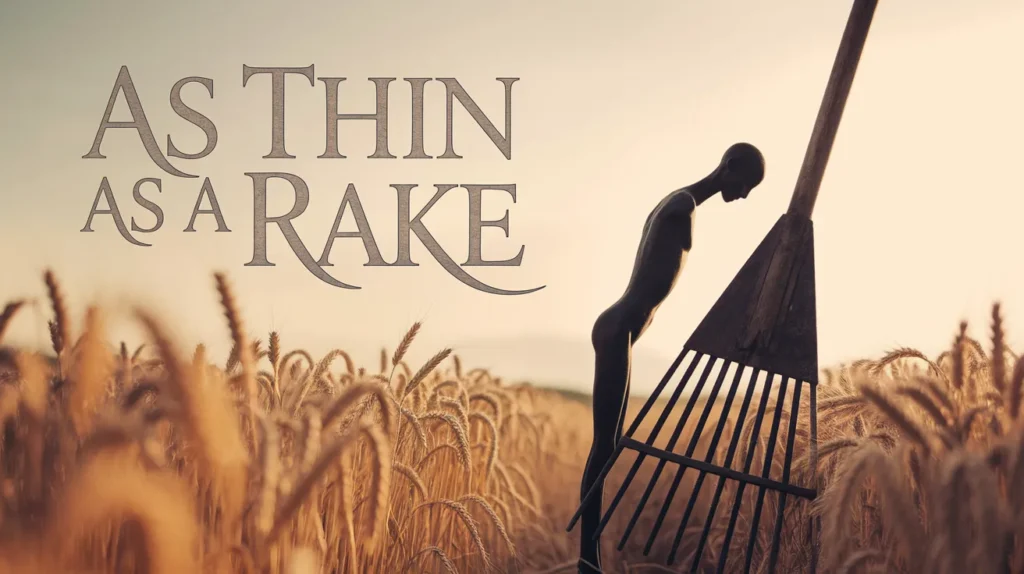
Meaning: Very skinny.
Usage Insight: Used when describing someone extremely slim.
Examples:
- He became as thin as a rake after illness.
- The model looked as thin as a rake.
- My cousin is as thin as a rake.
- The stray dog looked as thin as a rake.
- He remained as thin as a rake.
26. As wise as an owl
Meaning: Very wise or intelligent.
Usage Insight: Often used when praising someone’s wisdom.
Examples:
- The old teacher is as wise as an owl.
- My grandfather is as wise as an owl.
- The mentor seemed as wise as an owl.
- Her advice sounded as wise as an owl.
- The professor appeared as wise as an owl.
27. As red as a rose
Meaning: Deep red in color.
Usage Insight: Often used in romantic or descriptive writing.
Examples:
- Her cheeks were as red as a rose.
- The sunset looked as red as a rose.
- The apple was as red as a rose.
- His face turned as red as a rose.
- The flowers bloomed as red as roses.
28. As gentle as rain
Meaning: Very soft and soothing.
Usage Insight: Often used in poetic descriptions of voice or touch.
Examples:
- Her voice was as gentle as rain.
- The music sounded as gentle as rain.
- His touch felt as gentle as rain.
- The breeze moved as gentle as rain.
- She spoke as gentle as rain.
29. As quick as a flash
Meaning: Extremely fast.
Usage Insight: Used to describe sudden or rapid movement.
Examples:
- The rabbit ran as quick as a flash.
- He finished the task as quick as a flash.
- The answer came as quick as a flash.
- She reacted as quick as a flash.
- The car passed as quick as a flash.
30. As happy as a lark
Meaning: Extremely happy.
Usage Insight: Often used when describing cheerful moods.
Examples:
- The child woke up as happy as a lark.
- She felt as happy as a lark on vacation.
- He walked into the party as happy as a lark.
- The bride looked as happy as a lark.
- After the good news, she was as happy as a lark.
How to Use Similes Effectively in Writing
Using similes skillfully can make your writing more expressive and engaging. Here are a few practical tips:
1. Choose familiar comparisons Readers connect more easily with similes that compare fear to common experiences like storms, darkness, or shadows.
2. Avoid overusing similes Too many comparisons in one paragraph can overwhelm readers. Use them strategically for emotional impact.
3. Match the tone of your writing Dark or suspenseful stories benefit from eerie and chilling comparisons.
4. Use nature imagery Nature similes—storms, forests, lightning, and wind—often create powerful emotional scenes.
5. Keep the comparison clear A good simile should immediately make sense and create a vivid mental picture.
FAQs
1. What are powerful similes for scary situations?
Powerful similes for scary situations are comparisons that use vivid imagery to describe fear, such as “as chilling as a graveyard at midnight.”
2. What is the difference between a simile and a metaphor?
A simile compares two things using like or as, while a metaphor directly states that one thing is another.
Example: Simile – Her scream was like thunder. Metaphor – Her scream was thunder.
3. Why are similes important in literature?
Similes help writers create vivid imagery, making scenes more emotional, memorable, and easier for readers to visualize.
4. Can similes be used in academic writing?
Yes. While creative similes are more common in storytelling, simple comparisons can clarify ideas in essays and explanations.
5. How can writers create original similes?
Writers can create new similes by comparing emotions or actions with natural elements, everyday objects, or sensory experiences.
Conclusion
Fear is one of the most powerful emotions a writer can explore, and powerful similes for scary scenes help bring that emotion to life. Through vivid comparisons, writers transform simple descriptions into unforgettable images filled with tension, suspense, and atmosphere. Whether drawn from nature, darkness, or mysterious sounds, similes allow readers to feel fear rather than simply read about it.
From whispers in empty houses to storms in the night, these comparisons add depth and intensity to storytelling. When used thoughtfully, similes enrich language, strengthen imagery, and make writing more expressive. By mastering the art of similes, writers can create scenes that are not only descriptive but also emotionally powerful and deeply engaging for readers.