

Fear is one of the strongest emotions we experience as human beings. It can shake us like a storm, freeze us in silence, or push us toward courage and growth. In figurative language, similes help us describe fear in vivid, unforgettable ways.
They compare one feeling to something familiar, making emotions easier to understand and visualize. That is why powerful similes for fear are essential tools in creative writing, poetry, storytelling, and even academic essays.
They transform simple descriptions into meaningful comparisons filled with depth and imagery. When used well, similes become symbols of strength, resilience, wisdom, and emotional truth. In this guide, you will discover original and expressive similes that make fear come alive on the page.
What Is a Simile?
A simile is a figure of speech that compares two different things using the words “like” or “as.” It helps readers clearly picture emotions, actions, or qualities.
Example: Her fear was like ice crawling down her spine.
This comparison helps the reader feel the cold, sharp sensation of fear instead of just being told that she was afraid.
1. Fear like a shadow that never leaves
Meaning: Fear that constantly follows someone.
Usage Insight: Works well in emotional storytelling and reflective essays.
Examples:
- His fear followed him like a shadow that never leaves.
- The memory clung to her like a shadow at sunset.
- Doubt trailed him like a dark companion.
- Anxiety stood beside her like a silent twin.
- The threat lingered like a shape in dim light.
2. Fear like ice in the veins
Meaning: Sudden, freezing terror.
Usage Insight: Perfect for suspense or thriller scenes.
Examples:
- Fear ran through him like ice in his veins.
- The scream froze her like winter air.
- Panic chilled him instantly.
- Terror stiffened her body like frost.
- The news struck him cold and sharp.
3. Fear like a trapped bird in the chest
Meaning: Racing heartbeat and panic.
Usage Insight: Ideal for intense emotional moments.
Examples:
- His heart fluttered like a trapped bird in his chest.
- Anxiety beat against her ribs.
- Fear shook him from the inside.
- Her pulse jumped wildly.
- The dread thumped in his chest.
4. Fear like thunder before a storm
Meaning: Fear that warns something bad is coming.
Usage Insight: Strong in descriptive and symbolic writing.
Examples:
- The silence felt like thunder before a storm.
- Fear rolled through her thoughts.
- The tension rumbled quietly.
- His worry built like distant clouds.
- The room felt heavy with warning.
5. Fear like a deer in headlights
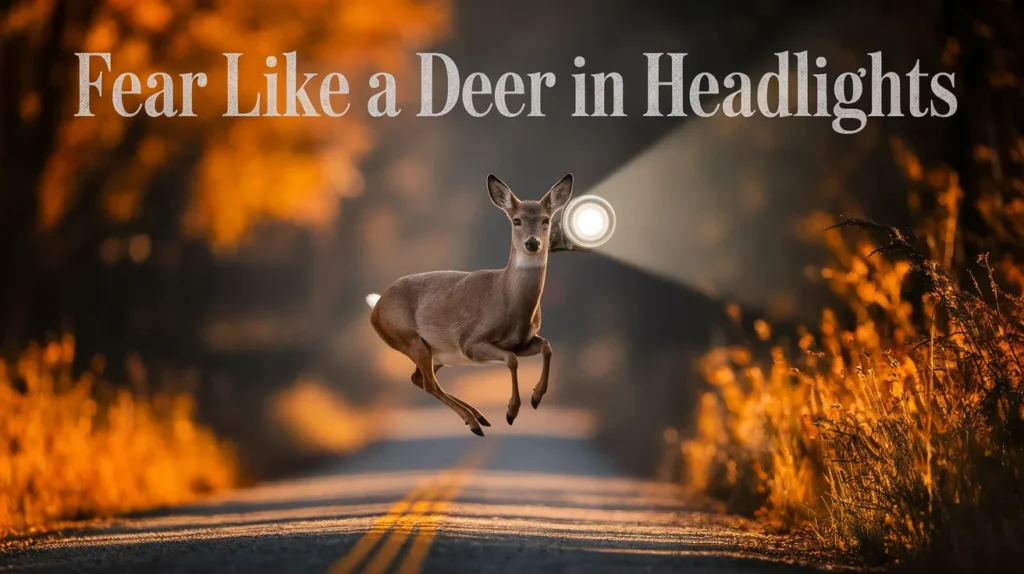
Meaning: Frozen in shock.
Usage Insight: Useful in narrative scenes.
Examples:
- He stood like a deer in headlights.
- She stared without moving.
- The child froze under pressure.
- He blinked in stunned silence.
- She couldn’t react at all.
6. Fear like chains around the ankles
Meaning: Fear that prevents action.
Usage Insight: Great for motivational or reflective writing.
Examples:
- Doubt held him like chains.
- Fear stopped her steps.
- Anxiety weighed him down.
- She felt stuck in place.
- Worry locked him still.
7. Fear like fog covering the mind
Meaning: Confusion caused by fear.
Usage Insight: Ideal for psychological themes.
Examples:
- Fear clouded her thoughts like fog.
- Panic blurred his reasoning.
- Anxiety dimmed her clarity.
- His mind felt unclear.
- The dread blocked his focus.
8. Fear like a whisper in the dark
Meaning: Subtle, quiet fear.
Usage Insight: Excellent for suspenseful writing.
Examples:
- Fear crept in like a whisper in the dark.
- Doubt murmured softly.
- The silence felt uneasy.
- Anxiety brushed past him.
- The tension was barely audible.
9. Fear like a crack in fragile glass
Meaning: Sudden emotional break.
Usage Insight: Strong in dramatic writing.
Examples:
- His confidence shattered like fragile glass.
- Fear split her calm.
- Panic fractured his courage.
- Her composure broke suddenly.
- The moment snapped her peace.
10. Fear like waves crashing against rocks
Meaning: Repeated, overwhelming fear.
Usage Insight: Works beautifully in poetic writing.
Examples:
- Fear crashed over him like waves.
- Anxiety returned again and again.
- The worry surged repeatedly.
- Panic struck in cycles.
- The dread would not stop.
11. Fear like fire in dry grass
Meaning: Fear spreading quickly.
Usage Insight: Effective in action scenes.
Examples:
- Panic spread like fire in dry grass.
- Fear moved through the crowd.
- Anxiety ignited instantly.
- The rumor sparked terror.
- Dread spread rapidly.
12. Fear like a ticking clock
Meaning: Growing pressure.
Usage Insight: Great for suspense narratives.
Examples:
- Fear ticked like a clock in his mind.
- Time added pressure.
- Anxiety counted down.
- The seconds felt louder.
- His heartbeat echoed urgency.
13. Fear like cold steel against skin
Meaning: Sharp, sudden fright.
Usage Insight: Strong in intense scenes.
Examples:
- The threat felt like cold steel.
- Fear cut sharply.
- Panic pierced her calm.
- Terror sliced through silence.
- The moment felt dangerous.
14. Fear like a caged storm
Meaning: Suppressed but powerful fear.
Usage Insight: Ideal for emotional buildup.
Examples:
- His fear raged like a caged storm.
- Anxiety churned inside her.
- Panic built quietly.
- The tension shook beneath the surface.
- Emotion swirled unseen.
15. Fear like roots gripping the earth

Meaning: Deep, lasting fear.
Usage Insight: Excellent for character development.
Examples:
- Fear gripped him like roots.
- Anxiety held her deeply.
- The dread anchored his thoughts.
- Worry settled firmly.
- Terror would not loosen.
16. Fear like a candle flickering in the wind
Meaning: Fragile fear that makes someone feel unstable or uncertain.
Usage Insight: Works beautifully in emotional, vulnerable, or reflective writing.
Examples:
- Her courage trembled like a candle flickering in the wind.
- His voice shook like a flame about to go out.
- My confidence wavered in that tense moment.
- She felt unsteady under the pressure.
- His hope flickered as doubt surrounded him.
17. Fear like a wolf howling at night
Meaning: Fear that feels lonely, haunting, and unsettling.
Usage Insight: Excellent for atmospheric or suspenseful descriptions.
Examples:
- The silence carried fear like a wolf howling at night.
- A lonely dread echoed in her heart.
- The darkness felt alive with unease.
- His thoughts howled in the quiet room.
- The distant sound filled her with chilling anxiety.
18. Fear like quicksand beneath the feet
Meaning: Fear that traps and overwhelms gradually.
Usage Insight: Perfect for situations where tension slowly increases.
Examples:
- Panic rose like quicksand beneath his feet.
- She felt herself sinking into doubt.
- The pressure pulled him deeper into worry.
- Anxiety tightened as he struggled to move forward.
- The situation swallowed her confidence slowly.
19. Fear like a locked door with no key
Meaning: Fear that feels impossible to escape.
Usage Insight: Strong in psychological or emotional narratives.
Examples:
- His fear stood like a locked door with no key.
- She felt trapped inside her own thoughts.
- The dread refused to let him out.
- Anxiety blocked every hopeful path.
- The moment felt sealed and suffocating.
20. Fear like a snake coiled to strike
Meaning: Sudden, alert fear ready to explode.
Usage Insight: Effective in action scenes or tense confrontations.
Examples:
- Fear tightened inside him like a snake coiled to strike.
- She waited nervously, ready for bad news.
- His muscles stiffened in anticipation.
- The tension curled beneath his calm face.
- Panic gathered quietly before bursting out.
21. Fear like a mirror reflecting worst thoughts
Meaning: Fear that magnifies insecurity and doubt.
Usage Insight: Ideal for introspective or character-driven writing.
Examples:
- Her fear reflected her worst thoughts like a cruel mirror.
- Doubt showed him everything that could go wrong.
- Anxiety replayed his insecurities.
- The moment exposed his hidden worries.
- Fear magnified every small mistake in his mind.
22. Fear like rain soaking through clothes
Meaning: Fear that slowly seeps in and overwhelms.
Usage Insight: Works well in emotional or symbolic descriptions.
Examples:
- Fear soaked into her like rain through thin clothes.
- Anxiety slowly covered his confidence.
- The dread crept deeper with every second.
- Panic settled heavily on her shoulders.
- Worry surrounded him completely.
23. Fear like a cliff edge underfoot
Meaning: Fear of danger or risk.
Usage Insight: Powerful in moments of decision or uncertainty.
Examples:
- The choice felt like standing on a cliff edge.
- Fear balanced him between courage and retreat.
- She hesitated at the edge of risk.
- The future seemed dangerously close.
- His heart pounded at the thought of falling.
24. Fear like smoke filling a room
Meaning: Fear spreading silently and suffocating.
Usage Insight: Excellent for building tension gradually.
Examples:
- Fear spread like smoke filling a room.
- Anxiety clouded their conversation.
- The tension thickened slowly.
- Panic made it hard to breathe.
- Dread hung heavily in the air.
25. Fear like a drum beating in the chest

Meaning: Strong, pounding anxiety.
Usage Insight: Perfect for high-intensity scenes.
Examples:
- His heart pounded like a drum in his chest.
- Fear beat loudly within her.
- Anxiety echoed through his body.
- The sound of his heartbeat filled his ears.
- Panic thudded with every breath.
26. Fear like thorns in bare skin
Meaning: Sharp, painful fear.
Usage Insight: Works in emotionally raw writing.
Examples:
- Her fear pricked like thorns against bare skin.
- Anxiety stung him unexpectedly.
- The dread hurt more than he expected.
- Panic scratched at her calm.
- Fear pierced his confidence.
27. Fear like a storm-tossed sea
Meaning: Chaotic, uncontrollable fear.
Usage Insight: Strong for dramatic emotional turmoil.
Examples:
- His thoughts churned like a storm-tossed sea.
- Fear crashed wildly inside her.
- Anxiety surged without warning.
- Panic rose and fell violently.
- The turmoil refused to settle.
28. Fear like a heavy stone in the stomach
Meaning: Deep, sinking anxiety.
Usage Insight: Excellent for subtle emotional moments.
Examples:
- Fear sat like a heavy stone in his stomach.
- Anxiety weighed her down quietly.
- The dread settled deep inside him.
- Panic tightened her core.
- Worry lingered heavily within.
29. Fear like darkness swallowing light
Meaning: Overpowering, overwhelming fear.
Usage Insight: Ideal for symbolic or poetic writing.
Examples:
- Fear spread like darkness swallowing light.
- Anxiety overshadowed his hope.
- Panic dimmed her courage.
- The dread erased her confidence.
- Terror consumed every positive thought.
30. Fear like an echo that never fades
Meaning: Lingering, lasting fear.
Usage Insight: Strong for reflective endings or trauma-related writing.
Examples:
- His fear remained like an echo that never fades.
- The memory haunted her quietly.
- Anxiety lingered long after the danger passed.
- The dread repeated itself in his mind.
- Fear stayed with her even in silence.
How to Use Similes Effectively in Writing
To make powerful similes for fear truly effective:
- Be specific: Choose comparisons readers can clearly imagine.
- Match tone: Use darker similes for suspense, softer ones for reflection.
- Avoid clichés: Create fresh comparisons.
- Use sparingly: Too many similes can overwhelm your writing.
- Blend naturally: Ensure the simile fits smoothly into the sentence.
Similes work beautifully in poems, short stories, essays, songs, and creative descriptions because they add emotion and clarity without long explanations.
FAQs
1. What makes a simile powerful?
A powerful simile creates a vivid mental image and emotional impact.
2. How are similes different from metaphors?
Similes use “like” or “as” to compare, while metaphors make direct comparisons.
3. Can similes be used in academic writing?
Yes, especially in literature analysis and descriptive essays.
4. Why are similes important in literature?
They enhance imagery, deepen emotional meaning, and engage readers.
5. How can I create original similes?
Think about sensory experiences—what fear feels, sounds, or looks like—and compare it to something concrete.
Conclusion
Powerful similes for fear bring emotion to life. They turn invisible feelings into clear, striking images that readers can see and feel. Whether you are writing poetry, fiction, or essays, these comparisons add depth, clarity, and emotional richness to your language.
By choosing thoughtful and original similes, you allow fear to become more than just a word—it becomes an experience your readers will never forget.