

Crying is one of the most human experiences we share, yet it is often difficult to describe with plain words. This is where similes become essential in figurative language. A simile allows writers to compare crying to vivid images from nature and daily life, making emotion easier to see, feel, and understand.
In literature, similes for crying often express not only sadness, but also strength, growth, resilience, wisdom, and emotional release. Tears can symbolize pain, love, loss, healing, or quiet courage, depending on how they are described.
By using the best similes for crying, writers transform tears into meaningful comparisons that resonate deeply with readers. This article explores rich, original similes that help capture the many shades of human emotion in a clear and memorable way.
What Is a Simile?
A simile is a figure of speech that compares two different things using like or as to create a vivid image or clearer meaning.
Example: She cried like rain falling softly on a silent lake.
Best Similes for Crying
1. Crying like rain soaking dry ground
Meaning: Emotional release after long suppression.
Usage Insight: Works well when showing relief mixed with sadness.
Examples:
- She cried like rain soaking dry ground after years of silence.
- He finally cried like rain soaking dry ground when the truth came out.
- Her tears fell like rain soaking dry ground in the quiet room.
- The child cried like rain soaking dry ground after holding fear inside.
- Grief poured out like rain soaking dry ground at last.
2. Crying like waves breaking on the shore
Meaning: Repeated waves of emotion.
Usage Insight: Ideal for ongoing or uncontrollable sadness.
Examples:
- He cried like waves breaking on the shore, again and again.
- Her sobs came like waves breaking on the shore.
- Grief returned like waves breaking on the shore each night.
- She cried like waves breaking on the shore of her heart.
- The pain rose like waves breaking on the shore.
3. Crying like a storm trapped in the chest
Meaning: Intense emotions held inside.
Usage Insight: Strong for internal conflict and tension.
Examples:
- He cried like a storm trapped in the chest.
- Her tears released a storm trapped in the chest.
- The silence broke as she cried like a storm trapped in the chest.
- Fear burst out like a storm trapped in the chest.
- He shook as the storm trapped in his chest finally escaped.
4. Crying like dew slipping from leaves
Meaning: Quiet, gentle sadness.
Usage Insight: Best for soft, reflective moments.
Examples:
- She cried like dew slipping from leaves at dawn.
- Tears fell like dew slipping from leaves.
- He cried like dew slipping from leaves, unnoticed.
- Her sadness rested like dew slipping from leaves.
- The goodbye came with tears like dew slipping from leaves.
5. Crying like thunder after long silence
Meaning: Sudden emotional outburst.
Usage Insight: Effective for dramatic turning points.
Examples:
- He cried like thunder after long silence.
- Her voice broke like thunder after long silence.
- The room shook as she cried like thunder after long silence.
- Grief erupted like thunder after long silence.
- His tears crashed like thunder after long silence.
6. Crying like a river breaking its banks

Meaning: Overwhelming emotion.
Usage Insight: Ideal for intense grief scenes.
Examples:
- She cried like a river breaking its banks.
- His sorrow spilled like a river breaking its banks.
- Tears rushed like a river breaking its banks.
- He collapsed, crying like a river breaking its banks.
- Pain flowed like a river breaking its banks.
7. Crying like fog rolling through a valley
Meaning: Slow, heavy sadness.
Usage Insight: Works well for lingering emotions.
Examples:
- She cried like fog rolling through a valley.
- His sadness crept in like fog rolling through a valley.
- Tears blurred her sight like fog rolling through a valley.
- Grief settled like fog rolling through a valley.
- He breathed through tears like fog rolling through a valley.
8. Crying like a candle melting in the dark
Meaning: Silent emotional exhaustion.
Usage Insight: Best for quiet, private sorrow.
Examples:
- She cried like a candle melting in the dark.
- Tears fell like wax from a candle melting in the dark.
- He wept like a candle melting in the dark, unseen.
- Her strength faded like a candle melting in the dark.
- Pain dripped like a candle melting in the dark.
9. Crying like wind shaking bare trees
Meaning: Raw and exposed emotion.
Usage Insight: Effective for vulnerability.
Examples:
- He cried like wind shaking bare trees.
- Her sobs sounded like wind shaking bare trees.
- Grief moved through him like wind shaking bare trees.
- Tears came with the force of wind shaking bare trees.
- She stood crying like wind shaking bare trees.
10. Crying like stars fading before sunrise
Meaning: Sadness mixed with acceptance.
Usage Insight: Ideal for endings and closure.
Examples:
- She cried like stars fading before sunrise.
- His tears softened like stars fading before sunrise.
- Pain dimmed like stars fading before sunrise.
- She let go, crying like stars fading before sunrise.
- Hope returned as tears faded like stars before sunrise.
11. Crying like glass cracking under pressure
Meaning: Emotional breaking point.
Usage Insight: Strong for psychological tension.
Examples:
- He cried like glass cracking under pressure.
- Her voice split like glass cracking under pressure.
- Tears fell as emotions cracked like glass under pressure.
- She finally broke, crying like glass cracking under pressure.
- Pain shattered like glass cracking under pressure.
12. Crying like snow melting in spring
Meaning: Healing and release.
Usage Insight: Great for emotional recovery scenes.
Examples:
- She cried like snow melting in spring.
- Tears flowed like snow melting in spring.
- His grief softened like snow melting in spring.
- She healed while crying like snow melting in spring.
- Sadness thinned like snow melting in spring.
13. Crying like a wounded animal hiding
Meaning: Deep pain mixed with fear.
Usage Insight: Effective for trauma-focused writing.
Examples:
- He cried like a wounded animal hiding.
- She wept like a wounded animal hiding from the world.
- Fear shook him as he cried like a wounded animal hiding.
- Tears came quietly like a wounded animal hiding.
- Pain curled inward like a wounded animal hiding.
14. Crying like bells ringing in empty air
Meaning: Emotional pain that feels unheard.
Usage Insight: Best for loneliness themes.
Examples:
- She cried like bells ringing in empty air.
- His sobs echoed like bells ringing in empty air.
- Tears fell like bells ringing in empty air.
- Grief sounded like bells ringing in empty air.
- Her pain rang like bells ringing in empty air.
15. Crying like ink bleeding on paper
Meaning: Emotion permanently leaving a mark.
Usage Insight: Ideal for reflective writing.
Examples:
- She cried like ink bleeding on paper.
- His tears marked him like ink bleeding on paper.
- Pain spread like ink bleeding on paper.
- Memory stained her like ink bleeding on paper.
- Grief settled like ink bleeding on paper.
16. Crying like broken clouds releasing rain
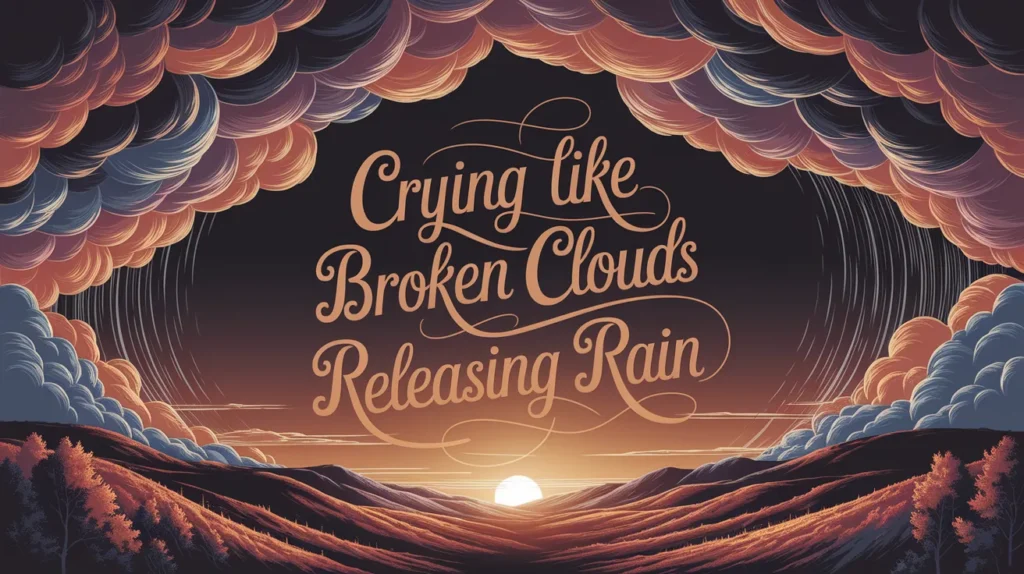
Meaning: Emotional release after emotional pressure builds up.
Usage Insight: Best for moments of confession, relief, or emotional honesty.
Examples:
- She cried like broken clouds releasing rain after holding everything in.
- His tears fell like broken clouds releasing rain at last.
- The truth came out with crying like broken clouds releasing rain.
- Grief poured freely like broken clouds releasing rain.
- She felt lighter after crying like broken clouds releasing rain.
17. Crying like a violin strained by sorrow
Meaning: Emotional pain expressed through sound or tone.
Usage Insight: Perfect for artistic, musical, or lyrical writing.
Examples:
- Her voice shook, crying like a violin strained by sorrow.
- He wept softly like a violin strained by sorrow.
- The room filled with pain crying like a violin strained by sorrow.
- Her sobs sounded like a violin strained by sorrow.
- Loss sang through him like a violin strained by sorrow.
18. Crying like shadows stretching at dusk
Meaning: Slow, quiet sadness settling in.
Usage Insight: Works well for reflective or melancholy scenes.
Examples:
- She cried like shadows stretching at dusk.
- His sadness grew like shadows stretching at dusk.
- Tears followed the day like shadows stretching at dusk.
- Grief crept in like shadows stretching at dusk.
- Silence watched as she cried like shadows stretching at dusk.
19. Crying like salt dissolving in water
Meaning: Pain blending quietly into everyday life.
Usage Insight: Ideal for subtle, inward emotional writing.
Examples:
- She cried like salt dissolving in water, unnoticed.
- His sadness blended in like salt dissolving in water.
- Tears disappeared like salt dissolving in water.
- Grief mixed into life like salt dissolving in water.
- He carried pain like salt dissolving in water.
20. Crying like fire losing its flame
Meaning: Emotional exhaustion or burnout.
Usage Insight: Best for themes of weariness or defeat.
Examples:
- She cried like fire losing its flame.
- His strength faded like fire losing its flame.
- Tears came as passion fell like fire losing its flame.
- Hope dimmed like fire losing its flame.
- He wept quietly like fire losing its flame.
21. Crying like birds leaving winter skies
Meaning: Sadness mixed with transition or change.
Usage Insight: Excellent for farewells and new beginnings.
Examples:
- She cried like birds leaving winter skies.
- Tears followed change like birds leaving winter skies.
- His grief moved on like birds leaving winter skies.
- She let go, crying like birds leaving winter skies.
- Pain lifted slowly like birds leaving winter skies.
22. Crying like moonlight trembling on water
Meaning: Gentle sadness touched with beauty.
Usage Insight: Ideal for poetic or romantic writing.
Examples:
- She cried like moonlight trembling on water.
- Tears shimmered like moonlight trembling on water.
- His sadness glowed like moonlight trembling on water.
- Pain reflected softly like moonlight trembling on water.
- The moment felt fragile like moonlight trembling on water.
23. Crying like doors closing softly
Meaning: Quiet acceptance or emotional closure.
Usage Insight: Works best in endings or resolutions.
Examples:
- She cried like doors closing softly behind her.
- His tears marked goodbye like doors closing softly.
- Grief ended gently like doors closing softly.
- Pain settled like doors closing softly.
- She breathed out, crying like doors closing softly.
24. Crying like echoes fading in a cave
Meaning: Emotional pain that slowly disappears.
Usage Insight: Strong for healing or time-passing scenes.
Examples:
- She cried like echoes fading in a cave.
- His grief softened like echoes fading in a cave.
- Tears grew quiet like echoes fading in a cave.
- Pain lingered like echoes fading in a cave.
- Memory weakened like echoes fading in a cave.
25. Crying like petals falling from flowers
Meaning: Gentle sadness tied to loss or change.
Usage Insight: Best for tender, emotional moments.
Examples:
- She cried like petals falling from flowers.
- Tears dropped like petals falling from flowers.
- His grief drifted like petals falling from flowers.
- Beauty remained even while crying like petals falling from flowers.
- Loss arrived softly like petals falling from flowers.
26. Crying like dust rising after footsteps

Meaning: Pain stirred by memory or movement.
Usage Insight: Ideal for reflective storytelling.
Examples:
- She cried like dust rising after footsteps.
- His past followed him like dust rising after footsteps.
- Tears surfaced like dust rising after footsteps.
- Memory stirred pain like dust rising after footsteps.
- He paused, crying like dust rising after footsteps.
27. Crying like breath fogging cold air
Meaning: Emotion visible but restrained.
Usage Insight: Great for quiet, tense scenes.
Examples:
- She cried like breath fogging cold air.
- His sadness showed like breath fogging cold air.
- Tears formed like breath fogging cold air.
- Pain hovered like breath fogging cold air.
- He stood crying like breath fogging cold air.
28. Crying like waves calming at night
Meaning: Sadness slowly settling into peace.
Usage Insight: Best for healing and acceptance scenes.
Examples:
- She cried like waves calming at night.
- His grief eased like waves calming at night.
- Tears slowed like waves calming at night.
- Pain rested like waves calming at night.
- Sleep followed crying like waves calming at night.
29. Crying like embers cooling in ash
Meaning: Emotion fading after intensity.
Usage Insight: Works well for emotional aftermath.
Examples:
- She cried like embers cooling in ash.
- His anger softened like embers cooling in ash.
- Tears faded like embers cooling in ash.
- Pain dimmed like embers cooling in ash.
- The storm passed like embers cooling in ash.
30. Crying like silence after music ends
Meaning: Deep emotional stillness after loss.
Usage Insight: Powerful for final scenes and reflection.
Examples:
- She cried like silence after music ends.
- His grief settled like silence after music ends.
- Tears fell into stillness like silence after music ends.
- Loss remained like silence after music ends.
- He sat crying like silence after music ends.
How to Use Similes Effectively in Writing
When using similes, choose images that match the emotion you want to express. In poems and songs, nature similes often create beauty and softness. In stories, similes reveal inner emotion without direct explanation.
In essays or academic writing, keep similes clear and purposeful. Avoid overusing them, and always ensure the comparison feels natural and relevant.
FAQs
1. What are the best similes for crying?
They are comparisons that clearly express sadness, release, or emotional depth.
2. How are similes different from metaphors?
Similes use like or as, while metaphors make direct comparisons.
3. Are similes used in literature?
Yes, similes are widely used to convey emotion and imagery.
4. Can similes describe positive crying?
Absolutely—tears can express joy, relief, and healing.
5. Are similes acceptable in academic writing?
Yes, when used sparingly and clearly.
Conclusion
The best similes for crying transform tears into powerful images that speak to the heart. They help writers express sadness, strength, healing, and resilience with clarity and beauty. Through nature similes and thoughtful comparisons, crying becomes more than emotion—it becomes meaning.
Whether used in poetry, stories, essays, or literature, these similes deepen emotional connection and enrich language, turning simple tears into unforgettable expression.