

Fear is one of the most powerful human emotions, yet it can be surprisingly difficult to describe. This is where similes become incredibly helpful. Similes allow us to compare one feeling to something familiar, making abstract emotions easier to understand and visualize.
In figurative language, similes add color, depth, and emotional clarity to writing. They turn ordinary sentences into powerful images that readers can see and feel.
When we explore the best similes for being scared, we discover how comparisons can symbolize vulnerability, survival instinct, growth, resilience, wisdom, and deep human emotion.
Fear is not only about weakness—it often reveals courage, awareness, and transformation. Through creative comparisons, writers can show trembling hands, racing hearts, or silent dread in ways that feel real and relatable.
In this guide, you’ll find 30 original similes, complete with meanings, usage insights, and practical examples to help you master expressive writing.
What Is a Simile?
A simile is a figure of speech that compares two different things using the words “like” or “as.” It helps readers understand one idea by linking it to something familiar.
Example: He was as brave as a lion.
This comparison connects courage to a lion, making the image strong and clear.
1. As scared as a deer caught in headlights
Meaning: Frozen with sudden fear or shock.
Usage Insight: Best for moments of unexpected danger or surprise.
Examples:
- She stood as scared as a deer caught in headlights when the alarm went off.
- He looked as scared as a deer caught in headlights after hearing his name called.
- I felt as scared as a deer caught in headlights during the sudden blackout.
- The boy froze, as scared as a deer caught in headlights.
- They stared at the figure in the doorway, as scared as deer caught in headlights.
2. Like a leaf trembling in the wind
Meaning: Shaking physically due to fear or anxiety.
Usage Insight: Perfect for describing visible nervousness.
Examples:
- Her hands shook like a leaf trembling in the wind.
- He waited outside like a leaf trembling in the wind.
- I felt like a leaf trembling in the wind before speaking.
- The child stood like a leaf trembling in the wind.
- She answered softly, like a leaf trembling in the wind.
3. As scared as a rabbit in a storm
Meaning: Feeling small, helpless, and exposed.
Usage Insight: Works well in emotional or nature-based descriptions.
Examples:
- He hid behind the door, as scared as a rabbit in a storm.
- I felt as scared as a rabbit in a storm during the thunder.
- She clung to her mother, as scared as a rabbit in a storm.
- The puppy looked as scared as a rabbit in a storm.
- They huddled together, as scared as rabbits in a storm.
4. Like a shadow chased by light
Meaning: Trying to escape unavoidable fear.
Usage Insight: Ideal for poetic or dramatic scenes.
Examples:
- He ran like a shadow chased by light.
- My thoughts scattered like a shadow chased by light.
- She hurried away like a shadow chased by light.
- Fear followed him like a shadow chased by light.
- I felt like a shadow chased by light that night.
5. As scared as a kitten near a barking dog
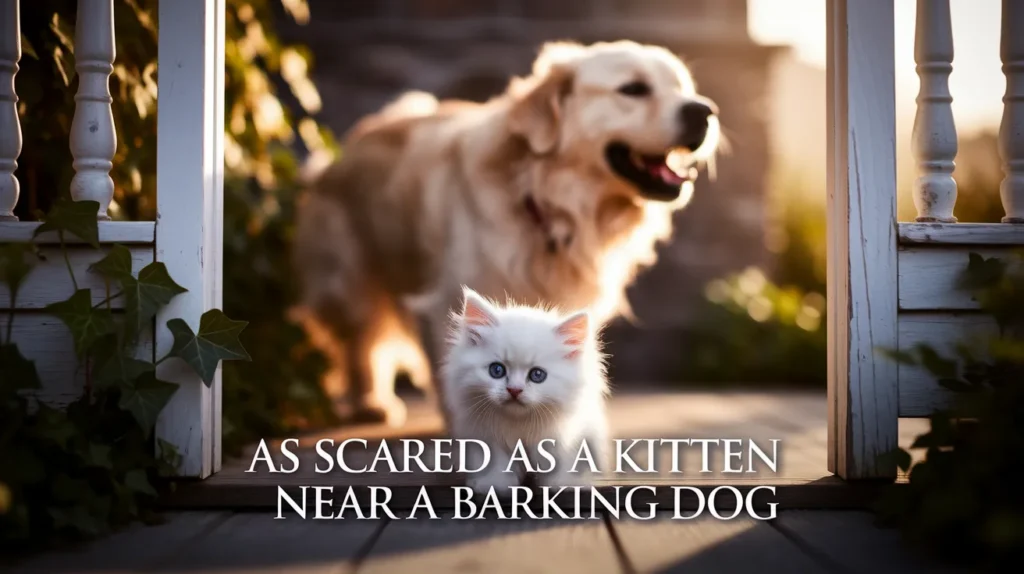
Meaning: Feeling intimidated and vulnerable.
Usage Insight: Useful when showing imbalance of power.
Examples:
- He stood as scared as a kitten near a barking dog.
- She felt as scared as a kitten near a barking dog in the meeting.
- I was as scared as a kitten near a barking dog before the interview.
- The child looked as scared as a kitten near a barking dog.
- They waited quietly, as scared as kittens near barking dogs.
6. Like ice melting under a blazing sun
Meaning: Courage fading under pressure.
Usage Insight: Effective for emotional or internal fear.
Examples:
- His bravery melted like ice under a blazing sun.
- I felt like ice melting under a blazing sun.
- Her confidence faded like ice under a blazing sun.
- They stood silent, like ice melting under a blazing sun.
- My strength dissolved like ice under a blazing sun.
7. As scared as a bird trapped indoors
Meaning: Panicked and desperate to escape.
Usage Insight: Perfect for confined situations.
Examples:
- She fluttered about, as scared as a bird trapped indoors.
- He felt as scared as a bird trapped indoors during the exam.
- I paced the room, as scared as a bird trapped indoors.
- They looked as scared as birds trapped indoors.
- The boy cried, as scared as a bird trapped indoors.
8. Like thunder rumbling before a storm
Meaning: Fear slowly building inside.
Usage Insight: Great for suspense and tension.
Examples:
- Dread grew inside me like thunder rumbling before a storm.
- He sensed danger like thunder before a storm.
- Her fear rolled through her like thunder before a storm.
- The silence felt like thunder rumbling before a storm.
- Anxiety gathered like thunder before a storm.
9. As scared as a mouse in a cat’s shadow
Meaning: Extremely fearful in the presence of danger.
Usage Insight: Strong predator-prey imagery.
Examples:
- He was as scared as a mouse in a cat’s shadow.
- I felt as scared as a mouse in a cat’s shadow.
- She stood quietly, as scared as a mouse in a cat’s shadow.
- The child hid, as scared as a mouse in a cat’s shadow.
- They waited silently, as scared as mice in a cat’s shadow.
10. Like a candle flickering in the dark
Meaning: Fragile and uncertain under fear.
Usage Insight: Beautiful in poetic writing.
Examples:
- Her voice trembled like a candle flickering in the dark.
- I felt like a candle flickering in the dark.
- His courage wavered like a candle flickering in the dark.
- They stood there like candles flickering in the dark.
- Hope flickered like a candle in the dark.
11. As scared as a fish out of water
Meaning: Uncomfortable and out of place.
Usage Insight: Good for social anxiety situations.
Examples:
- I felt as scared as a fish out of water at the party.
- He looked as scared as a fish out of water in the new school.
- She stood as scared as a fish out of water on stage.
- They seemed as scared as fish out of water.
- The intern felt as scared as a fish out of water.
12. Like a heart pounding against a drum
Meaning: Heart racing with fear.
Usage Insight: Ideal for physical fear reactions.
Examples:
- My chest thudded like a heart pounding against a drum.
- He breathed hard, like a heart pounding against a drum.
- She waited, her pulse beating like a drum.
- I stood frozen, my heart pounding like a drum.
- The silence echoed with his heart pounding like a drum.
13. As scared as a child lost in a crowd
Meaning: Feeling abandoned and anxious.
Usage Insight: Strong emotional vulnerability.
Examples:
- She looked as scared as a child lost in a crowd.
- I felt as scared as a child lost in a crowd.
- He stood there, as scared as a child lost in a crowd.
- They searched around, as scared as children lost in a crowd.
- The boy cried, as scared as a child lost in a crowd.
14. Like a wolf sensing danger
Meaning: Alert and fearful at once.
Usage Insight: Good for instinctive fear.
Examples:
- He turned quickly like a wolf sensing danger.
- I froze like a wolf sensing danger.
- She listened like a wolf sensing danger.
- They waited like wolves sensing danger.
- His eyes widened like a wolf sensing danger.
15. As scared as a soldier before battle
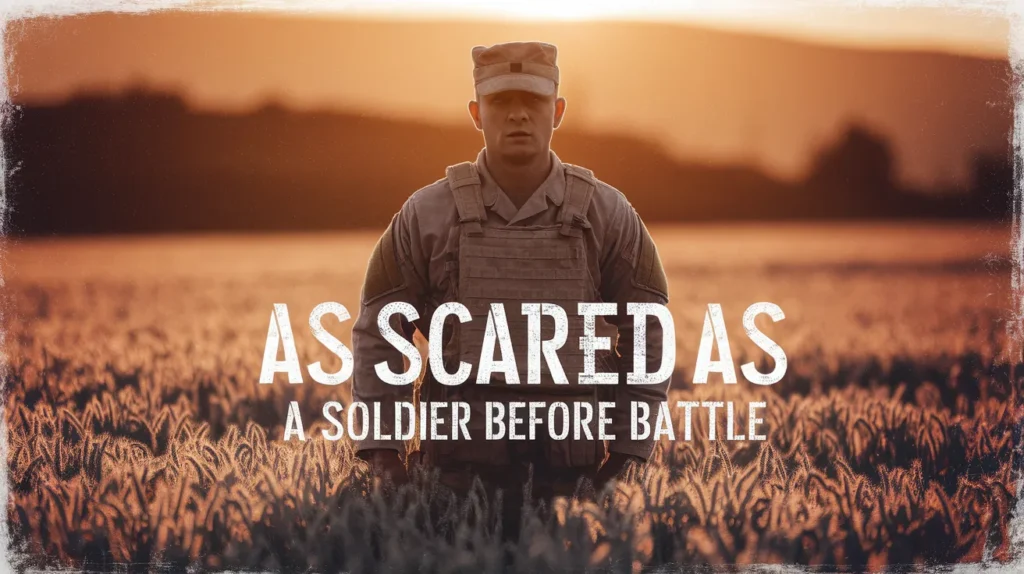
Meaning: Afraid but aware of responsibility.
Usage Insight: Shows courage mixed with fear.
Examples:
- He felt as scared as a soldier before battle.
- I stood there, as scared as a soldier before battle.
- She looked as scared as a soldier before battle.
- They prepared, as scared as soldiers before battle.
- My heart felt as scared as a soldier before battle.
16. Like a mirror cracking under pressure
Meaning: Breaking emotionally under stress.
Usage Insight: Ideal for mental strain scenes.
Examples:
- She felt like a mirror cracking under pressure.
- I stood there like a mirror cracking under pressure.
- His confidence split like a mirror under pressure.
- They seemed like mirrors cracking under pressure.
- My calm shattered like a mirror under pressure.
17. As scared as a sailor in a sinking ship
Meaning: Overwhelmed by unavoidable danger.
Usage Insight: Works for extreme crisis.
Examples:
- He felt as scared as a sailor in a sinking ship.
- I stood there as scared as a sailor in a sinking ship.
- She looked as scared as a sailor in a sinking ship.
- They panicked, as scared as sailors in a sinking ship.
- The crew felt as scared as sailors in a sinking ship.
18. Like footsteps echoing in an empty hall
Meaning: Fear magnified by silence.
Usage Insight: Perfect for suspense scenes.
Examples:
- My fear echoed like footsteps in an empty hall.
- She walked like footsteps echoing in an empty hall.
- He waited, fear echoing like footsteps in an empty hall.
- The sound felt like footsteps in an empty hall.
- I stood there, like footsteps echoing in an empty hall.
19. As scared as a climber losing grip
Meaning: Feeling unstable and unsafe.
Usage Insight: Good for moments of risk.
Examples:
- He felt as scared as a climber losing grip.
- I stood there, as scared as a climber losing grip.
- She looked as scared as a climber losing grip.
- They trembled, as scared as climbers losing grip.
- My thoughts slipped like a climber losing grip.
20. Like a cloud darkening before rain
Meaning: Fear slowly spreading.
Usage Insight: Excellent for subtle tension.
Examples:
- Dread grew like a cloud darkening before rain.
- He felt fear gathering like a cloud before rain.
- She stood there, like a cloud darkening before rain.
- The mood shifted like a cloud before rain.
- My thoughts darkened like clouds before rain.
21. As scared as a traveler lost at night
Meaning: Feeling uncertain, vulnerable, and unsure of direction.
Usage Insight: Perfect for describing confusion mixed with fear.
Examples:
- I felt as scared as a traveler lost at night when my phone battery died.
- She looked as scared as a traveler lost at night in the unfamiliar city.
- He stood there, as scared as a traveler lost at night without a map.
- They wandered through the forest, as scared as travelers lost at night.
- The child clung to his father, as scared as a traveler lost at night.
22. Like a branch bending in a strong wind
Meaning: Shaken and weakened by pressure or fear.
Usage Insight: Works well when showing emotional strain or instability.
Examples:
- Her confidence bent like a branch in a strong wind.
- I felt like a branch bending in a strong wind during the argument.
- He stood there, like a branch bending in a strong wind.
- They trembled like branches bending in a strong wind.
- My resolve weakened like a branch bending in a strong wind.
23. As scared as a swimmer in deep waters
Meaning: Overwhelmed and unsure of safety.
Usage Insight: Ideal for situations involving uncertainty or high risk.
Examples:
- He felt as scared as a swimmer in deep waters during the exam.
- I stood before the crowd, as scared as a swimmer in deep waters.
- She looked as scared as a swimmer in deep waters without support.
- They appeared as scared as swimmers in deep waters.
- The intern felt as scared as a swimmer in deep waters on her first day.
24. Like a door creaking in silence
Meaning: Fear that feels tense and unsettling.
Usage Insight: Excellent for suspenseful or mysterious scenes.
Examples:
- My fear crept in like a door creaking in silence.
- She spoke softly, like a door creaking in silence.
- He moved slowly, like a door creaking in silence.
- The tension rose like a door creaking in silence.
- I stood there, like a door creaking in silence.
25. As scared as a prisoner awaiting judgment
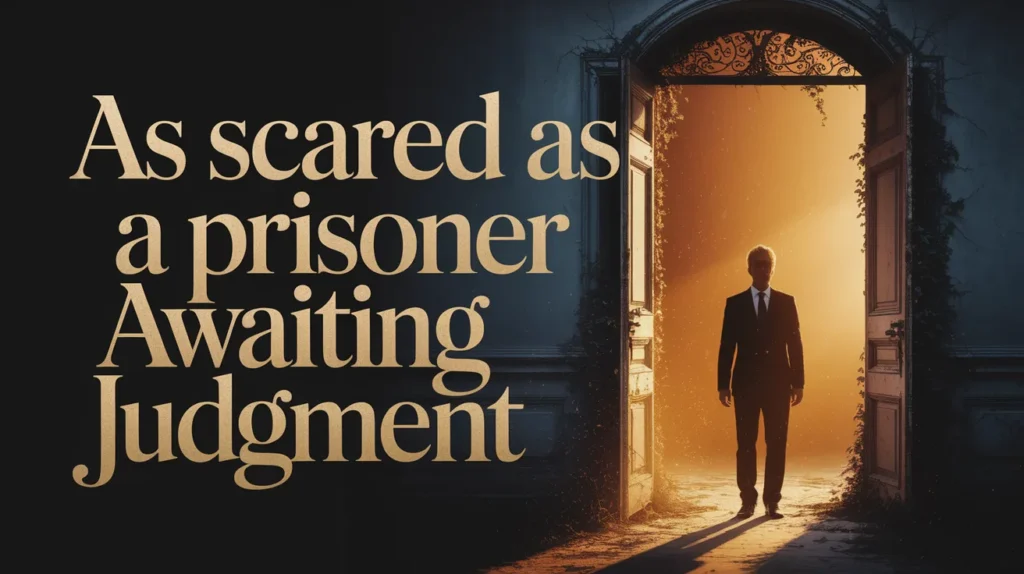
Meaning: Feeling anxious about an uncertain outcome.
Usage Insight: Strong for moments of anticipation and consequence.
Examples:
- He waited for the results, as scared as a prisoner awaiting judgment.
- I felt as scared as a prisoner awaiting judgment before the interview.
- She stood outside the office, as scared as a prisoner awaiting judgment.
- They sat quietly, as scared as prisoners awaiting judgment.
- The team felt as scared as prisoners awaiting judgment before the announcement.
26. Like smoke rising from unseen fire
Meaning: Fear quietly building beneath the surface.
Usage Insight: Works beautifully in emotional or psychological writing.
Examples:
- Anxiety rose inside me like smoke from unseen fire.
- She felt dread curling like smoke from unseen fire.
- His fear spread like smoke from unseen fire.
- The tension grew like smoke from unseen fire.
- I sensed trouble like smoke rising from unseen fire.
27. As scared as a candle about to go out
Meaning: Feeling fragile and close to losing hope.
Usage Insight: Ideal for vulnerable or emotional scenes.
Examples:
- She looked as scared as a candle about to go out.
- I felt as scared as a candle about to go out in the storm.
- He stood there, as scared as a candle about to go out.
- They waited silently, as scared as candles about to go out.
- The child’s voice sounded as scared as a candle about to go out.
28. Like a drumbeat pounding in the chest
Meaning: Intense physical fear with a racing heart.
Usage Insight: Perfect for action scenes or moments of panic.
Examples:
- My heart pounded like a drumbeat in my chest.
- He stood frozen, his pulse like a drumbeat in his chest.
- She felt fear rising like a drumbeat pounding in her chest.
- I waited, my heart beating like a drumbeat in my chest.
- They ran, hearts pounding like drumbeats in their chests.
29. As scared as a whisper in a haunted house
Meaning: Extremely uneasy and filled with dread.
Usage Insight: Great for horror or suspense writing.
Examples:
- She felt as scared as a whisper in a haunted house.
- I stood there, as scared as a whisper in a haunted house.
- He looked as scared as a whisper in a haunted house.
- They walked slowly, as scared as whispers in a haunted house.
- The silence made me feel as scared as a whisper in a haunted house.
30. Like a heartbeat racing in the dark
Meaning: Overcome by fear in an uncertain or hidden situation.
Usage Insight: Excellent for emotional or dramatic storytelling.
Examples:
- My fear raced like a heartbeat in the dark.
- She stood still, her pulse like a heartbeat racing in the dark.
- He felt panic spreading like a heartbeat racing in the dark.
- I waited, my chest tight like a heartbeat racing in the dark.
- They listened carefully, hearts racing like heartbeats in the dark.
How to Use Similes Effectively in Writing
- Be specific: Choose comparisons that clearly match the emotion.
- Avoid clichés: Try to create fresh, original similes.
- Match the tone: A poetic simile works best in stories or poems, while simple comparisons fit essays.
- Use sparingly: Too many similes can overwhelm readers.
- Engage the senses: Include sound, sight, touch, or movement for vivid imagery.
Similes are powerful tools in poems, stories, songs, essays, and creative descriptions because they transform ordinary language into memorable imagery.
FAQs
1. What are the best similes for being scared?
The best similes for being scared compare fear to relatable images like trembling leaves, trapped birds, or racing thunder.
2. What is the difference between a simile and a metaphor?
A simile uses “like” or “as,” while a metaphor directly states one thing is another.
3. Are similes important in academic writing?
Yes, when used carefully, similes clarify ideas and make explanations more engaging.
4. How do similes improve creative writing?
They add imagery, emotional depth, and vivid comparisons that help readers visualize scenes.
5. Can similes describe positive emotions too?
Absolutely. Similes can express joy, love, pride, courage, and resilience.
Conclusion
The best similes for being scared help turn fear into clear, powerful images that readers can instantly understand. Through strong comparisons, simple emotions become vivid and memorable.
Whether you are writing a story, poem, or essay, well-chosen similes add depth, clarity, and emotional impact. Used thoughtfully, they bring fear—and every other human feeling—to life in a meaningful way.