

Music has a way of reaching places in the heart that ordinary words often cannot. To describe that magic, writers turn to similes, one of the most expressive tools in figurative language. Similes help us compare music to familiar sights, feelings, and moments, making sound feel visible and alive.
When we explore beautiful similes for music, we unlock images of strength, growth, resilience, wisdom, and deep human emotion that resonate across cultures and experiences. Music, like nature and life itself, rises, falls, heals, and empowers.
Through thoughtful comparisons, we can explain not just how music sounds, but how it feels. This article will guide you through powerful similes, clear meanings, and practical examples to enrich your writing with clarity and emotional depth.
What Is a Simile?
A simile is a figure of speech that compares two different things using words like “like” or “as” to highlight a shared quality.
Example: Music flowed like a gentle river through the quiet room.
This simile compares music to a river to show its smooth, calming movement.
Music Like a Flowing River
Meaning: Music moves smoothly and continuously, creating calm and balance.
Usage Insight: Ideal for peaceful scenes, emotional healing, or reflective writing.
- The piano music flowed like a river, easing everyone into silence.
- Her voice moved like a flowing river, steady and comforting.
- The melody carried his thoughts like water over smooth stones.
- Soft music ran through the hall like a quiet stream.
- The song flowed like a river, never rushing, never stopping.
Music Like a Beating Heart
Meaning: Music feels alive and full of emotion.
Usage Insight: Works well for passionate, emotional, or personal moments.
- The drums sounded like a beating heart beneath the song.
- Music pulsed like a heart, keeping the crowd alive.
- The rhythm felt like a heartbeat guiding every step.
- Her song throbbed like a living heart.
- The bass echoed like a heart full of feeling.
Music Like Morning Sunlight
Meaning: Music brings hope, warmth, and renewal.
Usage Insight: Perfect for optimistic, uplifting scenes.
- The tune spread like morning sunlight across the room.
- His guitar notes rose like sunlight after a long night.
- Music warmed her soul like the first light of day.
- The melody shone like early sunlight on calm streets.
- The song arrived like sunlight breaking clouds.
Music Like a Whispering Breeze
Meaning: Music is soft, gentle, and soothing.
Usage Insight: Best for calm, intimate, or emotional writing.
- The flute sounded like a whispering breeze.
- Music brushed past them like a gentle wind.
- Her voice moved like a soft breeze at dusk.
- The tune floated like air through open windows.
- Music whispered like wind through leaves.
Music Like Rolling Thunder
Meaning: Music is powerful, loud, and commanding.
Usage Insight: Use for dramatic, energetic, or intense moments.
- The orchestra rose like rolling thunder.
- Music crashed like thunder in his chest.
- The drums boomed like a distant storm.
- The song struck like thunder across the crowd.
- Music thundered like a storm in motion.
Music Like Blooming Flowers
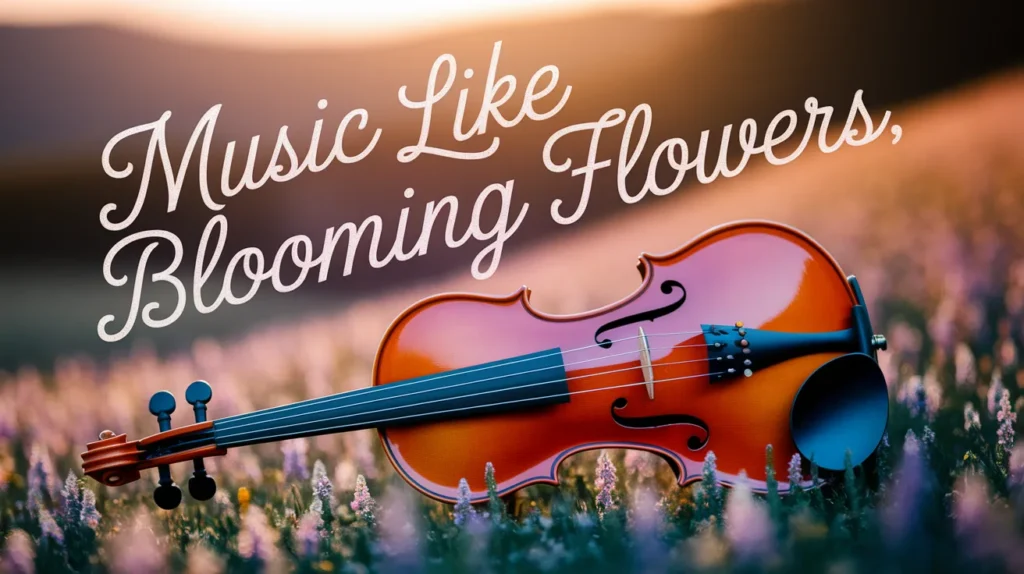
Meaning: Music grows beautifully and naturally.
Usage Insight: Ideal for describing emotional development or creativity.
- The melody opened like blooming flowers.
- Music grew like flowers in spring.
- Her song bloomed like petals in sunlight.
- Notes unfolded like flowers after rain.
- The tune blossomed with every verse.
Music Like a Guiding Star
Meaning: Music offers direction, hope, and comfort.
Usage Insight: Works well for inspirational or reflective writing.
- The song shone like a guiding star.
- Music guided him like a star in darkness.
- Her voice became a star in his silence.
- The melody led them like a steady light.
- Music glowed like a star above fear.
Music Like Ocean Waves
Meaning: Music rises and falls with emotion.
Usage Insight: Great for emotional depth and natural rhythm.
- The song moved like ocean waves.
- Music crashed and calmed like the sea.
- Her voice rolled like waves on shore.
- The rhythm flowed like the tide.
- Music echoed like waves at night.
Music Like Falling Rain
Meaning: Music is cleansing and emotional.
Usage Insight: Ideal for sadness, healing, or reflection.
- The tune fell like soft rain.
- Music washed over him like rain.
- Her song sounded like rain on glass.
- Notes dropped like steady rainfall.
- Music soothed like gentle rain.
Music Like Fire in the Soul
Meaning: Music ignites passion and energy.
Usage Insight: Perfect for intense emotion or motivation.
- The song burned like fire inside him.
- Music lit her spirit like flame.
- The rhythm sparked like fire.
- His voice flared like living fire.
- Music blazed through the room.
Music Like a Safe Embrace
Meaning: Music offers comfort and security.
Usage Insight: Use for emotional safety and warmth.
- The melody wrapped around her like a hug.
- Music held him like a warm embrace.
- Her song felt like being held.
- Notes surrounded them like comfort.
- Music embraced the lonely room.
Music Like a Rising Mountain
Meaning: Music shows strength and growth.
Usage Insight: Best for powerful or inspirational themes.
- The song rose like a mountain.
- Music stood strong like stone.
- His voice climbed like a peak.
- The melody grew like rising land.
- Music towered with strength.
Music Like a Healing Balm
Meaning: Music soothes pain and sadness.
Usage Insight: Works for emotional recovery scenes.
- The tune healed like balm.
- Music eased wounds like medicine.
- Her voice soothed like a cure.
- Notes healed silent pain.
- Music comforted aching hearts.
Music Like a Story Unfolding
Meaning: Music tells an emotional journey.
Usage Insight: Ideal for narrative writing.
- The song unfolded like a story.
- Music told a tale without words.
- Each note revealed meaning.
- The melody spoke like pages turning.
- Music narrated silent emotions.
Music Like Dancing Shadows
Meaning: Music feels playful and mysterious.
Usage Insight: Great for artistic or poetic descriptions.
- The tune moved like dancing shadows.
- Music played with light and dark.
- Notes shifted like shadows at dusk.
- Her song flickered softly.
- Music danced across silence.
Music Like a Shared Memory
Meaning: Music connects people emotionally.
Usage Insight: Best for nostalgia or relationships.
- The song felt like a shared memory.
- Music carried old moments.
- Her voice recalled forgotten days.
- The tune remembered them.
- Music held past and present.
Music Like a Calm Lake
Meaning: Music brings stillness and peace.
Usage Insight: Perfect for meditation or quiet scenes.
- The melody rested like a calm lake.
- Music settled the room.
- Her voice stilled the air.
- Notes reflected peace.
- Music became quiet water.
Music Like an Open Road
Meaning: Music suggests freedom and movement.
Usage Insight: Ideal for travel or growth themes.
- The song stretched like an open road.
- Music carried endless possibility.
- Her voice moved forward.
- The tune invited journey.
- Music traveled without limits.
Music Like a Gentle Teacher
Meaning: Music offers wisdom and lessons.
Usage Insight: Good for reflective or thoughtful writing.
- Music taught without words.
- The song guided gently.
- Her melody offered wisdom.
- Notes explained emotion.
- Music became a teacher.
Music Like Cradling Hands
Meaning: Music protects and nurtures emotion.
Usage Insight: Best for tender moments.
- The tune held her softly.
- Music cradled fragile feelings.
- Her voice protected silence.
- Notes supported emotion.
- Music cared deeply.
Music Like a Living Breath
Meaning: Music feels natural and alive.
Usage Insight: Great for organic, emotional writing.
- Music breathed through the room.
- The song felt alive.
- Her voice inhaled emotion.
- Notes exhaled feeling.
- Music lived among them.
Music Like a Bridge Between Souls
Meaning: Music connects people deeply.
Usage Insight: Ideal for love or unity themes.
- The song built a bridge.
- Music connected hearts.
- Her voice crossed silence.
- Notes joined strangers.
- Music united souls.
Music Like a Flickering Candle
Meaning: Music offers gentle hope.
Usage Insight: Perfect for quiet optimism.
- The tune glowed like a candle.
- Music flickered softly.
- Her voice lit darkness.
- Notes warmed the air.
- Music kept hope alive.
Music Like an Unspoken Promise
Meaning: Music holds emotional meaning without words.
Usage Insight: Best for subtle emotional depth.
- The song promised comfort.
- Music spoke silently.
- Her voice carried trust.
- Notes hinted at hope.
- Music meant more than words.
Music Like a Waking Dream
Meaning: Music feels magical and surreal.
Usage Insight: Ideal for creative or poetic writing.
- The melody felt dreamlike.
- Music blurred reality.
- Her voice drifted softly.
- Notes floated beyond time.
- Music felt unreal.
Music Like a Steady Anchor
Meaning: Music provides stability.
Usage Insight: Great for themes of resilience.
- The song anchored him.
- Music held steady.
- Her voice grounded emotion.
- Notes kept balance.
- Music stayed firm.
Music Like a Rising Phoenix
Meaning: Music represents rebirth and strength.
Usage Insight: Perfect for recovery and growth.
- The song rose again.
- Music renewed hope.
- Her voice overcame pain.
- Notes rebuilt spirit.
- Music returned stronger.
Music Like Soft Footsteps Home
Meaning: Music brings belonging and comfort.
Usage Insight: Ideal for emotional closure.
- The melody felt like home.
- Music welcomed him back.
- Her voice guided return.
- Notes softened distance.
- Music ended loneliness.
How to Use Similes Effectively in Writing
Use similes to clarify emotion, not complicate it. Choose comparisons your readers easily recognize. In poems and songs, focus on rhythm and feeling. In stories, use similes to reveal mood and character.
For essays, keep similes clear and purposeful. Always match the simile’s tone to your message, and avoid overusing them in one paragraph.
FAQs
What are beautiful similes for music?
They are comparisons that describe music using vivid, emotional imagery.
What is the difference between a simile and a metaphor?
A simile uses “like” or “as,” while a metaphor states a direct comparison.
Are similes used in literature?
Yes, similes are common in poetry, novels, and songs.
Can similes be used in academic writing?
Yes, when used sparingly to explain ideas clearly.
Why are similes important in figurative language?
They help readers visualize and feel abstract ideas.
Conclusion
Beautiful similes for music transform sound into image, emotion, and meaning. They add clarity, depth, and feeling to language, helping readers connect more deeply with words.
Whether you write poems, stories, essays, or songs, similes enrich your expression and strengthen your voice. By choosing thoughtful comparisons, you allow music to speak not just to the ears, but to the heart.