
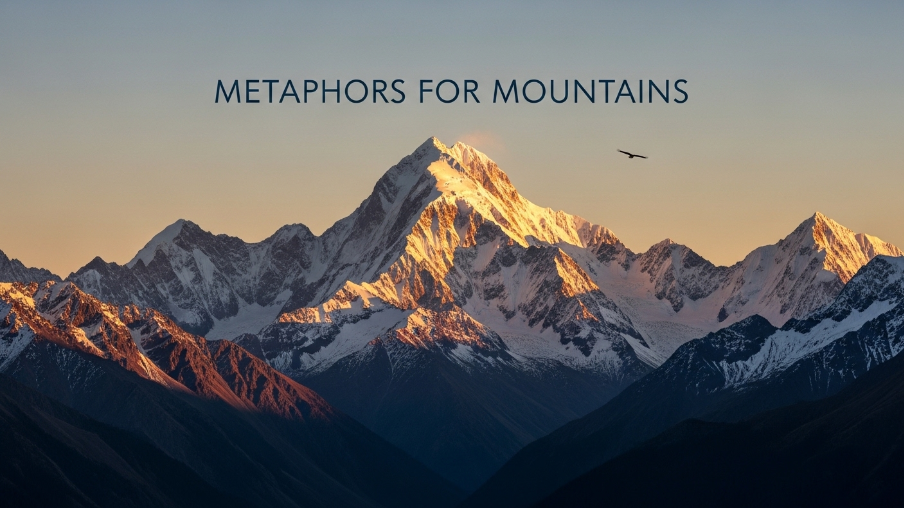
The first rays of dawn spill across a rugged mountain range, painting the peaks in shades of gold and amber. A cool breeze drifts through the valleys below, carrying the scent of pine and earth. Standing before a mountain often feels like standing before something ancient, wise, and almost alive. It is no wonder that writers, poets, and storytellers have long turned to mountains as symbols of strength, challenge, endurance, and inspiration.
Metaphors for mountains help transform ordinary descriptions into vivid imagery that readers can see, feel, and remember. Instead of simply describing a mountain as tall or impressive, a metaphor allows you to compare it to something unexpected, creating emotional depth and literary beauty.
Whether you’re writing poetry, fiction, social media captions, speeches, or personal reflections, mountain metaphors can add richness and meaning to your words. In this guide, you’ll discover powerful metaphors for mountains, learn how to use them effectively, explore creative examples, and practice crafting your own memorable comparisons.
Why Writers Use Metaphors for Mountains
Mountains naturally inspire metaphorical thinking because they represent more than physical landscapes. They often symbolize life’s obstacles, personal growth, resilience, wisdom, and ambition.
When writers use mountain metaphors, they create deeper emotional connections with readers. A mountain can become a giant guardian, a sleeping titan, or a staircase to the sky. These comparisons help readers visualize scenes while understanding the underlying message.
From ancient myths to modern literature, mountains continue to serve as powerful symbols of human experience and achievement.
Mountains as Giants of the Earth
One of the most common metaphors portrays mountains as giants standing watch over the land.
Meaning and Explanation
This metaphor emphasizes size, power, and permanence. Just as giants tower over ordinary people, mountains dominate the surrounding landscape.
Example Sentence
“The mountain stood like a silent giant guarding the valley below.”
Alternative Expressions
- Earthly titan
- Stone giant
- Ancient guardian
- Colossal watcher
Sensory and Emotional Detail
Imagine enormous rocky shoulders rising above forests while clouds drift around their heads. The image creates feelings of awe and respect.
Mini Storytelling Example
A traveler crossing a vast wilderness notices a distant peak. Day after day, the giant remains visible, watching silently as if protecting the land from unseen dangers.
Mountains as Stairways to Heaven
Many cultures view mountains as bridges between the earthly and spiritual worlds.
Meaning and Explanation
This metaphor highlights elevation, aspiration, and spiritual growth.
Example Sentence
“The snow-covered peak was a stairway to heaven reaching beyond the clouds.”
Alternative Expressions
- Path to the sky
- Heavenly ladder
- Celestial staircase
- Bridge to the divine
Literary Connection
Ancient civilizations often believed gods lived on mountain summits. This belief appears in myths from around the world.
Mountains as Sleeping Titans
Some mountains appear like enormous figures resting beneath blankets of snow and vegetation.
Meaning and Explanation
This metaphor suggests hidden power waiting to awaken.
Example Sentence
“The mountain lay across the horizon like a sleeping titan.”
Alternative Expressions
- Slumbering giant
- Resting colossus
- Dormant guardian
- Sleeping king
Emotional Impact
This image creates mystery and anticipation, making the landscape feel alive.
Mountains as Earth’s Backbone
Mountain ranges often resemble a spine stretching across continents.
Meaning and Explanation
This metaphor emphasizes support, strength, and structure.
Example Sentence
“The Rockies formed the backbone of the continent.”
Alternative Expressions
- Earth’s spine
- Stone framework
- Natural skeleton
- Planetary support beam
Real-Life Perspective
Major mountain ranges influence climate, ecosystems, and human settlement patterns, truly acting as structural features of the planet.
Mountains as Frozen Waves
Many mountain ridges resemble waves caught in motion.
Meaning and Explanation
This metaphor captures shape, movement, and beauty despite the mountain’s stillness.
Example Sentence
“The peaks looked like frozen waves rolling across the horizon.”
Alternative Expressions
- Stone ocean
- Petrified surf
- Frozen tide
- Rock waves
Sensory Description
Picture an endless sea suddenly transformed into stone, its waves permanently suspended.
Mountains as Ancient Kings
Mountains often symbolize authority and timeless wisdom.
Meaning and Explanation
Like wise rulers, mountains endure through centuries while observing generations pass.
Example Sentence
“The mountain reigned over the valley like an ancient king.”
Alternative Expressions
- Stone monarch
- Rocky ruler
- Crowned giant
- Timeless sovereign
Cultural Reference
Many legends describe mountains as sacred rulers of the landscape, deserving honor and respect.
Mountains as Towers of Strength
Strength is perhaps the most universal mountain metaphor.
Meaning and Explanation
This comparison highlights resilience and stability.
Example Sentence
“Her determination was a mountain towering above every obstacle.”
Alternative Expressions
- Fortress of stone
- Pillar of endurance
- Monument of strength
- Rock-solid sentinel
Daily-Life Application
This metaphor works well in motivational writing and personal development content.
Mountains as Libraries of Time
Every layer of rock tells a story from the distant past.
Meaning and Explanation
This metaphor focuses on history, memory, and accumulated wisdom.
Example Sentence
“The mountain was a library of time, each layer preserving ancient secrets.”
Alternative Expressions
- Archive of ages
- Geological diary
- Stone chronicle
- History carved in rock
Storytelling Element
A geologist examining cliff layers reads them much like a historian reading chapters in a book.
Mountains as Walls of the World
Mountain ranges frequently create natural boundaries.
Meaning and Explanation
This metaphor highlights protection and separation.
Example Sentence
“The mountains formed a mighty wall around the kingdom.”
Alternative Expressions
- Natural fortress
- Stone barrier
- Rocky shield
- Earth’s ramparts
Emotional Tone
The image conveys security, defense, and permanence.
Mountains as Crowns of Nature
Peaks often represent the highest and most magnificent features of a landscape.
Meaning and Explanation
This metaphor emphasizes beauty and prestige.
Example Sentence
“The snow-capped summit was the crown of the wilderness.”
Alternative Expressions
- Nature’s jewel
- Earth’s crown
- Royal peak
- Landscape’s gem
Visual Appeal
The image of sunlight reflecting off snowy peaks resembles precious jewels sparkling atop a crown.
Mountains as Challenges in Life
Many motivational speakers use mountains to symbolize difficult goals.
Meaning and Explanation
A mountain becomes a representation of personal obstacles and achievements.
Example Sentence
“Graduating from college was the mountain she spent years climbing.”
Alternative Expressions
- Personal summit
- Life challenge
- Peak achievement
- Difficult ascent
Real-Life Example
Athletes, entrepreneurs, and students often describe major goals as mountains to climb.
Three Creative Mountain Metaphors You Can Use Today
1. The Mountain Is a Silent Teacher
Meaning: Mountains teach patience, endurance, and humility.
Example: “The mountain became a silent teacher, showing him the value of persistence.”
Alternative: Wise mentor, patient instructor, ancient guide.
Emotional Detail: Standing on a trail for hours can feel like receiving lessons from nature itself.
2. The Mountain Is a Stone Cathedral
Meaning: Mountains inspire reverence and wonder.
Example: “The towering peak rose like a stone cathedral beneath the morning sun.”
Alternative: Natural temple, rocky sanctuary, sacred monument.
Literary Touch: Many poets describe wilderness locations as places of spiritual reflection.
3. The Mountain Is a Beacon of Hope
Meaning: Mountains can symbolize goals and aspirations.
Example: “The distant summit was a beacon of hope through difficult times.”
Alternative: Guiding light, distant promise, shining objective.
Story Element: Climbers often focus on the summit to stay motivated during challenging journeys.
How to Create Your Own Mountain Metaphors
Creating original metaphors is easier than many writers think.
Ask yourself:
- What emotion does the mountain evoke?
- What object or person shares that quality?
- How can the comparison reveal a deeper meaning?
For example:
- A mountain is a fortress.
- A mountain is a guardian.
- A mountain is a throne.
- A mountain is a lighthouse of stone.
The best metaphors connect physical appearance with emotional significance.
Interactive Exercise: Build a Mountain Metaphor
Try completing these prompts:
- The mountain was a __________ watching over the valley.
- The peak rose like a __________ above the clouds.
- The mountain range stretched across the land like a __________.
- The summit became a symbol of __________.
- The rocky cliff stood as a __________ against time.
Challenge yourself to create three completely original answers.
Using Mountain Metaphors in Poetry
Poetry thrives on imagery and symbolism.
Instead of writing:
“The mountain was tall.”
Try:
“The mountain pierced the heavens with a crown of silver snow.”
This approach creates visual impact while adding emotional depth.
Mountain metaphors are especially effective in:
- Nature poetry
- Inspirational poetry
- Adventure writing
- Reflective verse
- Travel journals
Using Mountain Metaphors in Social Media and Daily Life
Mountain metaphors are perfect for captions, speeches, and motivational posts.
Examples:
- “Every mountain starts with a single step.”
- “Chasing summits, both literal and personal.”
- “Today’s challenge is tomorrow’s mountaintop.”
- “Be steady like a mountain in a storm.”
These short comparisons are memorable and shareable.
Bonus Tips for Writing Strong Mountain Metaphors
To make your metaphors stand out:
- Avoid overused comparisons whenever possible.
- Include sensory details.
- Match the metaphor to your theme.
- Consider emotional resonance.
- Blend visual imagery with deeper meaning.
- Read nature poetry for inspiration.
- Experiment with unusual comparisons.
Remember, the strongest metaphors reveal something new about both the mountain and the idea being compared.
Common Mistakes to Avoid with Mountain Metaphors
Writers sometimes weaken their metaphors by making them too vague or overly complicated.
Avoid:
- Mixed metaphors
- Excessive comparisons in one sentence
- Clichés without fresh details
- Unclear symbolic meaning
Instead, focus on one strong image and develop it fully.
The Lasting Power of Mountain Symbolism
Mountains have inspired humanity for thousands of years. They appear in myths, sacred texts, literature, art, and personal stories because they embody qualities people admire—strength, endurance, wisdom, and aspiration.
When you use mountain metaphors thoughtfully, your writing gains emotional weight and memorable imagery. Readers don’t simply see the mountain; they feel its significance.
FAQs
What is a metaphor for a mountain?
A metaphor for a mountain is a direct comparison that describes a mountain as something else, such as a giant, fortress, king, or stairway to heaven, without using “like” or “as.”
Why are mountains commonly used in metaphors?
Mountains symbolize strength, endurance, wisdom, obstacles, achievement, and permanence, making them powerful literary symbols.
Can mountain metaphors be used in everyday writing?
Yes. They work well in essays, speeches, social media captions, personal reflections, poetry, and fiction.
What is an example of a creative mountain metaphor?
“The mountain was a silent teacher, offering lessons in patience with every step upward.”
How can I create my own mountain metaphor?
Focus on the mountain’s qualities—height, strength, beauty, or endurance—and compare those traits to people, objects, emotions, or experiences that share similar characteristics.
Conclusion
Mountain metaphors transform ordinary descriptions into memorable experiences. Whether a mountain becomes a giant guardian, a frozen wave, a stone cathedral, or a beacon of hope, each metaphor reveals deeper layers of meaning that resonate with readers.
By understanding symbolism, experimenting with creative comparisons, and practicing through writing exercises, you can craft mountain metaphors that elevate your storytelling and leave lasting impressions.
Like the mountains themselves, powerful metaphors stand tall through time, inspiring readers to look beyond the surface and discover new heights of imagination.