
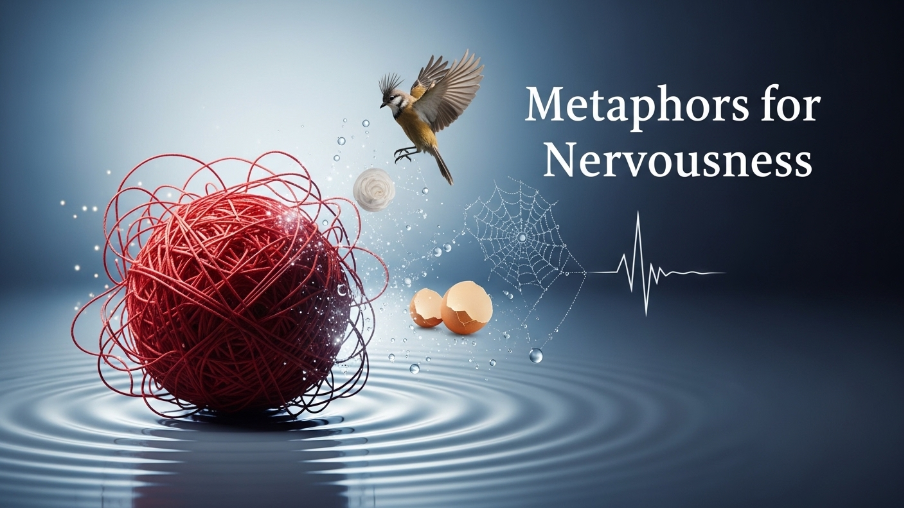
Have you ever stood backstage before a performance, your hands damp with sweat, your heartbeat drumming in your ears, and your thoughts racing faster than a storm wind? Perhaps you were waiting for an important interview, preparing to give a speech, or sending a message that could change everything. In those moments, nervousness can feel almost impossible to describe with ordinary words.
That is where metaphors become valuable. Metaphors for nervousness transform invisible emotions into vivid images that readers can see, hear, and feel. Instead of simply saying, “I was nervous,” you can paint a picture of butterflies fluttering wildly in your stomach or compare your mind to a tangled ball of yarn.
Whether you’re a student, writer, teacher, blogger, or someone who simply loves expressive language, understanding metaphors can help you communicate emotions more effectively. In this article, you’ll discover creative metaphors for nervousness, learn how to use them, explore literary inspiration, and practice crafting your own memorable comparisons.
Understanding Metaphors for Nervousness
A metaphor compares one thing to another without using “like” or “as.” It directly states that one thing is another to create a stronger emotional impact.
When describing nervousness, metaphors help translate internal feelings into concrete experiences. Readers instantly understand the emotion because they can visualize it.
For example:
- “My stomach was a cage full of butterflies.”
- “Fear was a drummer pounding inside my chest.”
- “My thoughts became a runaway train.”
These expressions make writing more colorful and relatable than simply stating that someone felt anxious.
Why Metaphors Make Anxiety Easier to Describe
Nervousness is often difficult to explain because it combines physical sensations, emotions, and thoughts.
Metaphors help by:
- Creating vivid imagery
- Making emotions relatable
- Strengthening storytelling
- Improving creative writing
- Helping readers connect emotionally
Many famous authors rely on metaphors because emotions become more memorable when attached to images and experiences.
The Butterfly Storm in Your Stomach
One of the most famous metaphors for nervousness is the butterfly metaphor.
Meaning and Explanation
The sensation of nervousness often feels like fluttering movements in the stomach. The image of butterflies captures both excitement and anxiety.
Example Sentence
“My stomach became a garden where frantic butterflies refused to settle.”
Alternative Expressions
- A flock of restless birds
- Fluttering wings beneath the ribs
- A storm of butterflies
Sensory Details
Imagine tiny wings beating rapidly inside your body, creating movement and anticipation.
This metaphor works especially well when describing first dates, public speaking, or exciting opportunities.
Nervousness as a Shaking Leaf
Nature provides countless metaphors for emotional experiences.
Meaning and Explanation
A leaf trembling in the wind symbolizes vulnerability and uncertainty.
Example Sentence
“I stood before the audience, a leaf shaking on the highest branch.”
Alternative Expressions
- A branch bending in the wind
- Grass swaying before a storm
- A fragile flower in a breeze
Emotional Impact
This metaphor conveys both fear and delicacy, making it ideal for emotional storytelling.
A Drumline Inside the Chest
Rapid heartbeat is one of the most noticeable signs of nervousness.
Meaning and Explanation
Comparing the heart to a drum highlights intensity and rhythm.
Example Sentence
“A marching band had taken over my chest.”
Alternative Ways to Express It
- A war drum pounding
- Thunder beating inside
- A drummer losing control
Mini Storytelling Example
Before stepping onto the graduation stage, Mia could barely hear her name. The drumline in her chest was louder than the applause.
The Runaway Train of Thoughts
Many people experience racing thoughts during stressful moments.
Meaning and Explanation
A runaway train represents mental momentum that seems impossible to stop.
Example Sentence
“My thoughts became a runaway train speeding toward uncertainty.”
Alternative Expressions
- A speeding locomotive
- A train with broken brakes
- A locomotive rushing through fog
Real-Life Relevance
Students often describe exam anxiety this way because thoughts seem to accelerate uncontrollably.
Metaphors for Nervousness in Literature
Writers throughout history have used vivid imagery to depict anxiety and fear.
Many classic stories compare nervousness to:
- Storm clouds gathering overhead
- Earthquakes beneath the feet
- Waves crashing against rocks
- Shadows creeping closer
These images create emotional depth and help readers empathize with characters facing difficult situations.
A Storm Gathering Beneath the Skin
Weather metaphors are particularly powerful.
Meaning and Explanation
Storms symbolize emotional turbulence and uncertainty.
Example Sentence
“A storm gathered beneath my skin as the interview began.”
Alternative Expressions
- Thunder trapped inside
- Lightning in the veins
- Clouds filling the mind
Sensory Detail
Picture dark clouds swirling before rainfall. The tension mirrors emotional anticipation.
The Tightrope Walker of Uncertainty
Nervousness often involves balancing confidence and fear.
Meaning and Explanation
A tightrope walker represents someone navigating risk and uncertainty.
Example Sentence
“I felt like a tightrope walker crossing a canyon of expectations.”
Alternative Expressions
- Walking on thin ice
- Crossing a fragile bridge
- Balancing on a narrow beam
Cultural Reference
Circus performers often symbolize courage under pressure, making this metaphor especially memorable.
A Cage Full of Restless Birds
This metaphor expands upon the butterfly concept.
Meaning and Explanation
Restless birds symbolize trapped energy and anticipation.
Example Sentence
“My chest was a cage filled with birds desperate to escape.”
Alternative Expressions
- Trapped wings
- Fluttering creatures
- Birds rattling their cage
Emotional Layer
This metaphor combines physical discomfort with emotional tension.
The Volcano Waiting to Erupt
Sometimes nervousness feels explosive rather than quiet.
Meaning and Explanation
A volcano represents pressure building beneath the surface.
Example Sentence
“I was a volcano holding back an eruption of worry.”
Alternative Expressions
- Pressure beneath the earth
- Lava under stone
- A mountain hiding fire
Writing Tip
This metaphor works well for characters who appear calm externally but feel overwhelmed internally.
Creative Writing Techniques Using Anxiety Metaphors
When writing metaphors for nervousness:
- Focus on physical sensations.
- Use imagery readers recognize.
- Connect emotions with nature.
- Draw from everyday experiences.
- Avoid clichés when possible.
Instead of repeating common expressions, add unique details.
For example:
Rather than “butterflies in my stomach,” try:
“My stomach had become an airport where nervous butterflies missed every departure.”
Example Set #1: The Iceberg of Worry
Meaning
An iceberg reveals only a small portion above the surface.
Example Scenario
“She smiled confidently, but beneath her calm expression floated an iceberg of worry.”
Alternative Expressions
- Hidden mountain of fear
- Buried glacier of anxiety
- Frozen uncertainty
Emotional Effect
This metaphor highlights unseen nervousness that others may not notice.
Example Set #2: The Alarm Bell Mind
Meaning
An alarm bell symbolizes heightened awareness and caution.
Example Sentence
“My mind became an alarm bell ringing at every possibility.”
Alternative Expressions
- Warning siren
- Emergency signal
- Constant alert system
Real-Life Application
This metaphor works well for describing job interviews, exams, and important conversations.
Example Set #3: The Tangled Ball of Yarn
Meaning
Nervous thoughts often become confusing and difficult to organize.
Example Sentence
“My thoughts were a tangled ball of yarn impossible to unravel.”
Alternative Expressions
- Knotted rope
- Twisted thread
- Entangled string
Sensory Detail
Imagine trying to pull apart dozens of knots while under pressure.
The frustration mirrors anxious thinking.
Interactive Exercise: Create Your Own Metaphors for Nervousness
Try completing these prompts:
- Nervousness is a __________.
- My thoughts became __________.
- Anxiety felt like __________.
- My heart turned into __________.
- Waiting for the results was like __________.
Challenge yourself to use objects, animals, weather, music, or nature.
Example:
“Nervousness was a hummingbird trapped inside a glass jar.”
The more specific the image, the stronger the metaphor.
Bonus Tips for Writers, Bloggers, and Social Media Creators
For Creative Writing
Choose metaphors that match your character’s personality and environment.
For Social Media
Short metaphors create memorable captions.
Example:
“Today my confidence was a candle in a windstorm.”
For Journaling
Write one metaphor each day describing your emotions.
For Public Speaking
Use relatable metaphors to connect with audiences emotionally.
For Storytelling
Combine multiple senses such as sound, movement, and touch for richer imagery.
Common Mistakes When Using Metaphors for Nervousness
Avoid these errors:
- Mixing unrelated metaphors
- Overusing clichés
- Creating confusing imagery
- Using too many metaphors in one sentence
- Ignoring context
Strong metaphors should clarify emotions rather than distract from them.
FAQs
What is a metaphor for nervousness?
A metaphor for nervousness is a figurative comparison that describes anxiety or anticipation through vivid imagery, such as “a cage full of restless birds” or “a storm beneath the skin.”
Why are metaphors useful for describing anxiety?
Metaphors make emotions easier to visualize and understand. They help readers connect with experiences that may otherwise be difficult to explain.
What is the most common metaphor for nervousness?
The most common metaphor is “butterflies in the stomach,” which describes the fluttering sensation many people feel when anxious or excited.
Can metaphors improve creative writing?
Yes. Metaphors add imagery, emotional depth, and originality, making stories, poems, and essays more engaging for readers.
How can I create my own metaphor for nervousness?
Think about how nervousness feels physically and emotionally. Then compare it to something familiar, such as weather, animals, music, or movement.
Conclusion
Nervousness is a universal human experience, yet it often feels difficult to describe with ordinary language. Metaphors bridge that gap by transforming invisible emotions into vivid images readers can instantly understand. Whether nervousness becomes a storm beneath your skin, a runaway train of thoughts, a cage of restless birds, or a trembling leaf in the wind, these comparisons bring emotional experiences to life.
By exploring and practicing metaphors for nervousness, you can enrich your writing, strengthen your storytelling, and communicate feelings with greater clarity and beauty. The next time your heart races before a big moment, pause and ask yourself:
What image best captures this feeling?
The answer might become your most memorable metaphor yet.