
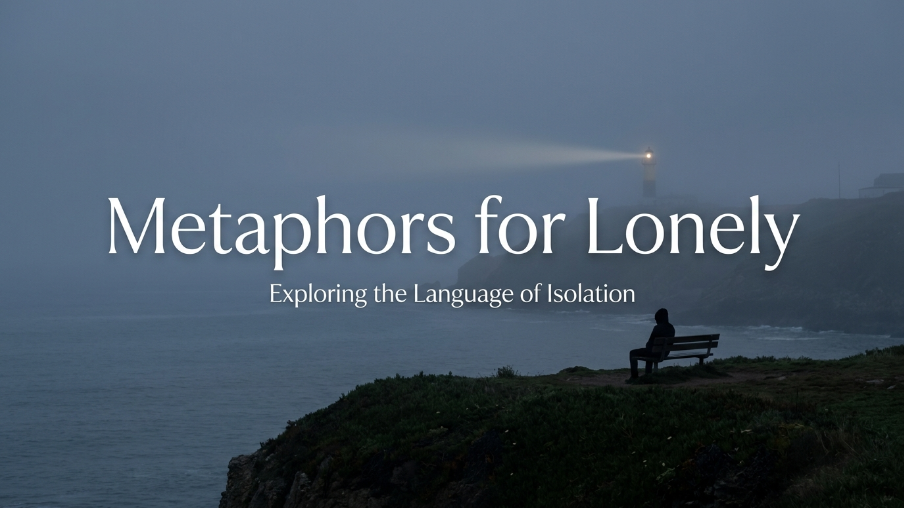
Have you ever stood in a crowded room and still felt completely alone? The laughter swirls around you, conversations flow like rivers, yet somehow you feel like an island disconnected from the mainland. Loneliness is one of the most universal human emotions, but it can also be one of the hardest feelings to describe. That’s where metaphors come in.
Metaphors for lonely help writers, students, poets, and everyday communicators transform abstract emotions into vivid images. Rather than simply saying someone feels lonely, a metaphor paints a picture that readers can see, hear, and feel. Whether you’re writing a story, creating social media captions, composing poetry, or expressing personal emotions, these figurative expressions add depth and emotional power.
Throughout literature, loneliness has been compared to deserts, abandoned houses, drifting boats, and countless other symbolic images. These comparisons allow us to connect with experiences that words alone sometimes fail to capture.
In this article, you’ll discover powerful metaphors for lonely, learn their meanings, explore examples, and practice using them creatively. By the end, you’ll have a collection of expressive tools that can bring your writing to life.
Understanding Metaphors for Lonely
A metaphor directly compares one thing to another without using words such as “like” or “as.” When describing loneliness, metaphors transform emotional experiences into concrete images.
For example:
“She was an abandoned lighthouse.”
This doesn’t mean she was literally a lighthouse. Instead, it suggests isolation, distance, and a longing to guide or connect with others.
Metaphors help readers experience emotions rather than merely read about them.
Why They Matter
- Create emotional impact
- Improve creative writing
- Enhance poetry and storytelling
- Help express difficult feelings
- Make descriptions memorable
The Empty Desert Metaphor
One of the most common metaphors for lonely is the image of a vast desert.
Meaning
A desert symbolizes emptiness, isolation, and the absence of companionship.
Example
“After moving to a new city, his life became a desert stretching endlessly before him.”
Alternative Expressions
- A barren landscape
- A wasteland of silence
- Endless dunes of solitude
Emotional Details
Imagine hot winds blowing across endless sand with no signs of life. That visual perfectly captures emotional isolation.
The Abandoned Lighthouse Metaphor
A lighthouse is built to guide ships, but an abandoned lighthouse stands alone against crashing waves.
Meaning
This metaphor suggests someone who longs for connection but remains isolated.
Example
“She felt like an abandoned lighthouse, shining for no one.”
Alternative Expressions
- Forgotten beacon
- Silent tower by the sea
- Lonely guardian of the shore
Literary Connection
Many coastal novels and poems use lighthouses as symbols of waiting, hope, and solitude.
The Island in the Ocean Metaphor
An island surrounded by water is physically separated from everything around it.
Meaning
It represents emotional distance and separation from others.
Example
“Despite having many friends online, he felt like an island in a vast ocean.”
Alternative Expressions
- Isolated shore
- Remote landmass
- Detached world
Sensory Image
Picture waves endlessly surrounding an island, creating a natural barrier between it and the world.
Why Writers Love Lonely Metaphors
Writers use loneliness metaphors because emotions are often invisible.
Instead of saying:
“She was lonely.”
A writer might say:
“She wandered through life as a leaf drifting away from the tree.”
The second description immediately creates a stronger emotional response.
Benefits include:
- Better reader engagement
- Stronger imagery
- Increased emotional depth
- More memorable storytelling
Example Metaphor #1: A Forgotten Book on a Shelf
This metaphor is especially effective for describing neglected feelings.
Meaning
A forgotten book suggests being overlooked despite having value.
Example Sentence
“After retirement, he felt like a forgotten book gathering dust on a shelf.”
Alternative Ways to Express It
- Unopened novel
- Neglected diary
- Hidden story
Mini Story
Imagine a library filled with readers. Every book is chosen except one. Day after day, it remains untouched. That image mirrors how many people experience loneliness.
Example Metaphor #2: A Single Star in a Cloudless Sky
Stars are beautiful, but a lone star can symbolize solitude.
Meaning
Being visible yet disconnected from others.
Example Sentence
“She was a single star shining quietly in the darkness.”
Alternative Expressions
- Solitary light
- Lone celestial spark
- Distant beacon
Emotional Impact
This metaphor combines loneliness with beauty, suggesting that solitude can sometimes contain quiet strength.
Example Metaphor #3: An Echo in an Empty Hall
Echoes exist only because of emptiness.
Meaning
The desire to be heard without receiving a response.
Example Sentence
“His words became an echo in an empty hall.”
Alternative Expressions
- Unanswered voice
- Lingering sound
- Hollow reflection
Sensory Experience
Imagine speaking into a vast room and hearing only your own voice return.
Nature-Inspired Metaphors for Lonely Feelings
Nature provides endless inspiration for figurative language.
Popular examples include:
- A lone wolf under the moon
- A tree standing in a barren field
- A cloud drifting across an empty sky
- A bird separated from its flock
- A flower blooming unseen
Nature metaphors resonate because humans instinctively connect with the natural world.
Metaphors for Lonely in Literature
Many famous authors have explored loneliness through figurative language.
Classic literature often portrays lonely characters as:
- Castaways at sea
- Wandering travelers
- Lost shadows
- Empty houses
- Silent forests
These images continue to appear because they capture universal emotional experiences.
For example, many themes in the works of Emily Dickinson and Edgar Allan Poe explore solitude, isolation, and emotional distance.
Using Lonely Metaphors in Creative Writing
To use metaphors effectively:
Show Instead of Tell
Instead of:
“He was lonely.”
Try:
“He drifted through conversations like a ghost no one noticed.”
Match the Mood
Choose metaphors that fit the emotional tone:
- Sad → Empty house
- Hopeful → Lone star
- Bitter → Desert
- Peaceful → Quiet island
Keep It Original
Avoid overused expressions whenever possible.
Create fresh imagery from personal experiences.
Interactive Exercise: Create Your Own Metaphor
Try completing these prompts:
- Loneliness is a __________.
- My heart felt like a __________.
- Solitude followed me like a __________.
- The empty room became a __________.
- I wandered through the day as a __________.
Challenge yourself to use sensory details.
Ask:
- What does loneliness look like?
- What does it sound like?
- What does it feel like physically?
Emotional and Sensory Details That Strengthen Metaphors
The best metaphors engage the senses.
Sight
“A candle flickering in a dark cathedral.”
Sound
“A piano note fading into silence.”
Touch
“A cold stone resting in the palm.”
Smell
“An abandoned house carrying the scent of forgotten years.”
Adding sensory layers makes loneliness feel real and immediate.
Bonus Tips for Social Media, Poetry, and Daily Writing
For Social Media Captions
Use short, powerful metaphors:
- “A lighthouse without ships.”
- “A star without a constellation.”
- “A page without a story.”
For Poetry
Combine multiple images:
“An island drifting through a desert sky.”
For Journaling
Use metaphors to explore emotions:
- What object represents your feelings today?
- What landscape matches your mood?
For Fiction
Let metaphors reveal character emotions naturally instead of explaining them directly.
Common Mistakes When Using Metaphors for Lonely
Avoid these pitfalls:
Mixing Metaphors
Incorrect:
“He was a lighthouse drifting through a desert.”
Too many unrelated images can confuse readers.
Overusing Metaphors
Use them strategically for maximum impact.
Choosing Weak Comparisons
Strong metaphors create vivid pictures.
Weak metaphors feel generic and forgettable.
Ignoring Context
A metaphor should fit the character, setting, and emotional tone.
Building a Personal Collection of Loneliness Metaphors
Great writers keep lists of favorite figurative expressions.
Create categories such as:
Nature
- Desert
- Island
- Lone wolf
Objects
- Forgotten book
- Empty chair
- Broken clock
Places
- Abandoned station
- Silent theater
- Vacant house
Over time, you’ll develop a unique writing voice and a richer emotional vocabulary.
FAQs
What is a metaphor for lonely?
A metaphor for lonely is a figurative comparison that represents loneliness through imagery, such as “an island in the ocean” or “a forgotten book on a shelf.”
Why are metaphors useful for describing loneliness?
They help readers visualize emotions, making feelings of isolation more relatable, memorable, and emotionally powerful.
What are some common loneliness metaphors?
Popular examples include a desert, abandoned lighthouse, lone star, drifting boat, forgotten book, and echo in an empty hall.
Can loneliness metaphors be positive?
Yes. Some metaphors portray solitude as peaceful or reflective, such as a quiet island or a star shining alone in the night sky.
How can I create my own metaphor for lonely?
Think about objects, places, or experiences that reflect separation, silence, or emotional distance. Then connect them creatively to the feeling of loneliness.
Conclusion
Loneliness is a complex emotion, but metaphors give it shape, color, and meaning. Whether it’s a deserted island surrounded by endless water, a forgotten book gathering dust, or an echo fading through an empty hall, these comparisons transform invisible feelings into vivid experiences.
Metaphors for lonely not only enrich writing but also help us understand and communicate emotions more deeply. By exploring imagery, sensory details, and creative comparisons, you can bring greater emotional depth to your stories, poems, journals, social media posts, and everyday conversations.
The next time you encounter loneliness in your writing, don’t simply describe it—paint it with a metaphor that readers will remember long after they’ve turned the page.