
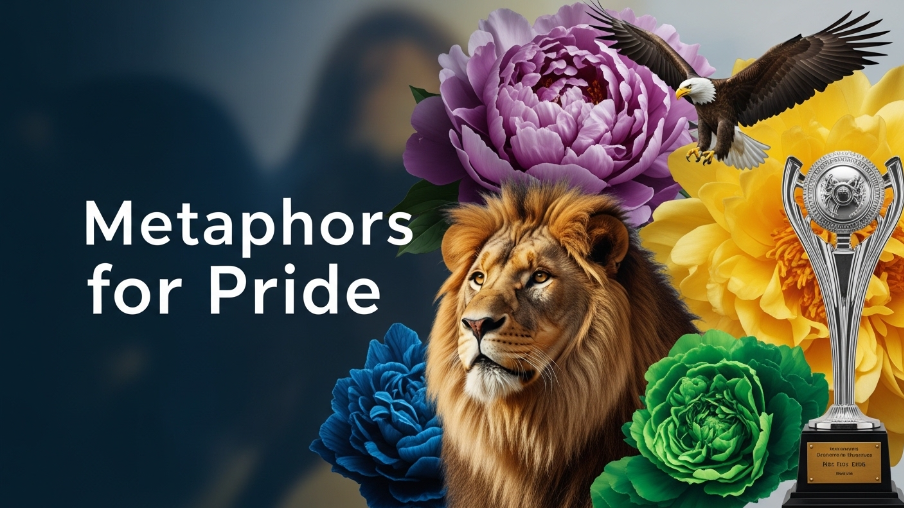
Imagine standing on a hilltop at sunrise. The golden light stretches across the horizon, and for a moment, your chest feels fuller, your posture straighter, and your spirit brighter. That feeling—the quiet satisfaction of achievement, dignity, or self-respect—is often described as pride. Yet pride can be difficult to explain with ordinary words. This is where metaphors become powerful.
Metaphors for pride help us transform an abstract emotion into vivid imagery. Whether pride appears as a soaring eagle, a shining crown, or a mountain peak, these comparisons allow writers, speakers, and everyday communicators to express complex feelings in memorable ways. From literature and poetry to social media captions and motivational speeches, pride metaphors add depth and emotional color.
In this article, you’ll explore meaningful metaphors for pride, learn how to use them effectively, discover creative examples, and practice crafting your own. By the end, you’ll have a rich collection of figurative language tools that can elevate your writing and storytelling.
Understanding Pride Through Metaphors
Pride is an emotion associated with accomplishment, dignity, confidence, and self-worth. Because it cannot be physically touched or seen, writers often compare it to tangible objects, forces of nature, or symbolic images.
A metaphor doesn’t say something is “like” another thing. Instead, it directly states that one thing is another, creating a stronger emotional connection.
For example:
- “Her pride was a lighthouse in the storm.”
This metaphor suggests that her self-respect guided her through difficult times.
Metaphors help readers feel emotions rather than merely understand them.
Why Metaphors for Pride Matter in Writing
Strong metaphors make writing memorable. They transform ordinary descriptions into vivid experiences.
When discussing pride, metaphors can:
- Add emotional depth.
- Create visual imagery.
- Strengthen storytelling.
- Improve poetry and creative writing.
- Make speeches and social media posts more engaging.
A well-chosen metaphor can communicate an entire emotional journey in just a few words.
Pride as a Crown: A Symbol of Honor
One of the most common metaphors for pride is a crown.
A crown represents achievement, dignity, responsibility, and earned respect. When someone wears pride like a crown, they carry themselves with confidence and grace.
Example:
“After years of hard work, her pride became a crown resting gently upon her head.”
Alternative expressions:
- Pride was her royal mantle.
- Pride adorned her like a jeweled crown.
- Self-respect became her throne.
Sensory detail:
Imagine the weight of polished gold, cool against the forehead, symbolizing accomplishments earned through persistence.
Pride as a Mountain Peak
Mountains symbolize achievement and perseverance. Reaching a summit often mirrors the emotional experience of accomplishing a difficult goal.
Example:
“His pride was a mountain peak rising above years of struggle.”
Alternative expressions:
- Pride stood like a towering summit.
- Success became a cliff overlooking the valley of effort.
- Confidence reached the highest ridge.
Mini storytelling:
A student spends years preparing for a difficult examination. When the results arrive, the feeling resembles standing atop a mountain after a long climb. The view represents every sacrifice made along the journey.
Pride as a Flame That Never Dies
A flame metaphor emphasizes inner strength and resilience.
Pride can burn quietly within a person, providing motivation and courage.
Example:
“Her pride was an eternal flame glowing through every challenge.”
Alternative expressions:
- Pride flickered in his heart.
- Self-respect blazed like fire.
- Confidence burned bright against darkness.
Emotional detail:
The warmth of a flame often mirrors the comfort and strength that healthy pride provides.
Pride in Literature and Storytelling
Throughout literary history, pride has appeared in countless symbolic forms.
Ancient heroes often carried pride as armor. Kings wore it as a crown. Warriors treated it as a shield protecting their honor.
In many stories, pride becomes both a strength and a weakness. Healthy pride inspires greatness, while excessive pride can lead to downfall.
This dual nature makes pride one of the most fascinating emotions for writers to explore.
Three Powerful Metaphors for Pride Explained
Let’s examine three highly effective metaphors in greater detail.
The Eagle in the Sky
Meaning:
An eagle symbolizes freedom, strength, and confidence.
Example Sentence:
“Her pride was an eagle soaring above every doubt.”
Alternative Expressions:
- A hawk riding the wind.
- Wings stretched toward victory.
- A bird of triumph above the clouds.
Cultural Reference:
Many cultures associate eagles with courage and leadership, making this metaphor especially powerful.
The Lighthouse on the Shore
Meaning:
A lighthouse represents guidance and stability.
Example Sentence:
“His pride stood like a lighthouse through years of uncertainty.”
Alternative Expressions:
- A beacon in the fog.
- A guiding lantern.
- A shining tower of certainty.
Real-Life Scenario:
A parent watching a child graduate may feel pride that acts as a beacon, illuminating years of dedication and sacrifice.
The Oak Tree in the Field
Meaning:
An oak tree symbolizes strength, endurance, and rooted confidence.
Example Sentence:
“Her pride was an oak tree standing firm against every storm.”
Alternative Expressions:
- A deeply rooted giant.
- A steadfast forest guardian.
- A tree that bends but never breaks.
Sensory Detail:
Imagine rough bark, strong branches, and roots stretching deep into the earth.
Positive vs. Negative Pride Metaphors
Not all pride is viewed the same way.
Positive pride often symbolizes:
- Confidence
- Achievement
- Self-respect
- Honor
Examples:
- Pride was a guiding star.
- Pride was a warm hearth.
Negative pride often symbolizes:
- Arrogance
- Vanity
- Overconfidence
Examples:
- Pride was a glass tower ready to shatter.
- Pride was a balloon drifting too close to the sun.
Understanding the distinction helps writers create nuanced characters and messages.
Nature-Based Metaphors for Pride
Nature offers endless inspiration.
Popular examples include:
- Pride was a sunrise spreading across the horizon.
- Pride was a river flowing steadily forward.
- Pride was a mighty oak.
- Pride was a soaring eagle.
- Pride was a mountain summit.
Nature metaphors feel universal because readers can easily visualize them.
Metaphors for Pride in Everyday Life
You don’t need to be a poet to use metaphors.
Everyday examples include:
- “My grandmother’s pride is the glue holding our family together.”
- “His pride is the engine behind every success.”
- “Their pride became the bridge connecting generations.”
These comparisons make conversations more colorful and memorable.
Using Pride Metaphors in Creative Writing
When writing stories, choose metaphors that match the character and setting.
A sailor might describe pride as:
“A ship’s mast surviving every storm.”
A musician might say:
“Pride was the final note echoing through the concert hall.”
A gardener might write:
“Pride was the first rose blooming after winter.”
Specific imagery creates stronger emotional impact.
Interactive Exercise: Create Your Own Pride Metaphor
Try completing these prompts:
- Pride is a __________ because __________.
- My greatest achievement felt like __________.
- Self-respect is a __________ that helps me __________.
- Confidence grows like __________.
- Pride shines through my life like __________.
Challenge:
Write three original metaphors without using crowns, mountains, or eagles.
Creative Writing Prompts Using Pride Comparisons
Practice with these ideas:
- Describe a championship victory using only metaphors.
- Write about family pride as a natural force.
- Create a character whose pride is represented by an object.
- Compare pride to weather, music, or light.
- Write a paragraph where pride changes from a strength to a weakness.
These exercises strengthen figurative language skills and creativity.
Bonus Tips for Using Metaphors for Pride
Here are practical ways to use pride metaphors effectively:
In Writing
Choose fresh imagery rather than overused comparisons.
Instead of:
“Pride was a crown.”
Try:
“Pride was a compass pointing toward dignity.”
On Social Media
Use short, visual metaphors.
Examples:
- “Pride is the sunrise after years of darkness.”
- “Confidence is the bridge built from persistence.”
In Daily Conversation
Metaphors can make stories more engaging.
Instead of saying:
“I felt proud.”
Try:
“I felt like I had finally reached the summit after years of climbing.”
In Speeches
Powerful metaphors help audiences remember key messages.
Leaders often use imagery involving stars, mountains, bridges, and flames to inspire listeners.
Common Mistakes When Using Pride Metaphors
Avoid these pitfalls:
- Mixing unrelated metaphors.
- Overusing clichés.
- Creating confusing comparisons.
- Using too many metaphors in one paragraph.
- Choosing imagery that doesn’t match the tone.
Strong metaphors are simple, clear, and emotionally relevant.
Building Emotional Impact With Figurative Language
Metaphors work best when paired with sensory details.
Instead of:
“His pride was strong.”
Try:
“His pride was an oak tree, roots gripping the earth while storms raged overhead.”
The second example allows readers to visualize and emotionally experience the feeling.
The Lasting Power of Metaphors for Pride
Metaphors transform pride from a simple emotion into a living image. They allow readers to see confidence as a mountain, feel honor as a crown, and experience self-respect as a flame.
Whether you’re writing poetry, fiction, speeches, captions, or journal entries, pride metaphors can enrich your language and help others connect more deeply with your message. The best metaphors stay with readers long after the words have been read, creating images that continue to inspire and resonate.
FAQs
What is a metaphor for pride?
A metaphor for pride is a figurative comparison that describes pride as something else, such as a crown, mountain, flame, or eagle, to create vivid imagery and emotional impact.
Why are metaphors for pride useful?
They help writers and speakers express complex emotions more clearly, making communication more memorable and engaging.
What is a positive metaphor for pride?
A positive metaphor for pride is “Pride is a lighthouse,” because it suggests guidance, confidence, and stability.
Can pride metaphors have negative meanings?
Yes. Pride can be portrayed negatively through metaphors like “a glass tower” or “a balloon too close to the sun,” symbolizing arrogance or excessive self-importance.
How can I create my own metaphor for pride?
Think about what pride feels like to you. Then connect that feeling to an object, place, or force of nature that shares similar qualities. For example, if pride feels steady and dependable, you might compare it to an anchor.
Conclusion
Pride is far more than a fleeting emotion—it is a reflection of achievement, dignity, perseverance, and self-worth. Through metaphors, we can transform this invisible feeling into vivid images that readers instantly understand and remember.
Whether pride appears as a crown of honor, a mountain peak earned through effort, an oak tree rooted in resilience, or a lighthouse shining through uncertainty, these comparisons bring depth and beauty to language.
By exploring, practicing, and creating your own metaphors for pride, you can enrich your writing, strengthen your storytelling, and communicate emotions with greater clarity and power. The next time you feel proud, ask yourself:
What image best captures that feeling?
Your answer may become your most memorable metaphor yet.