
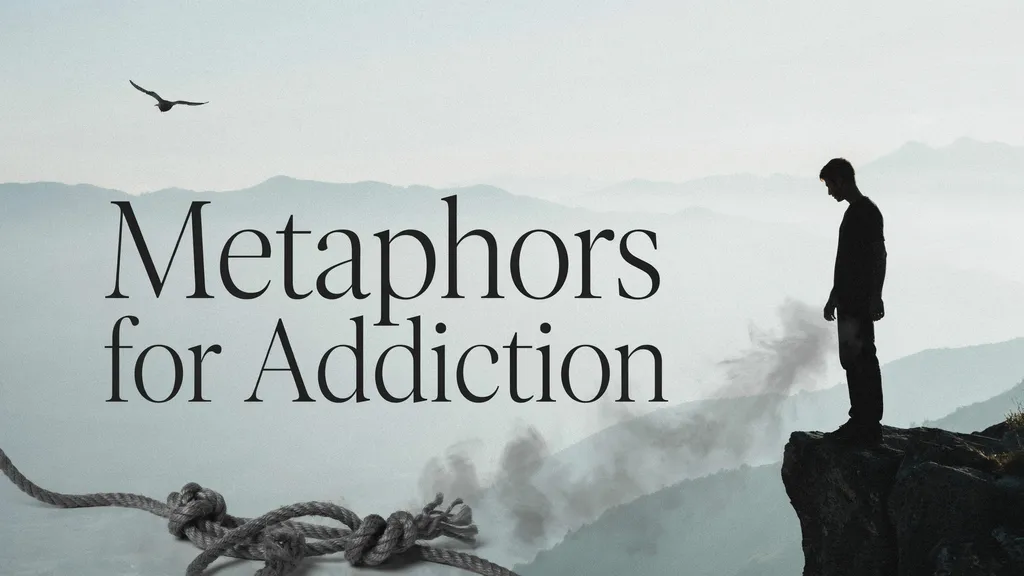
The room smells faintly of stale smoke and something sweeter—almost comforting at first, until it isn’t. A hand trembles, not from cold, but from the quiet pull of something unseen. It’s not just a habit. Not just a choice. It feels like gravity—constant, invisible, and impossible to escape. This is where language begins to fail… unless we borrow something stronger. That’s where metaphors for addiction come in.
Metaphors help us translate the invisible into something we can see, feel, and understand. Addiction is complex—woven from biology, emotion, memory, and environment. But through metaphor, it becomes a storm, a cage, a shadow, a fire. These comparisons don’t just describe addiction—they humanize it. They help writers, speakers, and everyday people express something deeply personal and often difficult to articulate.
In this article, we’ll explore powerful metaphors for addiction, unpack their meanings, and learn how to use them creatively and effectively. Along the way, you’ll find storytelling, exercises, and practical tips to help you bring these ideas into your writing—or even your own reflection.
Understanding Metaphors for Addiction in Everyday Language
Metaphors are more than decorative language—they’re bridges between experience and expression. When we say addiction is “a chain,” we’re not being literal, but we are revealing something true about its restraining force.
In everyday conversations, people often say things like:
- “I’m stuck in a loop.”
- “It’s like I’m drowning.”
- “I can’t break free.”
Each of these is a metaphor—an attempt to make sense of something overwhelming. Addiction, in this way, becomes less abstract and more relatable.
Why Metaphors Matter When Describing Addiction
Addiction can feel isolating, but metaphors create connection. They allow others to understand what might otherwise remain hidden.
A well-chosen metaphor can:
- Evoke empathy
- Clarify complex emotions
- Reduce stigma
- Encourage open dialogue
Think of how literature often uses metaphor to explore struggle—whether it’s a storm symbolizing turmoil or a maze representing confusion. These tools aren’t just artistic; they’re deeply human.
The Emotional Power of Figurative Language in Addiction Stories
When someone describes addiction as “a whisper that turns into a scream,” it captures escalation—how something subtle becomes overwhelming.
This emotional layering is what makes figurative language so powerful. It gives texture to experience.
Mini example:
“At first, it was a quiet companion. Then it became a voice I couldn’t silence.”
Notice how the metaphor evolves—just like addiction often does.
Common Themes in Metaphors for Addiction
Many metaphors for addiction fall into familiar categories:
- Nature: storms, waves, fire
- Objects: chains, cages, traps
- Creatures: monsters, parasites
- Journeys: spirals, mazes, roads
These themes resonate because they reflect universal human experiences—fear, struggle, entrapment, and hope.
Metaphor Example 1: Addiction as a Storm
Meaning and Explanation
Addiction as a storm suggests chaos, unpredictability, and overwhelming force. It highlights how addiction can arrive suddenly or build gradually, and once it’s there, it’s hard to control.
Example Scenario
“His cravings rolled in like thunderclouds, darkening everything in their path until he couldn’t see a way out.”
Alternative Expressions
- A hurricane tearing through calm
- A tidal wave crashing without warning
- A relentless downpour
Sensory & Emotional Detail
You can almost hear the wind howling, feel the pressure in the air. The storm doesn’t ask permission—it simply arrives.
Mini Storytelling
Like sailors in ancient tales who feared sudden tempests, those facing addiction often feel unprepared, caught in forces bigger than themselves.
Metaphor Example 2: Addiction as a Cage
Meaning and Explanation
This metaphor emphasizes restriction and lack of freedom. Addiction traps individuals, limiting choices and movement.
Example Sentence
“She felt like a bird in a cage, her wings strong but useless against the bars of her dependency.”
Alternative Ways to Express
- A prison with invisible walls
- Shackles that tighten over time
- A locked room with no key
Emotional Layer
There’s frustration here—not just suffering, but awareness of being trapped.
Real-Life Reflection
Many people describe addiction as knowing what they want to do—but feeling unable to act on it. That’s the cage.
Metaphor Example 3: Addiction as a Fire
Meaning and Explanation
Fire represents both warmth and destruction. Addiction often begins with pleasure but can quickly consume everything.
Example Scenario
“What started as a spark of comfort turned into a wildfire that burned through his life.”
Alternative Expressions
- A flame that won’t die
- A blaze out of control
- Smoldering embers reigniting
Sensory Detail
Heat. Smoke. The crackling sound of something being lost.
Cultural Note
Fire has long symbolized both creation and destruction—making this metaphor especially powerful and layered.
Creative Ways to Use Metaphors for Addiction in Writing
To use metaphors effectively:
- Match the metaphor to the emotion
- Avoid clichés—add a twist
- Extend the metaphor carefully
- Keep it relatable
Instead of just saying “a storm,” describe the storm’s impact—on surroundings, on the person, on the aftermath.
Using Addiction Metaphors in Social Media and Storytelling
Short-form content thrives on vivid imagery.
Examples:
- “Addiction isn’t loud at first—it’s a whisper that learns your name.”
- “It builds a home in your mind and locks the doors behind you.”
These lines are shareable because they’re concise yet evocative.
Interactive Exercise: Create Your Own Metaphors for Addiction
Try this:
- Think of a feeling associated with addiction (e.g., loss of control).
- Match it with an image (e.g., slipping on ice).
- Combine them: “It felt like walking on ice—every step uncertain, every fall inevitable.”
Now write 3 of your own metaphors.
Practice Prompt: Turning Emotions into Imagery
Prompt:
Describe addiction without using the word “addiction.”
Focus on:
- Sensory details
- Movement or lack of it
- Emotional shifts
Example: “It followed me like a shadow, growing longer at dusk.”
Bonus Tips for Using Metaphors in Daily Life
- Use them in journaling to process emotions
- Add them to captions or posts for impact
- Use them in conversations to explain feelings
Metaphors can turn confusion into clarity—even for yourself.
Avoiding Harmful or Misleading Metaphors
Not all metaphors help. Some can stigmatize or oversimplify.
Avoid:
- Metaphors that imply weakness or moral failure
- Overly dramatic comparisons that distort reality
Aim for empathy, not exaggeration.
Expanding Your Vocabulary of Addiction Comparisons
Try exploring:
- “A maze with shifting walls”
- “A shadow that grows stronger in silence”
- “A loop that tightens each time you go around”
The more you explore, the richer your language becomes.
The Role of Culture and Literature in Addiction Metaphors
From classic literature to modern storytelling, addiction is often symbolized indirectly.
Think of characters consumed by ambition, desire, or obsession—these are often metaphorical reflections of addictive patterns.
Stories help us see ourselves—and metaphors help us understand those stories.
Turning Metaphors into Healing and Awareness Tools
Metaphors can do more than describe—they can heal.
When someone says, “I feel trapped,” it opens the door to ask: “What would freedom look like?”
Language shapes thought. Thought shapes change.
FAQs
1. What is a metaphor for addiction?
A metaphor for addiction is a figurative comparison that helps describe the experience of addiction in relatable, vivid terms, such as comparing it to a storm or a cage.
2. Why are metaphors useful in understanding addiction?
They simplify complex emotions, create empathy, and make it easier to communicate personal experiences.
3. Can metaphors help in recovery?
Yes, they can provide insight, clarity, and a new way to frame one’s experiences, which can support emotional processing.
4. Are there risks in using metaphors for addiction?
Yes, if they reinforce stigma or oversimplify the issue. It’s important to choose metaphors thoughtfully.
5. How can I create my own metaphor for addiction?
Start with a feeling, match it to an image, and combine them into a descriptive sentence that captures the experience.
Conclusion
Addiction is not easy to define—but it can be felt, seen, and understood through the lens of metaphor. Whether it’s a storm, a cage, or a fire, each comparison brings us closer to understanding a deeply human experience.
By using metaphors thoughtfully, we don’t just describe addiction—we create space for empathy, reflection, and conversation. We give voice to what often feels voiceless. And sometimes, that’s where healing begins.