
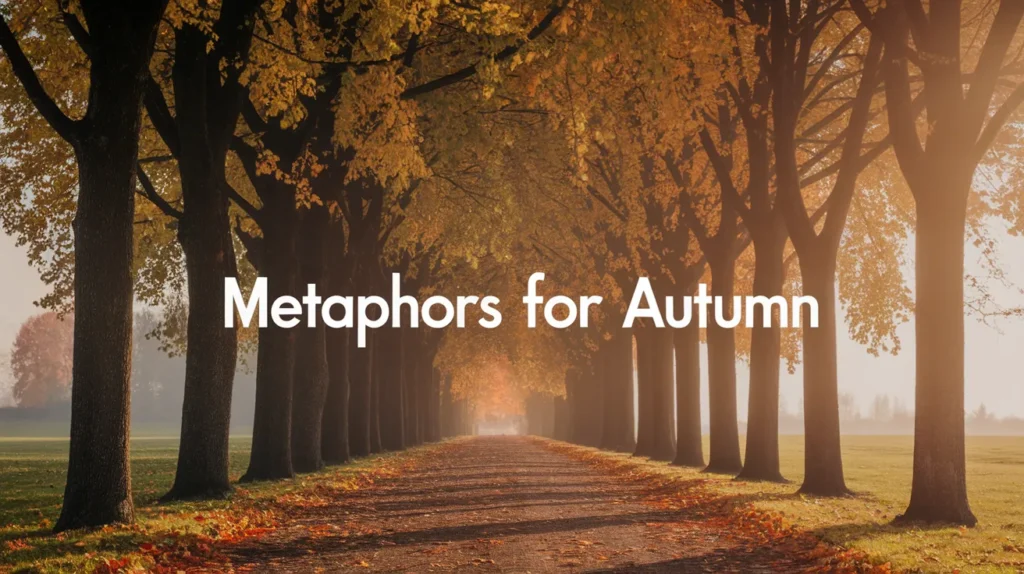
There’s a moment in autumn when the air turns crisp, leaves whisper underfoot, and the world seems to exhale a golden sigh. You walk beneath trees dressed in amber and crimson, and suddenly, everything feels like a story waiting to be told. Autumn isn’t just a season—it’s a feeling, a transition, a quiet kind of magic. And what better way to capture that magic than through metaphors? Metaphors for autumn allow us to express emotions, transformations, and fleeting beauty in ways that literal language simply cannot.
They deepen our writing, add sensory richness, and help readers connect with the essence of the season. Whether you’re crafting poetry, social media captions, or reflective journaling, mastering autumn metaphors can elevate your expression to something truly memorable. Let’s explore the poetic heart of fall through vivid metaphors, creative techniques, and hands-on inspiration.
Autumn as Nature’s Grand Farewell Performance
Autumn can be imagined as a grand theatrical finale, where trees perform their last dazzling act before winter’s quiet curtain falls.
Meaning & Explanation: This metaphor highlights the idea of beauty in endings. Just like a performer gives their best in a final act, nature showcases its most vibrant colors before the stillness of winter.
Example Sentence: The forest stood like a stage, autumn painting every leaf in a final, breathtaking performance.
Alternative Expressions:
- Autumn as a farewell symphony
- Nature’s closing ceremony
- A golden encore
Sensory Detail: You can almost hear the rustle of leaves like applause echoing through the woods.
Fall Foliage as a Burning Canvas of Colors
Imagine autumn as an artist splashing fiery hues across a vast canvas.
Meaning & Explanation: This metaphor emphasizes creativity, vibrancy, and transformation, portraying autumn as an artistic masterpiece.
Example Sentence: The hills blazed like a burning canvas, each leaf a stroke of fiery brilliance.
Alternative Expressions:
- A painter’s wild palette
- A sky dipped in embers
- A masterpiece in motion
Mini Storytelling: Think of a quiet countryside where every tree becomes a brushstroke—nature painting without pause, without perfection, yet achieving something extraordinary.
The Season of Change as Life’s Gentle Reminder
Autumn often symbolizes transitions, reminding us that change can be beautiful.
Meaning & Explanation: This metaphor connects the falling leaves to personal growth, letting go, and embracing new beginnings.
Example Sentence: Autumn whispered like a wise teacher, reminding us that letting go can be graceful.
Alternative Expressions:
- A lesson written in leaves
- Nature’s quiet advice
- The poetry of change
Emotional Detail: There’s a soft nostalgia in autumn, like revisiting old memories with a smile instead of sorrow.
Crisp Air as a Breath of Clarity
The cool autumn air can feel like a refreshing reset.
Meaning & Explanation: This metaphor connects autumn to mental clarity and emotional renewal.
Example Sentence: The crisp air felt like a deep breath of clarity after a long, restless summer.
Alternative Expressions:
- A cool whisper of renewal
- A breath of fresh beginnings
- The air of awakening
Falling Leaves as Letters from Time
Leaves drifting down can symbolize messages from the past.
Meaning & Explanation: Each leaf represents a memory, a moment, or a passing phase.
Example Sentence: The falling leaves were letters from time, each one carrying a story of what once was.
Alternative Expressions:
- Memories in motion
- Time’s scattered pages
- Nature’s diary entries
Autumn Sunlight as Liquid Gold
The soft, golden sunlight of autumn creates a magical atmosphere.
Meaning & Explanation: This metaphor captures warmth, richness, and fleeting beauty.
Example Sentence: The sunlight poured through the trees like liquid gold, warming the earth gently.
Alternative Expressions:
- Golden honey light
- A soft amber glow
- Sunlight kissed with warmth
Chilly Evenings as Cozy Invitations
Autumn evenings feel like an invitation to slow down.
Meaning & Explanation: This metaphor reflects comfort, warmth, and introspection.
Example Sentence: The chilly evening wrapped around us like a cozy invitation to pause and reflect.
Alternative Expressions:
- A blanket of calm
- A quiet embrace
- Evening’s gentle hug
Harvest Season as Life’s Reward
Autumn is often linked to harvesting what has been sown.
Meaning & Explanation: This metaphor symbolizes results, fulfillment, and gratitude.
Example Sentence: Autumn stood as life’s reward, a harvest of everything we had nurtured through the year.
Alternative Expressions:
- The season of abundance
- A time of gathering blessings
- Nature’s reward ceremony
Autumn Winds as Whispers of Change
The breeze carries a sense of transformation.
Meaning & Explanation: This metaphor reflects subtle shifts and unseen forces guiding change.
Example Sentence: The autumn wind whispered secrets of change through the rustling leaves.
Alternative Expressions:
- Winds of transition
- Nature’s quiet messenger
- A breeze of transformation
Trees as Letting-Go Teachers
Trees shedding leaves symbolize release.
Meaning & Explanation: This metaphor teaches emotional resilience and acceptance.
Example Sentence: The trees stood tall, silent teachers of how to let go with grace.
Alternative Expressions:
- Masters of release
- Guardians of change
- Silent philosophers
Misty Mornings as Dreams in Reality
Autumn mornings often feel surreal.
Meaning & Explanation: This metaphor captures mystery and softness.
Example Sentence: The misty morning felt like a dream that hadn’t fully awakened.
Alternative Expressions:
- A waking dream
- Fog-kissed reality
- Morning’s soft illusion
Pumpkin Fields as Childhood Memories
Autumn traditions evoke nostalgia.
Meaning & Explanation: This metaphor connects to joy, simplicity, and memory.
Example Sentence: The pumpkin field stretched like a patchwork of childhood memories.
Alternative Expressions:
- A harvest of nostalgia
- Fields of laughter
- Memories growing on vines
Rainy Autumn Days as Gentle Melancholy
Autumn rain often carries emotion.
Meaning & Explanation: This metaphor reflects introspection and quiet sadness.
Example Sentence: The autumn rain fell like a gentle melancholy, soft and thoughtful.
Alternative Expressions:
- Tears of the sky
- A quiet sadness
- Rain-soaked reflection
Shorter Days as Fading Stories
Daylight fades earlier in autumn.
Meaning & Explanation: This metaphor symbolizes endings and reflection.
Example Sentence: The shorter days felt like stories slowly reaching their final pages.
Alternative Expressions:
- The dimming of light
- A closing chapter
- Twilight’s whisper
Autumn Nights as Starry Secrets
Clear autumn skies reveal stars.
Meaning & Explanation: This metaphor conveys wonder and mystery.
Example Sentence: The autumn night unfolded like a book of starry secrets.
Alternative Expressions:
- A sky full of whispers
- Night’s hidden stories
- A cosmic canvas
Creative Practice: Try Your Own Autumn Metaphors
Here are a few interactive prompts to spark your creativity:
- Describe autumn using a food metaphor (e.g., “Autumn is like…”).
- Write a sentence comparing falling leaves to something unexpected.
- Imagine autumn as a character—what would it say or wear?
Quick Exercise: Complete this line: “Autumn feels like _________ because _________.”
Bonus Tips for Using Autumn Metaphors
- In Writing: Use metaphors sparingly but powerfully—one vivid image is better than many weak ones.
- On Social Media: Pair metaphors with photos for emotional impact.
- In Daily Life: Use seasonal metaphors in conversations to express feelings creatively.
FAQs
1. Why are metaphors important when describing autumn?
They help convey emotions, sensory details, and deeper meanings that literal descriptions cannot capture.
2. Can I use autumn metaphors in everyday writing?
Absolutely. They enhance storytelling, journaling, and even casual captions.
3. What makes a good autumn metaphor?
Clarity, creativity, and emotional connection. It should paint a vivid mental image.
4. Are autumn metaphors only for poetry?
No, they work well in blogs, essays, social media, and speeches.
5. How can I improve my metaphor-writing skills?
Practice regularly, observe nature closely, and read poetic descriptions for inspiration.
Conclusion
Autumn is more than falling leaves and cooler air—it’s a season rich with meaning, emotion, and quiet beauty. Through metaphors, we can transform simple observations into vivid expressions that resonate deeply with readers and listeners alike.
Whether you see autumn as a farewell performance, a burning canvas, or a gentle teacher, each metaphor reveals a different layer of its magic. By practicing and experimenting with these ideas, you’ll not only improve your writing but also deepen your appreciation for the world around you.
So the next time you step outside and hear leaves crunch beneath your feet, pause for a moment. Let the season speak—and then, translate its whispers into words.