
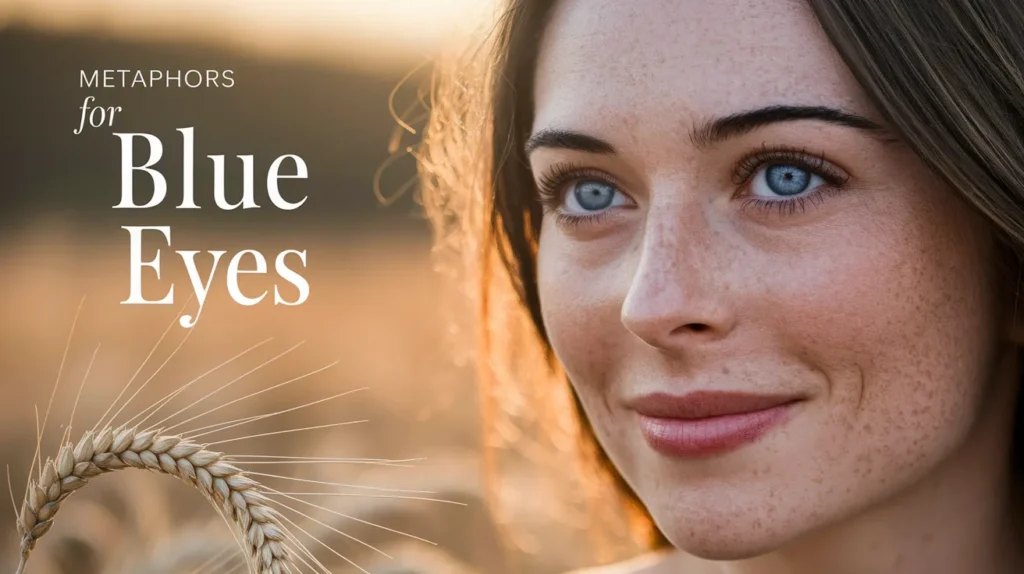
The first time you notice truly striking blue eyes, it rarely feels like a casual moment. It feels like standing at the edge of something vast—like an ocean stretching beyond the horizon, or a sky so endless it swallows your thoughts whole. There’s a quiet pull, a sense of depth, a flicker of something unspoken. Blue eyes don’t just look beautiful—they suggest something deeper. And that’s where metaphors come in.
Metaphors for blue eyes help us translate that quiet magic into words. They allow writers, poets, and everyday storytellers to express emotions, moods, and impressions that plain descriptions simply can’t capture. Whether you’re writing a love letter, crafting a story, or posting something memorable on social media, the right metaphor can transform a simple observation into something unforgettable.
In this article, you’ll explore vivid, creative, and meaningful metaphors for blue eyes, along with practical ways to use them effectively. You’ll also find exercises, storytelling ideas, and tips to sharpen your descriptive writing.
Ocean-Inspired Metaphors for Blue Eyes
The ocean is one of the most powerful and natural comparisons for blue eyes. It suggests depth, mystery, calmness, and sometimes danger.
Example 1: “Her eyes were a calm ocean at dawn.”
- Meaning: Peaceful, gentle, and comforting
- Scenario: A character feels safe in someone’s presence
- Alternative expressions: “still sea,” “glassy tide,” “quiet waters”
- Sensory detail: Soft waves, cool breeze, pale morning light
Example 2: “His gaze was a stormy sea, restless and wild.”
- Meaning: Emotional intensity or inner turmoil
- Scenario: A character hiding pain or passion
- Alternatives: “tempest tide,” “raging current,” “dark waters”
Example 3: “Her blue eyes were deep as the ocean trench.”
- Meaning: Profound depth, mystery, or wisdom
- Story moment: Someone feels there’s more beneath the surface
Sky-Themed Comparisons for Blue Eyes
The sky offers lightness, freedom, and openness—perfect for softer or more romantic metaphors.
Example 1: “His eyes were a cloudless summer sky.”
- Meaning: Pure, open, and honest
- Use case: Describing innocence or sincerity
Example 2: “Her gaze shimmered like twilight skies.”
- Meaning: Dreamy, transitional, slightly mysterious
- Alternatives: “sunset blue,” “dusk-lit gaze”
Example 3: “Eyes like a winter sky—beautiful but distant.”
- Meaning: Cold beauty, emotional distance
Gemstone and Crystal Metaphors for Blue Eyes
Gemstones add a sense of value, rarity, and brilliance.
Example 1: “Her eyes sparkled like sapphires.”
- Meaning: Precious, vivid, captivating
- Alternative: “blue jewels,” “crystal gaze”
Example 2: “His eyes were shards of icy crystal.”
- Meaning: Sharp, cold, intense
- Scenario: A character who intimidates others
Example 3: “Eyes like polished aquamarine.”
- Meaning: Soft elegance and clarity
Nature-Based Metaphors for Blue Eyes
Nature offers endless inspiration beyond oceans and skies.
Example 1: “Her eyes were like a hidden mountain lake.”
- Meaning: Quiet beauty, hidden depth
- Mini story: A traveler discovers a secret lake—just like discovering her true self
Example 2: “His gaze mirrored frozen glaciers.”
- Meaning: Cold, majestic, untouchable
Example 3: “Eyes like blue petals in spring.”
- Meaning: Fresh, delicate, full of life
Romantic Metaphors for Blue Eyes
These metaphors emphasize attraction, warmth, and emotional connection.
Example 1: “Her eyes were love letters written in blue.”
- Meaning: Deep emotional expression
- Use: Romantic writing or poetry
Example 2: “I got lost in his ocean eyes.”
- Meaning: Overwhelming attraction
Example 3: “Her gaze held a thousand whispered promises.”
- Meaning: Intimacy and emotional depth
Mysterious and Enigmatic Blue Eye Metaphors
Sometimes blue eyes feel unreadable, even haunting.
Example 1: “His eyes were locked doors beneath blue glass.”
- Meaning: Secrets hidden beneath beauty
Example 2: “Her gaze was a riddle wrapped in sky.”
- Meaning: Intriguing and puzzling
Example 3: “Eyes like a foggy horizon.”
- Meaning: Unclear intentions
Cold and Icy Metaphors for Blue Eyes
Blue eyes can also feel distant or chilling.
Example 1: “Her eyes were winter frost.”
- Meaning: Emotionally distant
Example 2: “His gaze cut like ice.”
- Meaning: Sharp, intimidating
Example 3: “Eyes like frozen rivers.”
- Meaning: Still but powerful
Warm and Gentle Blue Eye Metaphors
Not all blue eyes are cold—many feel comforting.
Example 1: “Her eyes were soft waves on a quiet shore.”
- Meaning: Calm and soothing
Example 2: “His gaze glowed like morning light on water.”
- Meaning: Gentle warmth
Example 3: “Eyes like a peaceful sky after rain.”
- Meaning: Renewal and hope
Fantasy and Magical Metaphors for Blue Eyes
Perfect for creative writing or storytelling.
Example 1: “Her eyes held pieces of the sky’s magic.”
- Meaning: Enchanting and otherworldly
Example 2: “His gaze shimmered like enchanted water.”
- Meaning: Mystical charm
Example 3: “Eyes like portals to another world.”
- Meaning: Deep imagination or mystery
Cultural and Literary References for Blue Eyes
Throughout literature, blue eyes often symbolize purity, mystery, or intensity.
- In classic poetry, blue eyes are often compared to heavens or divine beauty
- In modern storytelling, they can represent hidden strength or emotional depth
- Mini example: A character described with “eyes like a northern sea” often carries both beauty and danger
Creative Writing Tips for Using Blue Eye Metaphors
- Match the mood: Choose metaphors that reflect the character’s emotions
- Avoid clichés: Add a twist to common comparisons
- Use sensory details: Include sound, texture, or temperature
- Be consistent: Don’t mix conflicting metaphors in one scene
Example Deep Dive: Crafting Strong Blue Eye Metaphors
Core Idea: Combine emotion + imagery
- Basic: “Her eyes were blue”
- Improved: “Her eyes were like a quiet ocean”
- Advanced: “Her eyes were a quiet ocean, hiding storms beneath their calm surface”
Interactive Exercise: Create Your Own Blue Eye Metaphors
Try these prompts:
- Compare blue eyes to a place you love
- Describe blue eyes using weather
- Turn an emotion into a visual metaphor
Example prompt: “Blue eyes like ______ because they make me feel ______.”
Social Media and Everyday Uses of Blue Eye Metaphors
- Instagram caption: “Lost somewhere between sky and sea 💙”
- Text message: “Your eyes = my favorite view”
- Poetry snippet: “In your eyes, I found a horizon I never want to leave”
Bonus Tips for Writers and Creators
- Use metaphors sparingly for impact
- Pair metaphors with actions (a glance, a smile)
- Experiment with unexpected comparisons (music, time, memory)
Common Mistakes When Writing Blue Eye Metaphors
- Overusing “ocean eyes” without variation
- Mixing too many images at once
- Ignoring emotional context
- Being too vague
Expanding Your Figurative Language Beyond Blue Eyes
Once you master blue eye metaphors, try applying similar techniques to:
- Hair descriptions
- Emotions (anger, love, fear)
- Nature scenes
FAQs
1. What is the most common metaphor for blue eyes?
The most common is comparing them to the ocean or sky due to their natural blue tones and symbolic depth.
2. How can I make my metaphors more unique?
Add emotional context, sensory details, or combine unexpected ideas for originality.
3. Are blue eye metaphors only for romantic writing?
No, they can be used in storytelling, poetry, character building, and even casual descriptions.
4. Can blue eyes symbolize negative traits?
Yes, they can represent coldness, distance, or mystery depending on the metaphor used.
5. How many metaphors should I use in one piece?
Use a few strong ones rather than many weak ones to maintain clarity and impact.
Conclusion
Blue eyes are more than just a color—they’re a canvas for imagination, emotion, and storytelling. Through metaphors, they become oceans, skies, crystals, and dreams. They can comfort, unsettle, inspire, or captivate—all depending on how you choose to describe them.
By learning to craft thoughtful, vivid metaphors for blue eyes, you’re not just improving your writing—you’re learning how to see more deeply and express more meaningfully.
Whether you’re writing a novel, a poem, or a simple caption, the right metaphor can turn a fleeting glance into something unforgettable. So next time you see a pair of blue eyes, don’t just notice them—translate them into something magical.