
The old lighthouse stood against the crashing waves night after night, never abandoning the ships that searched for safety in the storm. Its beam swept across the dark water like a promise that refused to break. In many ways, loyalty feels exactly like that lighthouse—steady, unwavering, and comforting when the world becomes uncertain. Loyalty is one of the most admired human qualities.
It appears in friendships that survive years apart, families who stand together during hardship, and relationships strengthened by trust instead of convenience. Because loyalty is such a deep emotional concept, writers and speakers often use metaphors to make it more vivid and meaningful. A strong metaphor transforms abstract feelings into something readers can see, hear, and feel.
In this article, you’ll explore meaningful metaphors for loyalty, discover how to use them creatively, and learn ways to apply them in storytelling, poetry, speeches, social media captions, and everyday conversations. Along the way, you’ll find examples, mini stories, writing prompts, and practical tips to help your language shine with warmth and emotional depth.
Why Metaphors for Loyalty Matter in Writing and Communication
Loyalty can sometimes feel difficult to describe directly. Saying someone is “very loyal” communicates the idea, but it lacks emotional texture. Metaphors add color and atmosphere.
When you compare loyalty to a lighthouse, an anchor, or an oak tree, readers instantly understand the feeling behind the words. They don’t just think about loyalty—they experience it.
Metaphors for loyalty are especially useful in:
- Poetry and literature
- Romantic writing
- Friendship captions
- Speeches and tributes
- Character development
- Inspirational social media posts
- Personal journaling
They also help readers connect emotionally with stories and messages. A memorable metaphor lingers in the mind long after the sentence ends.
Loyalty as an Anchor in a Storm
One of the most popular metaphors for loyalty compares it to an anchor holding a ship steady during rough seas.
Meaning and Explanation
An anchor prevents a ship from drifting away when strong waves or winds arrive. Likewise, a loyal person stays grounded beside you during life’s difficult moments.
This metaphor emphasizes:
- Stability
- Reliability
- Emotional security
- Commitment during hardship
Example Sentence
“Her loyalty was an anchor that kept him steady through the chaos of grief.”
Alternative Expressions
- A harbor in rough waters
- A rope tied firmly to shore
- A steady hand on a trembling boat
Emotional and Sensory Detail
Imagine thunder roaring above dark ocean waves while one heavy anchor keeps the vessel from disappearing into the night. That image mirrors the comfort loyal people provide during uncertainty.
Mini Storytelling Example
During wartime letters exchanged between families and soldiers often reflected this kind of loyalty. Even across oceans, handwritten promises became emotional anchors for those waiting at home.
Metaphors for Faithful Friendship and Lasting Bonds
Friendship often reveals the purest form of loyalty. True friends remain present even after misunderstandings, distance, or time.
Writers frequently compare loyal friendship to:
- Roots beneath a tree
- Stars guiding travelers
- Bridges over rivers
- Campfires in winter
These images symbolize connection and endurance.
A friendship metaphor becomes especially powerful when paired with sensory language:
“His friendship was a campfire glowing quietly through the coldest winters of her life.”
That sentence creates warmth readers can almost physically feel.
Loyalty Compared to a Lighthouse
The lighthouse metaphor beautifully captures guidance and unwavering support.
Meaning and Explanation
A lighthouse remains standing through storms while guiding lost travelers toward safety. Loyal people often do the same emotionally.
Example Sentence
“She became the lighthouse that guided her family through years of uncertainty.”
Alternative Ways to Express It
- A lantern in the fog
- A beacon in darkness
- A torch that never fades
Cultural and Literary References
Lighthouses frequently appear in maritime literature and films as symbols of hope, protection, and faithfulness. In classic storytelling, they often represent someone who waits patiently for loved ones to return home.
Emotional Detail
The lonely glow of a lighthouse cutting through fog carries both melancholy and reassurance. It suggests devotion that survives isolation and time.
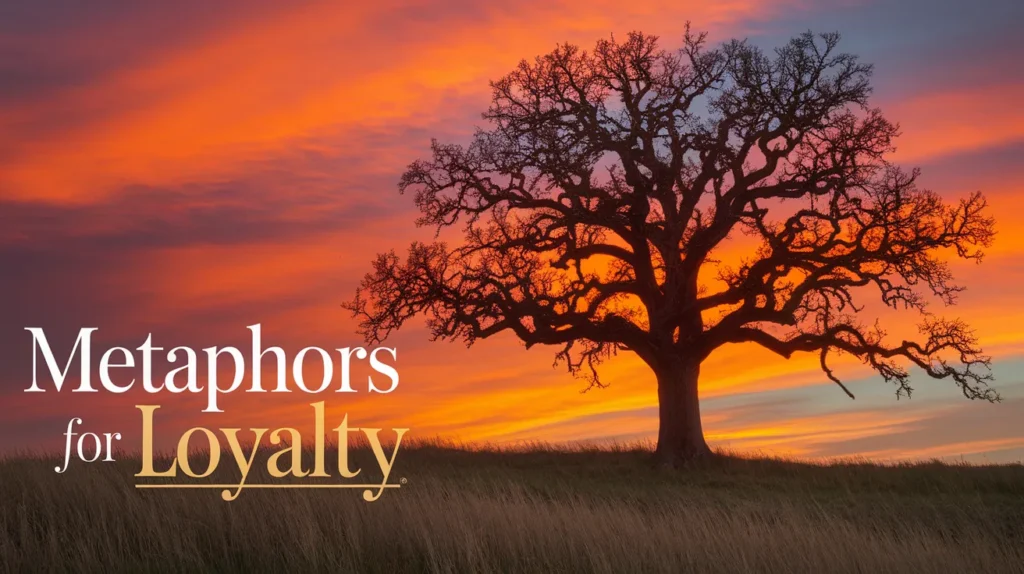
The Oak Tree Metaphor for Loyalty
Strong trees are timeless symbols of endurance and reliability.
Meaning and Explanation
An oak tree survives storms because its roots run deep. Loyal people also stay firm when relationships face pressure or conflict.
Example Sentence
“Their marriage stood like an oak tree through every season of hardship.”
Alternative Expressions
- Roots woven into the earth
- A forest that bends but never breaks
- Branches sheltering others from rain
Sensory Detail
Picture rough bark beneath your fingertips, leaves rustling in heavy wind, and roots gripping the soil beneath the earth. That image reflects emotional strength and long-lasting commitment.
Real-Life Reflection
Many families have a person who acts like the “oak tree” of the household—the one everyone depends on during difficult moments.
Symbolic Metaphors for Loyalty in Literature
Throughout literature, loyalty appears through symbolic imagery rather than direct explanation.
Common literary metaphors include:
MetaphorSymbolismGolden threadUnbreakable connectionShieldProtection and devotionCompassGuidance and moral supportCastle wallDefense and reliabilityEternal flameLasting affection and faithfulness
In fantasy novels, loyal companions often appear as shields or guardians. In romance literature, loyalty may become a flame that survives through separation and hardship.
These symbolic metaphors deepen emotional resonance and make characters unforgettable.
Loyalty as a Bridge Between Hearts
Bridges symbolize connection across distance, pain, or misunderstanding.
Meaning and Explanation
A loyal relationship creates emotional pathways that survive obstacles.
Example Sentence
“Trust became the bridge that kept their friendship alive after years apart.”
Alternative Expressions
- A road leading home
- Threads stitched across silence
- A path through the wilderness
Emotional Tone
This metaphor feels hopeful because bridges imply reunion, healing, and effort. They connect what might otherwise remain separated forever.
Mini Story Example
Two childhood friends reconnect after a decade apart. Despite years of silence, their bond feels unchanged. Their loyalty acted like a bridge waiting quietly over time.
Emotional Metaphors for Loyalty in Relationships
Romantic relationships often use poetic metaphors for devotion and trust.
Popular examples include:
- “You are my safe harbor.”
- “Her love was a flame that never dimmed.”
- “His devotion wrapped around her like a warm blanket.”
- “They were stitched together by trust.”
These metaphors create intimacy because they combine emotion with imagery.
Writers frequently use nature-based language for romantic loyalty because natural elements feel timeless and universal.
Creative Ways to Use Loyalty Metaphors in Daily Life
Metaphors are not limited to books or poetry. You can use them naturally in conversations, captions, cards, and speeches.
Social Media Caption Ideas
- “Real friends are anchors during life’s storms.”
- “Loyalty shines brightest in dark seasons.”
- “Some people are lighthouses in human form.”
- “Trust grows deep roots.”
Writing Tips
Use metaphors sparingly but meaningfully. Too many comparisons can overwhelm readers.
Choose metaphors that:
- Match the emotional tone
- Fit your audience
- Feel relatable and vivid
- Avoid clichés when possible
Bonus Tip
Mix sensory details into your metaphor:
Instead of: “Her loyalty was strong.”
Try: “Her loyalty stood like an oak tree against winter winds.”
The second sentence feels more alive and memorable.
Metaphors for Loyalty Inspired by Nature
Nature offers endless inspiration because it reflects endurance, cycles, and interconnectedness.
Here are meaningful nature metaphors for loyalty:
- Mountains standing for centuries
- Rivers returning to the sea
- Wolves protecting the pack
- Birds migrating together
- Ivy clinging to stone walls
Nature metaphors feel especially poetic because readers already associate the natural world with emotional symbolism.
Example
“Their loyalty flowed like a river that never forgot its way home.”
That image suggests persistence, memory, and inevitability.
Loyalty as a Flame That Never Dies
Fire symbolizes passion, warmth, and enduring energy.
Meaning and Explanation
A loyal person continues caring even when circumstances become difficult.
Example Sentence
“Even after years apart, their friendship burned like an eternal flame.”
Alternative Expressions
- A candle surviving the wind
- Embers glowing through darkness
- A fire guarded carefully through winter
Emotional Detail
Fire metaphors often create warmth and nostalgia. They suggest emotional closeness that survives time and hardship.
Literary Reference
Ancient myths frequently used sacred flames to symbolize eternal devotion or vows that could never be broken.
Powerful Loyalty Comparisons for Storytelling
Writers can strengthen storytelling by attaching loyalty metaphors to character behavior.
For example:
Instead of saying: “He was loyal to his brother.”
You could write: “He guarded his brother like a knight protecting a kingdom.”
That comparison creates stronger imagery and emotional stakes.
Storytelling Exercise
Take a simple sentence: “She stayed by her friend.”
Rewrite it using a metaphor: “She stood beside her friend like a lighthouse refusing to fade during the storm.”
Notice how the emotional intensity increases immediately.
Using Loyalty Metaphors in Poetry and Creative Writing
Poetry thrives on metaphor because poems often focus more on emotion than direct explanation.
Writing Prompt
Write about loyalty without using the word “loyal.”
Instead, describe:
- Weather
- Objects
- Landscapes
- Animals
- Seasons
For example:
“Through every winter, the old pine tree remained beside the cabin.”
The tree quietly symbolizes unwavering devotion.
Bonus Poetry Tip
Use contrasts for stronger impact:
- Storm vs shelter
- Darkness vs light
- Cold vs warmth
- Distance vs connection
Contrasts make loyalty feel more dramatic and emotionally satisfying.
Interactive Exercises to Practice Loyalty Metaphors
Practicing metaphors improves creativity and emotional expression.
Exercise 1: Finish the Comparison
Complete these sentences:
- Loyalty is like __________.
- A faithful friend is a __________.
- Trust grows like __________.
Exercise 2: Sensory Writing Challenge
Describe loyalty using:
- One sound
- One texture
- One smell
- One visual image
Example: “Loyalty sounded like footsteps returning home.”
Exercise 3: Character Creation Prompt
Create a fictional character known for loyalty. Then compare them to:
- An object
- A weather element
- An animal
- A place in nature
This exercise helps writers develop memorable symbolic characters.
Common Mistakes When Using Metaphors for Loyalty
Even beautiful metaphors can lose impact if overused or unclear.
Avoid Mixed Metaphors
Incorrect: “Her loyalty was an anchor lighting the road ahead.”
Anchors and roads belong to different symbolic systems, which creates confusion.
Avoid Overcomplication
Simple metaphors often feel strongest:
- “A steady bridge”
- “A guiding star”
- “Deep roots”
Avoid Repetition
Using the same metaphor repeatedly weakens emotional effect. Try rotating imagery:
- Nature
- Light
- Architecture
- Weather
- Travel symbols
Famous Cultural Symbols of Loyalty Around the World
Different cultures use unique symbols to represent loyalty and devotion.
Wolves
Wolves symbolize loyalty because of their strong pack bonds and protective behavior.
Dogs
Across many cultures, dogs represent unconditional faithfulness and companionship.
Samurai Traditions
In Japanese history and storytelling, samurai loyalty to honor and duty became legendary.
Knots and Threads
In mythology and folklore, woven threads often symbolize destiny and unbreakable connection.
These cultural symbols enrich storytelling and help metaphors feel universal.
Bonus Tips for Using Loyalty Metaphors in Social Media and Everyday Writing
Short metaphors work especially well online because they are emotionally memorable and easy to share.
Caption Examples
- “Loyal hearts leave permanent footprints.”
- “Some souls stay through every storm.”
- “True loyalty whispers instead of boasting.”
- “Real devotion grows roots.”
Journaling Prompt
Write about someone who stayed beside you during a difficult season. Compare them to:
- A season
- A building
- A source of light
- A natural element
This creates emotional depth while strengthening reflective writing skills.
Conversation Tip
Metaphors can also make compliments feel more meaningful:
Instead of: “You’re very supportive.”
Say: “You’ve been my lighthouse this year.”
That sentence feels more personal and emotionally rich.
FAQs
What is a good metaphor for loyalty?
An anchor is one of the strongest metaphors for loyalty because it represents stability, support, and reliability during difficult times.
Why are metaphors useful in describing loyalty?
Metaphors create vivid emotional imagery that helps readers feel the meaning of loyalty instead of simply understanding it logically.
Can loyalty metaphors be used in poetry?
Yes. Loyalty metaphors are extremely popular in poetry because they add emotional depth, symbolism, and beauty to relationships and themes.
What are some nature metaphors for loyalty?
Oak trees, rivers, mountains, wolves, stars, and roots are all powerful nature-based metaphors representing devotion and steadfastness.
How can I create my own loyalty metaphor?
Think about qualities of loyalty—strength, consistency, trust, protection—and compare them to objects, places, or natural elements that share those traits.
Conclusion
Loyalty is more than simple faithfulness—it is presence during storms, warmth during loneliness, and strength during uncertainty. Metaphors allow us to express these emotions with beauty and clarity. Whether loyalty appears as an anchor in rough seas, an oak tree with deep roots, or a lighthouse glowing through darkness, these comparisons transform ordinary language into something memorable and moving.
By practicing loyalty metaphors in storytelling, poetry, captions, and daily conversations, you can communicate emotion more vividly and connect with readers on a deeper level. The most powerful metaphors are the ones that feel honest, human, and emotionally alive. Like a steady flame refusing to fade in the wind, true loyalty continues shining long after words are spoken.