
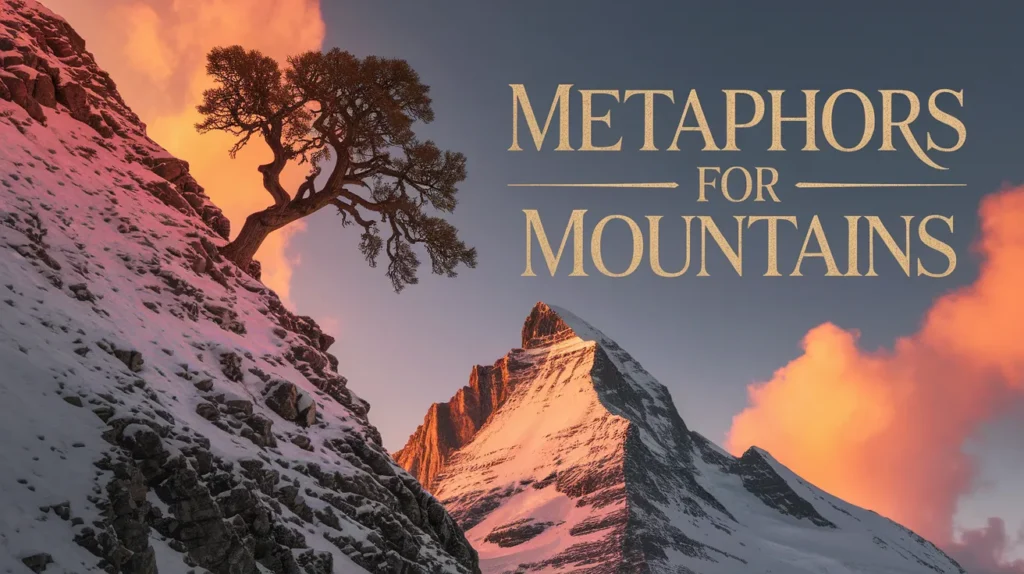
The wind howled across the rocky ridge as the first light of dawn painted the peaks gold. Far below, rivers curled like silver ribbons through sleeping valleys, while above, the mountains stood unmoved—ancient, silent, and watchful. For centuries, mountains have stirred something deep inside human hearts. They symbolize strength, struggle, wisdom, isolation, ambition, and even spiritual awakening. Whether in poetry, novels, speeches, or everyday conversations, mountain metaphors help us describe emotions and experiences too vast for ordinary words.
Metaphors for mountains are more than beautiful literary devices. They allow writers, speakers, and thinkers to express challenges, resilience, dreams, and emotional journeys with vivid clarity. A difficult life goal becomes “a mountain to climb.” A wise elder becomes “an unmoving mountain in the storm.” These comparisons instantly create emotional depth and imagery that readers can feel.
In this article, you’ll explore rich and creative mountain metaphors, learn how to use them effectively, discover literary inspirations, and practice crafting your own figurative language. Along the way, you’ll find storytelling prompts, writing tips, emotional nuances, and practical examples you can use in fiction, poetry, social media captions, or daily conversations.
Why Mountains Make Powerful Metaphors
Mountains naturally inspire awe. Their towering size, rugged endurance, and timeless beauty make them perfect symbols for human experiences. Across cultures, mountains often represent spiritual journeys, obstacles, strength, or wisdom.
When writers use mountain metaphors, they instantly create scale and emotion. Readers don’t just understand the idea—they feel it. A “mountain of grief” feels heavy and overwhelming. A “mountain of hope” feels uplifting and limitless.
Mountain metaphors also work because they connect to universal experiences. Almost everyone understands the effort of climbing uphill or the relief of reaching a summit. These physical experiences mirror emotional and personal struggles beautifully.
Mountain as a Symbol of Strength
One of the most common metaphors for mountains is strength. Mountains survive storms, earthquakes, harsh winters, and centuries of erosion. They stand firm despite chaos.
Meaning and Explanation: Using mountains as symbols of strength emphasizes resilience, stability, and endurance.
Example Sentence: “After losing everything in the flood, her father remained a mountain for the family.”
Alternative Expressions:
- Solid as a mountain
- A mountain against the storm
- Mountain-hearted
Emotional Detail: This metaphor creates feelings of safety, reliability, and admiration.
In literature, heroic figures are often compared to mountains because they provide emotional shelter for others. Think of wise kings, strong parents, or leaders who remain calm during crisis.
The Mountain as a Life Challenge
Life’s hardest struggles are often described as mountains because climbing requires patience, courage, and persistence.
Meaning and Explanation: A mountain represents obstacles that seem overwhelming but achievable through effort.
Example Scenario: “Starting her business felt like climbing a mountain barefoot.”
Alternative Ways to Express It:
- Uphill battle
- Steep climb
- Reaching the summit
Sensory Imagery: Imagine cold air burning your lungs while your legs ache during a climb. That physical exhaustion mirrors emotional perseverance.
This metaphor appears everywhere—from motivational speeches to sports documentaries—because it perfectly captures human struggle and triumph.
Spiritual Meanings Behind Mountain Metaphors
Many cultures see mountains as sacred places where humans connect with something greater than themselves.
Ancient myths often placed gods on mountaintops. Pilgrims climbed mountains seeking enlightenment. In poetry, mountains symbolize clarity, reflection, and inner peace.
Example Sentence: “Her meditation retreat became a mountain between her old self and her awakening.”
Alternative Expressions:
- Sacred summit
- Peak of enlightenment
- Closer to heaven
Mountains in spiritual metaphors often suggest distance from noise and distraction. They become spaces for truth, wisdom, and transformation.
Emotional Weight and “Mountains of Feeling”
Sometimes emotions become so intense they feel enormous and impossible to move.
Meaning and Explanation: A mountain metaphor can express emotional heaviness, pressure, or overwhelming responsibility.
Example Sentence: “He carried a mountain of guilt after the argument.”
Alternative Ways to Say It:
- Buried beneath emotions
- Crushed by the peak
- Carrying stone-heavy sorrow
Mini Storytelling Example: A teenager preparing for exams might feel like textbooks are stacked into a mountain blocking every path forward. That image instantly creates emotional understanding.
Writers often use these metaphors to make invisible feelings feel tangible and physical.
Mountains as Symbols of Wisdom and Age
Mountains are ancient. They existed long before us and will likely remain long after us. Because of this timelessness, they often symbolize wisdom.
Example Sentence: “My grandmother sat quietly by the window, a mountain of memory and patience.”
Meaning and Explanation: The metaphor suggests calm understanding developed through years of experience.
Alternative Expressions:
- Ancient as the hills
- Stone-wise
- Timeless peak
This metaphor works especially well for mentors, elders, teachers, and thoughtful characters in fiction.
Literary Examples of Mountain Metaphors
Many famous writers have used mountain imagery to deepen emotional meaning.
In romantic poetry, mountains often symbolize longing and distance. In adventure novels, they represent danger and transformation. In fantasy stories, mountains frequently guard secrets, kingdoms, or spiritual truths.
A classic example appears in adventure literature where crossing mountains symbolizes entering a new stage of life. The physical climb mirrors emotional growth.
Even modern films use mountain metaphors visually. A character climbing alone often represents self-discovery or emotional healing.
These literary uses remind us that mountain metaphors are timeless tools for storytelling.
Creative Metaphors for Mountains in Poetry
Poetry thrives on vivid imagery, and mountains offer endless possibilities.
Here are some imaginative examples:
- “The mountain was a sleeping giant wrapped in snow.”
- “Her silence rose like a mountain at dusk.”
- “The city skyline stood like steel mountains against the storm.”
- “His ambition became a volcano beneath the mountain.”
Each metaphor creates a different emotional mood. Some feel peaceful, others intimidating or mysterious.
Writing Tip
Combine mountain imagery with weather, seasons, or sound for deeper sensory detail:
- Whispering pines
- Cracking ice
- Rolling thunder
- Golden sunrise on stone
These details make metaphors more immersive and memorable.
Using Mountain Metaphors in Everyday Writing
Mountain metaphors are not limited to novels or poems. They also strengthen speeches, social media captions, journaling, and conversations.
Examples:
- “This week feels like a mountain, but I’ll climb it.”
- “My goals are mountains worth chasing.”
- “Parenthood is both a mountain and a miracle.”
These metaphors make ordinary statements more emotional and engaging.
Bonus Tip for Social Media
Mountain metaphors pair beautifully with travel photos, motivational posts, and reflective captions:
- “Every mountain teaches patience.”
- “Storms shape mountains—and people.”
- “One step closer to the summit.”
Short metaphors often feel more powerful online because they combine emotion with visual imagery.
Three Powerful Mountain Metaphor Ideas to Try
The Mountain as a Silent Guardian
Meaning: Protection, reliability, emotional support.
Example Sentence: “My older brother stood like a mountain beside me during the hardest year of my life.”
Alternative Expressions:
- Rock of support
- Unshakable peak
- Silent protector
Emotional Tone: Comforting and reassuring.
This metaphor works beautifully in emotional storytelling and family-centered writing.
The Mountain as Hidden Fear
Meaning: Anxiety or challenges that appear impossible.
Example Sentence: “Public speaking became a mountain shadowing every opportunity.”
Alternative Ways to Express It:
- Cliff of fear
- Avalanche of doubt
- Towering uncertainty
Mini Storytelling Example: Imagine a student staring at a stage before giving a speech. The audience suddenly feels like steep cliffs rising around them.
The Mountain as Personal Growth
Meaning: Transformation through struggle.
Example Sentence: “Every mistake became another step up the mountain of maturity.”
Alternative Expressions:
- Journey to the summit
- Climbing toward wisdom
- Rising above the valley
Sensory Detail: Cold wind, scraped hands, tired muscles, and finally seeing the sunrise from the summit—all mirror emotional growth.
Cultural and Mythological Mountain Symbolism
Different cultures give mountains powerful meanings.
In Greek mythology, Mount Olympus was believed to be the home of the gods. In Asian traditions, mountains often symbolize harmony and spiritual balance. Indigenous stories frequently portray mountains as living ancestors or protectors.
These cultural meanings add richness to writing. Referencing mountain symbolism can make metaphors feel deeper and more universal.
For example:
- A mountain temple may symbolize inner peace.
- A volcanic mountain may symbolize buried anger.
- Snow-covered peaks may represent purity or isolation.
Understanding cultural symbolism helps writers create layered, meaningful imagery.
Interactive Exercise: Create Your Own Mountain Metaphor
Try this creative exercise:
Step 1: Choose an Emotion
Pick a feeling such as fear, hope, grief, excitement, or love.
Step 2: Imagine a Mountain Landscape
Think about:
- Weather
- Height
- Color
- Terrain
- Sounds
Step 3: Connect the Emotion to the Mountain
Example: “Her anxiety was a mountain wrapped in fog—huge, cold, and impossible to see through.”
Practice Prompt
Write three sentences describing:
- A mountain of joy
- A mountain of regret
- A mountain of ambition
This exercise strengthens descriptive writing and emotional imagery.
How to Make Mountain Metaphors More Original
Some mountain metaphors are overused, like “a mountain to climb.” To make your writing stand out, add unexpected details.
Instead of:
“He faced a mountain of work.”
Try:
“He faced a jagged mountain of unfinished tasks, sharp enough to cut into his sleep.”
Specific details create stronger emotional reactions.
Bonus Creativity Tips
- Mix mountains with seasons or weather.
- Use unusual mountain features like caves, cliffs, or avalanches.
- Combine emotional and physical imagery.
Original metaphors make readers pause and imagine.
Mountain Metaphors in Motivational Writing
Motivational speakers frequently use mountain imagery because it inspires perseverance and hope.
A summit represents achievement. The climb represents effort. The view from the top symbolizes reward and perspective.
Example:
“The mountain doesn’t lower itself—you grow stronger climbing it.”
This kind of metaphor encourages resilience without sounding overly dramatic.
Real-Life Inspiration
Athletes, entrepreneurs, and survivors often describe recovery or success as climbing a mountain. The metaphor resonates because progress is rarely easy or immediate.
Sensory Language That Strengthens Mountain Imagery
Strong metaphors become unforgettable when paired with sensory details.
Sight
- Snow glowing under moonlight
- Sharp black cliffs
- Mist drifting through valleys
Sound
- Wind roaring through rocks
- Cracking ice
- Distant thunder
Touch
- Rough stone
- Freezing air
- Trembling ground
Emotional Effect
Sensory details make readers feel present inside the metaphor rather than simply observing it.
Common Mistakes When Using Mountain Metaphors
Even beautiful metaphors can lose impact if overused or unclear.
Avoid Mixed Metaphors
Incorrect: “Her mountain of sadness sailed across the ocean of hope.”
The imagery clashes and confuses readers.
Avoid Excessive Drama
Not every challenge needs to be “an impossible mountain.” Smaller metaphors sometimes feel more authentic.
Keep Tone Consistent
A poetic mountain metaphor may feel strange inside casual business writing unless used carefully.
Thoughtful balance makes figurative language more effective.
Practical Ways to Use Mountain Metaphors Daily
Mountain metaphors can improve creativity far beyond literature.
In Journaling
Describe your emotional state using landscapes.
In Public Speaking
Use mountain imagery to inspire audiences.
In Social Media Captions
Create emotional and memorable posts.
In Fiction Writing
Give characters emotional depth through symbolic landscapes.
In Personal Reflection
Thinking of problems as mountains can make struggles feel structured and conquerable rather than chaotic.
Metaphors are not just decorative—they shape how we understand life itself.
FAQs
What do mountains usually symbolize in metaphors?
Mountains commonly symbolize strength, challenges, wisdom, spiritual growth, perseverance, and emotional depth.
Why are mountain metaphors so popular in literature?
They create vivid imagery and connect naturally to human struggles, ambition, and transformation.
How can I make my mountain metaphors more unique?
Add sensory details, emotional nuance, unusual settings, or unexpected comparisons instead of relying on common phrases.
Can mountain metaphors be used in everyday conversation?
Yes. People often say things like “I have a mountain of work” or “We climbed that mountain together” to describe challenges and achievements.
Are mountain metaphors useful for poetry?
Absolutely. Mountains provide rich visual and emotional symbolism that works beautifully in poetic and descriptive writing.
Conclusion
Mountains rise through human imagination as symbols of struggle, wisdom, endurance, and transformation. Their towering presence reminds us of obstacles we face, dreams we chase, and strength we discover within ourselves. Whether you’re crafting poetry, writing fiction, creating social media captions, or simply searching for better ways to express emotion, mountain metaphors offer powerful tools for vivid communication.
The beauty of these metaphors lies in their emotional truth. We all climb something in life. We all stand before moments that seem too steep, too cold, or too distant. Yet mountains also promise perspective. The climb changes us. The summit reveals new horizons.
So the next time you write about fear, hope, love, grief, or ambition, let the mountains speak. Their ancient silence still carries some of the most powerful stories ever told.