
Rain hammered against the old window while a tiny green shoot pushed through a crack in the concrete outside. It bent under the storm, trembling in the wind, yet it did not break. By morning, the little plant still stood there—quietly alive, stubbornly growing. That image captures the heart of resilience better than any dictionary definition ever could.
Resilience is more than surviving difficult moments. It is the ability to recover, adapt, and keep moving forward even when life feels heavy. Writers, speakers, students, and everyday people often use metaphors for resilience to express emotional strength in vivid, unforgettable ways. A strong metaphor transforms an abstract feeling into something readers can see, hear, and almost touch.
Whether you are crafting poetry, writing inspirational captions, teaching figurative language, or simply searching for words to describe perseverance, resilience metaphors can add emotional depth and beauty to your communication. In literature, culture, and everyday speech, these comparisons help people connect to courage and hope on a deeply human level.
This article explores meaningful metaphors for resilience, creative comparisons, practical writing ideas, and emotional storytelling techniques that make figurative language more powerful. Along the way, you will discover examples, exercises, and inspiration to help you use these metaphors naturally in writing and daily life.
Why Metaphors for Resilience Matter in Writing and Life
Resilience can be difficult to explain directly because it is emotional and deeply personal. Metaphors make it easier to understand by connecting strength with familiar images from nature, travel, weather, or art.
When someone says, “She is a lighthouse in the storm,” we instantly imagine guidance, endurance, and hope. A simple comparison paints an entire emotional landscape.
These figurative language examples are useful because they:
- Create emotional connection
- Make writing more memorable
- Help readers visualize difficult emotions
- Add beauty and creativity to communication
- Encourage motivation and reflection
In everyday life, resilience metaphors also help people cope with hardship. Comparing recovery to “a tree growing after wildfire” can make healing feel possible and natural rather than impossible.
The Meaning Behind Resilience Metaphors
A metaphor compares two unlike things without using “like” or “as.” Instead of saying someone is like a mountain, you simply say, “She is a mountain.”
Metaphors for resilience often involve:
- Nature
- Weather
- Journeys
- Fire and rebuilding
- Strength and movement
- Light overcoming darkness
These images symbolize endurance, recovery, patience, and emotional courage.
For example:
- “He is an unbroken bridge after the flood.”
- “Her spirit is a phoenix rising from ashes.”
- “They are roots gripping the earth during a storm.”
Each one communicates persistence in a unique and emotionally rich way.
Resilience as a Tree in the Wind
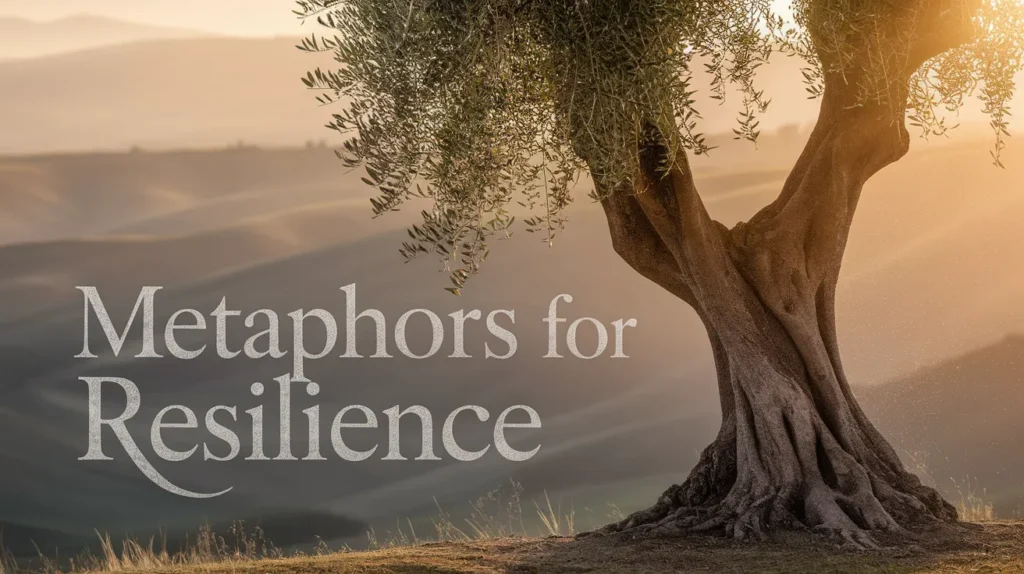
One of the most timeless metaphors for resilience is the image of a tree bending during a storm.
Meaning and Explanation
A tree survives not because it is rigid, but because it bends. Flexibility becomes strength. This metaphor teaches that adapting to hardship is often wiser than resisting every challenge.
Example Scenario
After losing her job, Maria slowly rebuilt her confidence and career. Her friend said:
“You’re like an oak tree in the wind—shaken but never uprooted.”
Alternative Expressions
- Strong roots in troubled soil
- Branches bending without breaking
- A forest surviving winter
Emotional and Sensory Details
Imagine rain drumming against leaves while roots cling tightly underground. Even in darkness, the tree continues growing silently.
Mini Storytelling Example
In many cultures, ancient trees symbolize wisdom and endurance. Japanese bonsai art especially reflects patience, balance, and resilience through careful shaping over time.
The Phoenix Rising from Ashes
Few figurative language examples are as powerful as the phoenix metaphor.
Meaning and Explanation
The phoenix represents rebirth after destruction. It symbolizes transformation, hope, and the ability to begin again after failure or heartbreak.
Example Sentence
“After years of struggle, he rose from disappointment like a phoenix from ashes.”
Alternative Ways to Express It
- Reborn through fire
- Turning ashes into wings
- A soul forged in flame
Emotional Layer
This metaphor feels dramatic and inspiring because it suggests that pain can become a source of power rather than defeat.
Literary and Cultural Reference
The phoenix appears in Greek mythology and many modern stories. From fantasy novels to motivational speeches, it remains a universal symbol of human perseverance.
A Lighthouse During the Storm
This metaphor highlights emotional steadiness.
Meaning and Explanation
A lighthouse does not stop the storm. It simply continues shining despite chaos. Resilient people often provide hope and direction even in difficult times.
Example Scenario
A teacher supporting students through personal struggles might be described as:
“A lighthouse in rough seas.”
Alternative Expressions
- A steady flame in darkness
- A beacon through fog
- Guiding light during hardship
Sensory Details
Picture crashing waves, cold wind, and distant thunder while one golden beam cuts through the darkness.
This metaphor works beautifully in speeches, essays, and emotional storytelling.
Nature Metaphors for Strength and Perseverance
Nature provides endless inspiration for metaphors for resilience because the natural world constantly adapts and survives.
Popular examples include:
- Rivers carving through stone
- Flowers blooming after rain
- Mountains enduring centuries of storms
- Seeds pushing through frozen ground
These comparisons feel universal because everyone has witnessed nature’s persistence in some form.
For example:
“Her determination was a river slowly shaping the canyon.”
That sentence suggests patience, quiet strength, and long-term endurance.
Emotional Resilience Compared to the Ocean
The ocean metaphor captures emotional depth and movement.
Meaning
The sea changes constantly. Waves rise and fall, yet the ocean remains vast and enduring. Resilient people experience emotional ups and downs without losing themselves completely.
Example Sentence
“His emotions crashed like waves, but deep inside he remained calm as the ocean floor.”
Alternative Comparisons
- Tides returning after every retreat
- Storms passing over open water
- Deep currents beneath rough waves
Sensory Details
Salt air, rolling waves, and endless horizons create a calming emotional atmosphere.
This metaphor is especially effective in reflective writing and poetry.
Figurative Language Examples for Everyday Motivation
Resilience metaphors are not limited to literature. They appear in daily conversation, social media captions, motivational speeches, and journaling.
Here are a few simple but powerful examples:
- “Scars are maps of survival.”
- “Pressure creates diamonds.”
- “Broken crayons still color.”
- “Every sunrise proves darkness ends.”
- “Bruised wings can still fly.”
These short metaphors work well because they are emotional, visual, and easy to remember.
How Writers Use Metaphors for Emotional Impact
Great writers understand that emotions become stronger when readers can visualize them.
Instead of writing:
“She was resilient.”
A writer may say:
“She stitched herself together like a sailor repairing torn sails after a storm.”
The second version creates movement, imagery, and emotional depth.
To write better resilience metaphors:
- Use sensory details
- Draw inspiration from nature
- Connect emotion with action
- Avoid clichés when possible
- Keep imagery vivid but clear
Reading poetry and literary fiction can also help you discover fresh figurative language ideas.
Resilience in Literature and Popular Culture
Stories throughout history celebrate perseverance through metaphor and symbolism.
In classic literature, storms often represent emotional conflict while dawn symbolizes hope. Superhero films frequently portray resilience through rebirth, transformation, or survival against impossible odds.
Consider these cultural symbols:
- The phoenix in mythology
- Frodo continuing his journey in fantasy literature
- Cinderella rising from hardship
- Rocky climbing the stairs despite repeated failure
These stories resonate because resilience is deeply human.
People connect emotionally to characters who fall, struggle, and rise again.
Interactive Exercise: Create Your Own Resilience Metaphor
Try this creative writing exercise to strengthen your figurative language skills.
Step 1: Think About a Challenge
Choose a difficult moment from your life or imagination.
Examples:
- Moving to a new city
- Recovering from heartbreak
- Starting over after failure
Step 2: Connect It to Nature or Objects
Ask yourself:
- What image matches this feeling?
- Is it a storm, bridge, fire, river, or mountain?
Step 3: Build the Metaphor
Combine emotion and imagery.
Example:
“Starting over felt like rebuilding a house after a wildfire.”
Bonus Prompt
Write three resilience metaphors using:
- Water
- Light
- Seasons
This exercise improves creativity and emotional expression.
Creative Ways to Use Resilience Metaphors on Social Media
Social media captions become more memorable when they include poetic imagery.
Instead of posting:
“I’m staying strong.”
Try:
- “Even cracked glass catches sunlight.”
- “Storms taught my roots to grow deeper.”
- “The moon survives every phase.”
These lines feel emotional, relatable, and visually powerful.
Bonus Tips for Social Media
- Pair metaphors with nature photography
- Use short poetic sentences
- Add emotional authenticity
- Keep wording simple and vivid
Inspirational metaphors often perform well because readers emotionally connect with them quickly.
Using Resilience Comparisons in Poetry and Journaling
Journaling becomes more healing when emotions are expressed creatively.
Instead of writing:
“I felt sad.”
You could write:
“My heart was a winter garden waiting for spring.”
This transforms emotion into imagery, making reflection more meaningful.
Poetry Tips
- Use seasons to symbolize emotional change
- Repeat meaningful symbols for rhythm
- Experiment with light and darkness imagery
- Blend emotional honesty with sensory details
Even beginners can create beautiful metaphors by focusing on simple, relatable images.
The Difference Between Similes and Metaphors for Resilience
Many people confuse similes and metaphors.
Metaphor
Direct comparison:
“She is a mountain.”
Simile
Comparison using “like” or “as”:
“She stood like a mountain against adversity.”
Both forms are powerful, but metaphors often feel more emotionally immersive because they sound more direct and confident.
Quick Practice
Turn these similes into metaphors:
- “Strong like steel”
- “Calm as the ocean”
- “Bright like the sun”
Possible answers:
- “He is steel under pressure.”
- “Her soul is the ocean.”
- “She became the sun after darkness.”
Resilience Metaphors for Students and Young Writers
Students often struggle to describe emotions creatively. Resilience metaphors make writing more expressive and imaginative.
Helpful Classroom Examples
- “Failure is a staircase, not a wall.”
- “Hope is a candle in a blackout.”
- “Dreams are kites surviving strong winds.”
Teachers can encourage students to:
- Describe emotions through weather
- Compare courage to animals or objects
- Write metaphor-based journal entries
- Analyze symbolism in books and films
These activities improve both creativity and emotional intelligence.
Three Powerful Metaphor Ideas You Can Use Immediately
Here are three easy-to-use metaphor concepts for speeches, essays, captions, or personal reflection.
Resilience as Armor
Meaning
Emotional strength protects people from giving up completely.
Example
“Experience became her armor during difficult years.”
Alternative Phrases
- Invisible shield
- Battle-worn protection
- Heart wrapped in steel
Emotional Feel
Strong, heroic, protective.
Resilience as a Bridge
Meaning
Resilience helps people cross from pain toward healing.
Example
“Faith became the bridge over his darkest season.”
Alternative Phrases
- Crossing troubled waters
- Path toward hope
- Road through uncertainty
Emotional Feel
Hopeful and forward-moving.
Resilience as Fire
Meaning
Challenges refine character rather than destroy it.
Example
“Hardship was the fire that shaped her spirit.”
Alternative Phrases
- Forged in flames
- Tempered by heat
- Spark surviving the ashes
Emotional Feel
Intense, transformative, empowering.
Bonus Tips for Writing Stronger Figurative Language
Want your metaphors to sound more original and emotional? Try these techniques:
Use Specific Images
Instead of “strong as nature,” write:
“Steady as a pine tree during snowfall.”
Specific details create stronger visuals.
Mix Emotion with Motion
Movement makes imagery feel alive.
Example:
“Hope crawled back slowly like dawn across the hills.”
Avoid Overused Phrases
Try creating fresh combinations rather than relying only on clichés.
Instead of:
“Tough as nails”
Try:
“Weathered like a dock surviving endless tides.”
Read Poetry and Song Lyrics
Poets often use vivid symbolism that inspires better figurative language skills.
Practicing Resilience Through Daily Reflection
Metaphors are not only writing tools—they can shape mindset and emotional healing.
When facing stress, ask yourself:
- What image represents my struggle today?
- What symbol represents my hope?
- Am I a storm, a seed, a river, or a sunrise?
These reflections encourage emotional awareness and self-expression.
Many therapists and journaling coaches even use metaphor exercises to help people process emotions safely and creatively.
FAQs
What are metaphors for resilience?
Metaphors for resilience are figurative comparisons that symbolize strength, recovery, perseverance, and emotional endurance. Examples include “a phoenix rising from ashes” or “a tree bending in the wind.”
Why are resilience metaphors important in writing?
They help readers emotionally connect with ideas by turning abstract feelings into vivid imagery. This makes writing more memorable and expressive.
What is the difference between a metaphor and a simile?
A metaphor directly compares two things, while a simile uses “like” or “as.” For example, “She is a mountain” is a metaphor, while “She stood like a mountain” is a simile.
How can I create my own resilience metaphor?
Think about a challenge, then connect it to an image from nature, weather, travel, or everyday life. Focus on emotions and sensory details to make it vivid.
Where can resilience metaphors be used?
They work well in essays, poetry, journals, motivational speeches, social media captions, storytelling, and everyday conversations.
Conclusion
Resilience is one of the most powerful human qualities, yet it often reveals itself quietly—in the seed pushing through concrete, the lighthouse enduring the storm, or the river carving stone over time. Metaphors for resilience help us see courage in a more vivid and emotional way. They transform pain into imagery, struggle into story, and healing into something tangible.
Whether you are a writer searching for figurative language examples, a student exploring creative expression, or someone navigating personal challenges, resilience metaphors can offer both beauty and hope. They remind us that hardship is not always the end of the story. Sometimes, it is simply the fire that shapes stronger wings.