

Pain is one of the most intense and universal human experiences. It can be physical, emotional, mental, or even spiritual. Yet sometimes, the word pain alone feels too small to describe what we truly feel.
This is where powerful similes for pain become incredibly valuable. Similes help us compare pain to something vivid and familiar, allowing readers to see, feel, and understand the emotion more clearly. In figurative language, similes are not just decorative tools — they are powerful symbols of strength, growth, resilience, wisdom, and deep human emotion.
They transform suffering into meaning and turn experiences into stories. In this guide, you will discover carefully crafted similes that bring clarity, depth, and emotional power to your writing.
What Is a Simile?
A simile is a figure of speech that compares two different things using the words “like” or “as.” It creates vivid imagery and helps readers understand emotions or experiences more deeply.
Example: The pain hit him like a sudden lightning strike.
This comparison makes the feeling sharp, fast, and intense instead of simply stating that it hurt.
1. Pain like a knife twisting in the wound
Meaning: Sharp, ongoing suffering.
Usage Insight: Best for intense emotional or physical distress.
Examples:
- The betrayal felt like a knife twisting in the wound.
- Her harsh words cut deeper each time.
- The memory reopened old scars.
- Regret stabbed him repeatedly.
- The loss throbbed painfully within him.
2. Pain like fire burning under the skin
Meaning: Fierce, uncontrollable pain.
Usage Insight: Ideal for physical pain descriptions.
Examples:
- The injury burned like fire under his skin.
- Her anger flared painfully inside.
- The fever scorched his body.
- Grief heated her chest unbearably.
- The sting refused to cool.
3. Pain like a storm tearing through the heart
Meaning: Emotional chaos and heartbreak.
Usage Insight: Powerful in romantic or dramatic writing.
Examples:
- The breakup struck like a storm in her heart.
- His sorrow raged without warning.
- Grief crashed through her calm.
- The loss shook him deeply.
- Her emotions swirled violently.
4. Pain like thorns pressed into bare skin
Meaning: Sharp, persistent discomfort.
Usage Insight: Strong for emotional wounds.
Examples:
- His guilt felt like thorns against bare skin.
- Every reminder pricked her heart.
- The insult lingered painfully.
- Shame scratched at his confidence.
- The memory stung repeatedly.
5. Pain like a heavy stone in the chest

Meaning: Deep emotional burden.
Usage Insight: Effective for grief or sadness.
Examples:
- Sorrow rested like a heavy stone in her chest.
- Anxiety weighed him down quietly.
- The disappointment sat heavily within her.
- Regret pressed against his ribs.
- The silence felt unbearably dense.
6. Pain like ice spreading through veins
Meaning: Cold, numbing shock.
Usage Insight: Perfect for sudden bad news.
Examples:
- Fear spread like ice through his veins.
- The diagnosis froze her instantly.
- Shock numbed his thoughts.
- The truth chilled her deeply.
- His body stiffened with cold dread.
7. Pain like glass shattering inside
Meaning: Sudden emotional break.
Usage Insight: Ideal for betrayal scenes.
Examples:
- Her trust broke like glass inside her.
- His hope shattered instantly.
- The news fractured her calm.
- Disappointment cracked his spirit.
- The dream splintered into pieces.
8. Pain like waves crashing endlessly
Meaning: Recurring emotional pain.
Usage Insight: Works beautifully in poetic writing.
Examples:
- Grief returned like waves against the shore.
- Sadness rose again and again.
- The ache refused to fade.
- Tears came in steady tides.
- His sorrow surged repeatedly.
9. Pain like a bruise that never heals
Meaning: Lingering hurt.
Usage Insight: Strong in reflective writing.
Examples:
- The insult felt like a bruise that never heals.
- Old wounds remained tender.
- The hurt resurfaced often.
- She carried the ache quietly.
- The pain lingered for years.
10. Pain like lightning striking twice
Meaning: Unexpected repeated pain.
Usage Insight: Good for sudden setbacks.
Examples:
- The failure hit like lightning striking twice.
- Bad news came again unexpectedly.
- His heart dropped suddenly.
- The shock returned without warning.
- Misfortune struck twice.
11. Pain like a cracked mirror reflecting sorrow
Meaning: Emotional pain that distorts perception and self-image.
Usage Insight: Ideal for introspective or character-driven writing.
Examples:
- Her heartbreak felt like a cracked mirror reflecting sorrow.
- His confidence fractured under criticism.
- The rejection distorted how she saw herself.
- Shame altered his reflection in his own mind.
- The memory splintered her sense of identity.
12. Pain like rain soaking into cold earth
Meaning: Slow, deep emotional absorption of sorrow.
Usage Insight: Works beautifully in poetic and reflective passages.
Examples:
- Grief settled like rain soaking into cold earth.
- Sadness quietly seeped into her thoughts.
- The loss spread through him slowly.
- His disappointment absorbed into silence.
- The sorrow lingered beneath the surface.
13. Pain like chains tightening slowly
Meaning: Increasing emotional or physical suffering.
Usage Insight: Strong for building tension gradually.
Examples:
- Anxiety tightened like chains around his chest.
- The pressure grew heavier each day.
- Fear restricted her breathing.
- The stress gripped him firmly.
- The burden became harder to bear.
14. Pain like a splinter buried deep
Meaning: Small but persistent pain.
Usage Insight: Excellent for subtle emotional wounds.
Examples:
- The insult felt like a splinter buried deep.
- Regret lingered quietly inside him.
- The memory irritated her constantly.
- A small disappointment stayed with him.
- The hurt refused to disappear.
15. Pain like a shadow that follows endlessly
Meaning: Long-lasting emotional suffering.
Usage Insight: Ideal for trauma or lasting grief.
Examples:
- His guilt followed him like a shadow that never fades.
- The heartbreak stayed beside her.
- Regret trailed him silently.
- The sorrow accompanied her everywhere.
- The pain remained constant.
16. Pain like salt poured into a wound
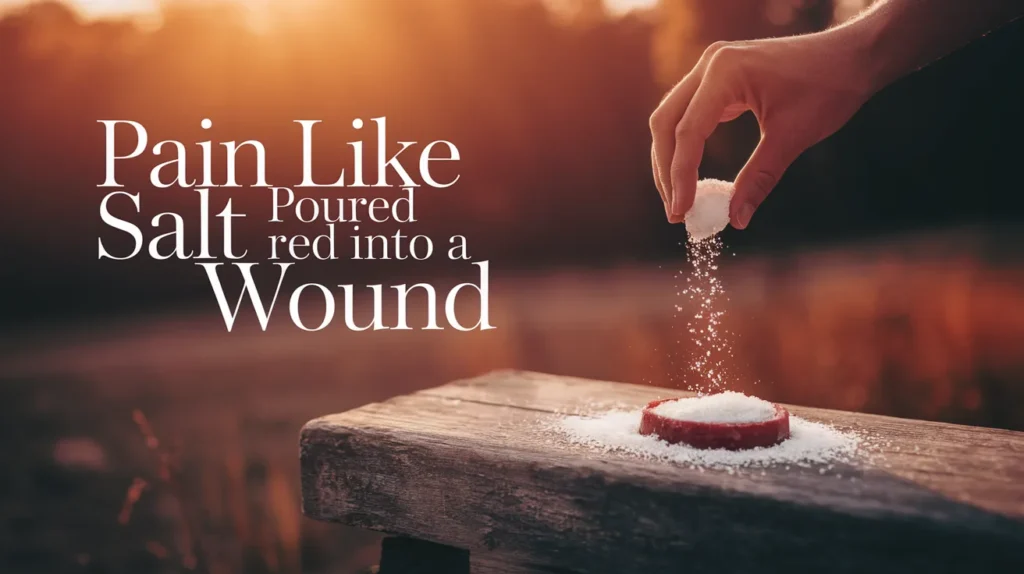
Meaning: Pain intensified by additional hurt.
Usage Insight: Powerful for betrayal or repeated injury.
Examples:
- Her apology felt like salt in a wound.
- His words worsened the heartbreak.
- The reminder deepened her sorrow.
- Criticism made the injury sharper.
- The second failure hurt even more.
17. Pain like a drum beating relentlessly
Meaning: Persistent, pounding pain.
Usage Insight: Effective for physical discomfort or anxiety.
Examples:
- His headache throbbed like a drum beating relentlessly.
- Fear pounded in her chest.
- The ache pulsed steadily.
- His heart beat loudly with distress.
- The pain echoed through his body.
18. Pain like smoke suffocating the lungs
Meaning: Overwhelming emotional distress.
Usage Insight: Ideal for describing emotional suffocation.
Examples:
- Grief surrounded her like smoke in a closed room.
- Anxiety made it hard to breathe.
- The sorrow felt suffocating.
- Panic clouded his senses.
- The sadness filled every space.
19. Pain like a cliff collapsing beneath
Meaning: Sudden loss of stability or security.
Usage Insight: Strong for shocking revelations.
Examples:
- The truth felt like a cliff collapsing beneath him.
- Her world fell apart instantly.
- The news shattered his foundation.
- Security disappeared in seconds.
- The shock removed her balance.
20. Pain like frost covering fragile petals
Meaning: Pain harming innocence or vulnerability.
Usage Insight: Beautiful in poetic writing.
Examples:
- Criticism fell like frost on fragile petals.
- Her innocence suffered quietly.
- The harsh words damaged his spirit.
- Hope wilted under cold treatment.
- Tender feelings were harmed easily.
21. Pain like a locked door with no escape
Meaning: Feeling trapped in suffering.
Usage Insight: Effective for psychological tension.
Examples:
- Depression felt like a locked door with no escape.
- She felt imprisoned by grief.
- The sorrow closed every exit.
- He could not find relief.
- The pain confined her thoughts.
22. Pain like a candle burning at both ends
Meaning: Exhausting, draining pain.
Usage Insight: Ideal for burnout descriptions.
Examples:
- Stress consumed her like a candle burning at both ends.
- He felt emotionally drained.
- The pressure exhausted him completely.
- Fatigue followed her daily.
- The struggle used all his energy.
23. Pain like roots digging into the earth
Meaning: Deep, grounded suffering.
Usage Insight: Strong for long-term emotional pain.
Examples:
- The trauma settled like roots digging into the earth.
- His grief anchored him heavily.
- The sadness took hold deeply.
- Pain embedded itself in memory.
- The hurt grew stronger over time.
24. Pain like thunder shaking the sky
Meaning: Loud, powerful emotional outburst.
Usage Insight: Excellent for dramatic scenes.
Examples:
- His anger roared like thunder shaking the sky.
- The sorrow exploded suddenly.
- Her cry echoed loudly.
- Emotion burst out uncontrollably.
- The moment felt violently intense.
25. Pain like quicksand pulling downward

Meaning: Gradual emotional sinking.
Usage Insight: Great for depression-related writing.
Examples:
- Hopelessness felt like quicksand pulling downward.
- She sank deeper into despair.
- The sadness dragged him slowly.
- Motivation slipped away.
- The burden increased steadily.
26. Pain like a rope pulled too tight
Meaning: Strained emotional pressure.
Usage Insight: Effective for tension-filled scenes.
Examples:
- His nerves felt like a rope pulled too tight.
- Stress stretched her patience thin.
- The tension almost snapped.
- He felt ready to break.
- The pressure strained his composure.
27. Pain like darkness swallowing dawn
Meaning: Overpowering loss of hope.
Usage Insight: Ideal for symbolic writing.
Examples:
- Despair spread like darkness swallowing dawn.
- Hope disappeared gradually.
- The light faded from her eyes.
- Optimism vanished quickly.
- The sorrow overshadowed everything.
28. Pain like a storm trapped inside
Meaning: Suppressed emotional turmoil.
Usage Insight: Perfect for internal conflict.
Examples:
- His anger churned like a storm trapped inside.
- She held back tears quietly.
- Emotion swirled beneath his calm surface.
- The tension stayed hidden.
- The turmoil waited to burst.
29. Pain like an echo in an empty hall
Meaning: Loneliness within suffering.
Usage Insight: Strong in reflective writing.
Examples:
- Her sadness echoed like footsteps in an empty hall.
- The loneliness repeated in his mind.
- Silence amplified her sorrow.
- The ache felt hollow.
- His grief resonated quietly.
30. Pain like a scar written across the soul
Meaning: Permanent emotional impact.
Usage Insight: Powerful for concluding reflections.
Examples:
- The experience remained like a scar written across his soul.
- The loss changed her forever.
- The heartbreak marked him deeply.
- The memory shaped her future.
- The pain left a lasting imprint.
How to Use Similes Effectively in Writing
To use powerful similes for pain effectively:
- Choose comparisons readers can visualize clearly.
- Match the tone to the emotion.
- Avoid clichés by creating fresh imagery.
- Use similes sparingly for stronger impact.
- Blend them naturally into sentences.
Similes are especially powerful in poetry, short stories, novels, personal essays, songs, and descriptive writing because they deepen emotional resonance and create strong imagery.
FAQs
1. What makes a simile powerful in describing pain?
A powerful simile creates vivid imagery and emotional clarity that readers can feel instantly.
2. What is the difference between a simile and a metaphor?
A simile uses “like” or “as” to compare, while a metaphor directly states one thing is another.
3. Can similes be used in academic writing?
Yes, especially in literary analysis and reflective essays where imagery strengthens interpretation.
4. Why are similes important in literature?
They enrich descriptions, strengthen comparisons, and make emotions more relatable.
5. How can I create original similes for pain?
Think about physical sensations, nature, or everyday experiences that resemble the feeling of pain.
Conclusion
Powerful similes for pain transform ordinary descriptions into vivid emotional experiences. They allow writers to express suffering with clarity, imagery, and depth. Whether describing heartbreak, physical injury, or silent emotional struggles, similes give pain a voice that readers can understand and connect with. When used thoughtfully, they turn hardship into art and emotion into meaning — making your writing stronger, richer, and unforgettable.