

Worry is a quiet but powerful emotion that touches everyone at some point in life. Sometimes it appears as a restless thought, and other times it feels like a heavy weight on the heart. This is where similes play an important role in figurative language.
Similes help us explain worry by comparing it to clear images from nature and everyday life, making invisible feelings easier to understand. In similes in literature, worry often reflects not only fear, but also care, responsibility, wisdom, and emotional depth.
When used thoughtfully, the best similes for worried show growth, resilience, and the strength it takes to care deeply. This article explores rich comparisons that help writers express worry with clarity, beauty, and emotional truth.
What Is a Simile?
A simile is a figure of speech that compares two different things using like or as to make an idea more vivid and understandable.
Example: She was worried like a bird watching the sky before a storm.
1. Worried like a bird sensing a coming storm
Meaning: A deep, instinctive feeling that trouble is near.
Usage Insight: Works well for quiet tension or emotional intuition.
Examples:
- She felt worried like a bird sensing a coming storm.
- He grew worried like a bird sensing a coming storm at dusk.
- Her heart fluttered, worried like a bird sensing a coming storm.
- The village waited, worried like a bird sensing a coming storm.
- I stood worried like a bird sensing a coming storm.
2. Worried like leaves trembling in the wind
Meaning: Nervousness caused by uncertainty.
Usage Insight: Ideal for anxiety or emotional instability.
Examples:
- She looked worried like leaves trembling in the wind.
- His hands shook, worried like leaves trembling in the wind.
- The crowd felt worried like leaves trembling in the wind.
- Her voice sounded worried like leaves trembling in the wind.
- He waited, worried like leaves trembling in the wind.
3. Worried like clouds gathering before rain
Meaning: Anxiety building slowly over time.
Usage Insight: Best for gradual emotional tension.
Examples:
- She grew worried like clouds gathering before rain.
- His thoughts darkened, worried like clouds gathering before rain.
- The room felt worried like clouds gathering before rain.
- Fear settled in, worried like clouds gathering before rain.
- He watched silently, worried like clouds gathering before rain.
4. Worried like a knot tightening in a rope
Meaning: Increasing stress or pressure.
Usage Insight: Effective for inner conflict scenes.
Examples:
- She felt worried like a knot tightening in a rope.
- His chest tightened, worried like a knot in a rope.
- Anxiety pulled him worried like a knot tightening in a rope.
- Her thoughts twisted, worried like a knot tightening in a rope.
- He breathed shallowly, worried like a knot tightening in a rope.
5. Worried like a candle flickering in the wind
Meaning: Fear mixed with vulnerability.
Usage Insight: Best for delicate emotional moments.
Examples:
- She stood worried like a candle flickering in the wind.
- His hope shook, worried like a candle flickering in the wind.
- Her smile faded, worried like a candle flickering in the wind.
- He felt exposed, worried like a candle flickering in the wind.
- The night felt worried like a candle flickering in the wind.
6. Worried like a clock ticking too loudly
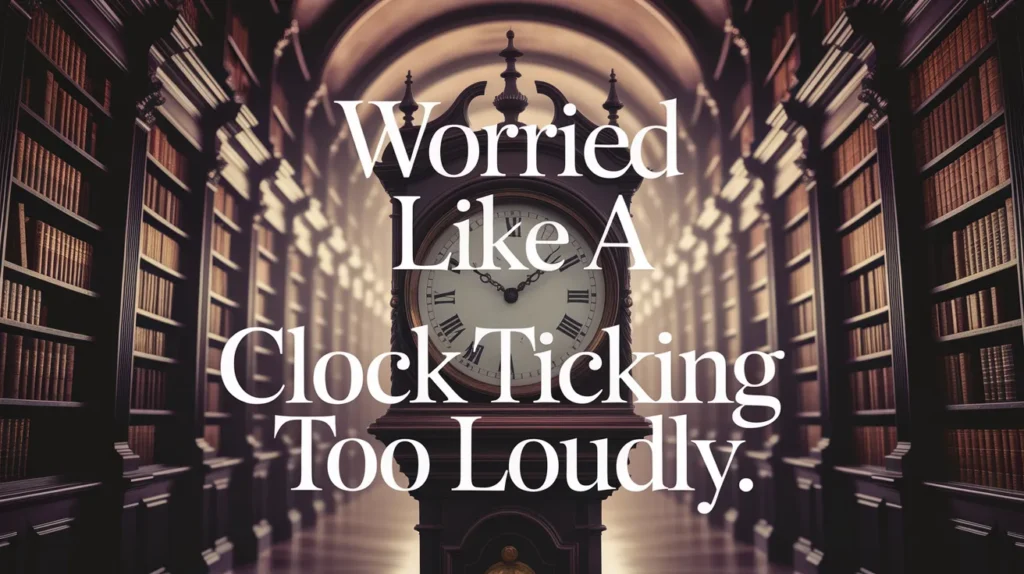
Meaning: Constant, nagging anxiety.
Usage Insight: Works well for persistent worry.
Examples:
- She was worried like a clock ticking too loudly.
- His thoughts repeated, worried like a clock ticking too loudly.
- Silence felt worried like a clock ticking too loudly.
- He lay awake, worried like a clock ticking too loudly.
- The wait grew worried like a clock ticking too loudly.
7. Worried like ants scattering after rain
Meaning: Sudden panic or confusion.
Usage Insight: Best for moments of chaos.
Examples:
- The children looked worried like ants scattering after rain.
- His thoughts scattered, worried like ants after rain.
- The office buzzed worried like ants scattering after rain.
- She moved fast, worried like ants scattering after rain.
- Fear spread worried like ants scattering after rain.
8. Worried like a bridge shaking under weight
Meaning: Stress caused by heavy responsibility.
Usage Insight: Ideal for leadership or duty-based worry.
Examples:
- He felt worried like a bridge shaking under weight.
- Her shoulders sagged, worried like a bridge shaking under weight.
- The decision left him worried like a bridge shaking under weight.
- She carried fear, worried like a bridge shaking under weight.
- He stood firm but worried like a bridge shaking under weight.
9. Worried like fog closing in on a road
Meaning: Uncertainty and lack of clarity.
Usage Insight: Great for confusion or doubt.
Examples:
- She felt worried like fog closing in on a road.
- His future looked worried like fog closing in on a road.
- Thoughts blurred, worried like fog closing in on a road.
- The journey felt worried like fog closing in on a road.
- He paused, worried like fog closing in on a road.
10. Worried like a pot left boiling unattended
Meaning: Anxiety that may lead to trouble.
Usage Insight: Works well for impending consequences.
Examples:
- She felt worried like a pot left boiling unattended.
- His mind bubbled, worried like a pot left boiling unattended.
- The issue sat worried like a pot left boiling unattended.
- He glanced back, worried like a pot left boiling unattended.
- Fear simmered, worried like a pot left boiling unattended.
11. Worried like a mouse hearing footsteps
Meaning: Fear of being discovered or harmed.
Usage Insight: Best for vulnerability.
Examples:
- She froze, worried like a mouse hearing footsteps.
- He waited worried like a mouse hearing footsteps.
- The child looked worried like a mouse hearing footsteps.
- Her breath caught, worried like a mouse hearing footsteps.
- He hid his fear, worried like a mouse hearing footsteps.
12. Worried like a sail flapping without wind
Meaning: Restlessness without direction.
Usage Insight: Ideal for emotional uncertainty.
Examples:
- She felt worried like a sail flapping without wind.
- His thoughts drifted, worried like a sail flapping without wind.
- The day felt uneasy, worried like a sail flapping without wind.
- He paced, worried like a sail flapping without wind.
- Anxiety pulled him worried like a sail flapping without wind.
13. Worried like ice cracking underfoot
Meaning: Fear of sudden danger.
Usage Insight: Best for suspenseful scenes.
Examples:
- She stepped carefully, worried like ice cracking underfoot.
- His confidence slipped, worried like ice cracking underfoot.
- The plan felt risky, worried like ice cracking underfoot.
- He moved slowly, worried like ice cracking underfoot.
- Trust weakened, worried like ice cracking underfoot.
14. Worried like a storm trapped behind mountains
Meaning: Strong emotions held inside.
Usage Insight: Effective for internalized anxiety.
Examples:
- She felt worried like a storm trapped behind mountains.
- His silence hid worry like a storm trapped behind mountains.
- Fear gathered, worried like a storm trapped behind mountains.
- He carried tension, worried like a storm trapped behind mountains.
- Emotions pressed in, worried like a storm trapped behind mountains.
15. Worried like a dog waiting for its owner
Meaning: Anxious concern mixed with loyalty and care.
Usage Insight: Ideal for emotional attachment.
Examples:
- She waited worried like a dog waiting for its owner.
- His heart ached, worried like a dog waiting for its owner.
- Love made her worried like a dog waiting for its owner.
- He checked the door, worried like a dog waiting for its owner.
- Hope lingered, worried like a dog waiting for its owner.
16. Worried like shadows growing at dusk
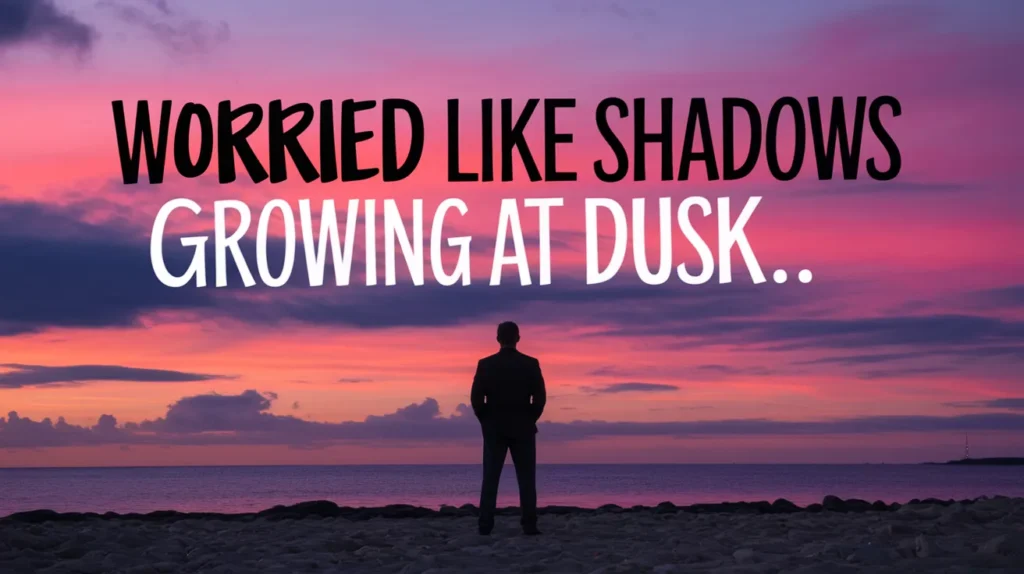
Meaning: Anxiety slowly increasing.
Usage Insight: Best for gradual emotional change.
Examples:
- She felt worried like shadows growing at dusk.
- His fear stretched, worried like shadows growing at dusk.
- The evening felt worried like shadows growing at dusk.
- Doubt crept in, worried like shadows growing at dusk.
- He sensed trouble, worried like shadows growing at dusk.
17. Worried like a door left unlocked at night
Meaning: Fear of vulnerability.
Usage Insight: Ideal for insecurity.
Examples:
- She felt worried like a door left unlocked at night.
- His thoughts stayed worried like a door left unlocked at night.
- The secret made her worried like a door left unlocked at night.
- He lay awake, worried like a door left unlocked at night.
- Trust felt fragile, worried like a door left unlocked at night.
18. Worried like a spider sensing vibration
Meaning: Heightened alertness.
Usage Insight: Best for anticipation scenes.
Examples:
- She stayed worried like a spider sensing vibration.
- His nerves twitched, worried like a spider sensing vibration.
- The guard stood worried like a spider sensing vibration.
- Fear sharpened him, worried like a spider sensing vibration.
- He listened closely, worried like a spider sensing vibration.
19. Worried like water rising behind a dam
Meaning: Anxiety building toward release.
Usage Insight: Effective for emotional pressure.
Examples:
- She felt worried like water rising behind a dam.
- His stress mounted, worried like water rising behind a dam.
- Silence grew worried like water rising behind a dam.
- Fear pressed in, worried like water rising behind a dam.
- Tears waited, worried like water rising behind a dam.
20. Worried like a tight shoe on a long walk
Meaning: Persistent discomfort.
Usage Insight: Good for long-term anxiety.
Examples:
- She felt worried like a tight shoe on a long walk.
- His concern stayed worried like a tight shoe on a long walk.
- The problem lingered, worried like a tight shoe on a long walk.
- He endured worry like a tight shoe on a long walk.
- Anxiety followed her, worried like a tight shoe on a long walk.
21. Worried like smoke clinging to clothes
Meaning: Anxiety that won’t go away.
Usage Insight: Best for lingering worry.
Examples:
- She felt worried like smoke clinging to clothes.
- His fear lingered, worried like smoke clinging to clothes.
- Doubt stayed worried like smoke clinging to clothes.
- The thought stuck, worried like smoke clinging to clothes.
- Anxiety followed him worried like smoke clinging to clothes.
22. Worried like a map with missing roads
Meaning: Confusion about direction.
Usage Insight: Ideal for decision-making scenes.
Examples:
- She felt worried like a map with missing roads.
- His future looked worried like a map with missing roads.
- Choices confused him, worried like a map with missing roads.
- She paused, worried like a map with missing roads.
- Life felt uncertain, worried like a map with missing roads.
23. Worried like a cat sensing danger
Meaning: Sharp, instinctive anxiety.
Usage Insight: Best for sudden tension.
Examples:
- She tensed, worried like a cat sensing danger.
- His body reacted, worried like a cat sensing danger.
- Fear sharpened her, worried like a cat sensing danger.
- He watched closely, worried like a cat sensing danger.
- Silence felt heavy, worried like a cat sensing danger.
24. Worried like cracks spreading in glass
Meaning: Anxiety threatening emotional stability.
Usage Insight: Strong for psychological tension.
Examples:
- She felt worried like cracks spreading in glass.
- His calm broke, worried like cracks spreading in glass.
- Fear crept in, worried like cracks spreading in glass.
- Pressure grew worried like cracks spreading in glass.
- Trust weakened, worried like cracks spreading in glass.
25. Worried like sand slipping through fingers
Meaning: Fear of losing control.
Usage Insight: Ideal for helplessness themes.
Examples:
- She felt worried like sand slipping through fingers.
- Time passed worried like sand slipping through fingers.
- His control faded, worried like sand slipping through fingers.
- Anxiety grew as moments slipped like sand through fingers.
- Hope felt fragile, worried like sand slipping through fingers.
26. Worried like a watch running too fast

Meaning: Stress about time and urgency.
Usage Insight: Best for deadline pressure.
Examples:
- She felt worried like a watch running too fast.
- His heart raced, worried like a watch running too fast.
- The deadline loomed, worried like a watch running too fast.
- Thoughts rushed, worried like a watch running too fast.
- Anxiety ticked loudly, worried like a watch running too fast.
27. Worried like frost creeping over fields
Meaning: Slow, spreading anxiety.
Usage Insight: Effective for subtle tension.
Examples:
- She felt worried like frost creeping over fields.
- Fear spread, worried like frost creeping over fields.
- The town grew worried like frost creeping over fields.
- His mood cooled, worried like frost creeping over fields.
- Silence froze, worried like frost creeping over fields.
28. Worried like a thread about to snap
Meaning: Emotional limit nearing.
Usage Insight: Ideal for climax scenes.
Examples:
- She felt worried like a thread about to snap.
- His patience thinned, worried like a thread about to snap.
- Pressure built, worried like a thread about to snap.
- Calm barely held, worried like a thread about to snap.
- Fear stretched him, worried like a thread about to snap.
29. Worried like an echo that won’t fade
Meaning: Persistent troubling thoughts.
Usage Insight: Best for lingering anxiety.
Examples:
- She felt worried like an echo that won’t fade.
- His doubts returned, worried like an echo that won’t fade.
- The question stayed worried like an echo that won’t fade.
- Fear repeated, worried like an echo that won’t fade.
- Anxiety followed him, worried like an echo that won’t fade.
30. Worried like a heart holding its breath
Meaning: Deep emotional tension.
Usage Insight: Powerful for intimate moments.
Examples:
- She felt worried like a heart holding its breath.
- His chest tightened, worried like a heart holding its breath.
- The moment paused, worried like a heart holding its breath.
- Fear waited, worried like a heart holding its breath.
- Hope stayed fragile, worried like a heart holding its breath.
How to Use Similes Effectively in Writing
When using similes, choose comparisons that naturally fit the emotion and situation. Nature similes work beautifully in poems and songs, while clear everyday comparisons suit essays and stories.
Avoid forcing similes into sentences—let them flow naturally. In academic writing, use similes sparingly to clarify complex ideas. Always ensure the simile strengthens meaning rather than distracting from it.
FAQs
1. What are the best similes for worried?
They are comparisons that clearly express anxiety, concern, or emotional tension.
2. What is the difference between similes and metaphors?
Similes use like or as, while metaphors compare directly.
3. Are similes used in literature?
Yes, similes are widely used to express emotion and imagery.
4. Can similes show positive worry?
Yes, worry can reflect care, love, and responsibility.
5. Are similes suitable for academic writing?
Yes, when used clearly and sparingly.
Conclusion
The best similes for worried help transform anxiety into vivid, meaningful images. They allow writers to express fear, care, tension, and resilience with clarity and emotional depth. Through thoughtful comparisons and nature similes, worry becomes more than unease—it becomes insight.
Whether used in literature, creative writing, or essays, these similes strengthen language, deepen connection, and give voice to one of the most human emotions we experience.