

Loneliness is one of the most universal human emotions, yet it is often the hardest to describe. This is where similes become powerful tools in figurative language. Similes help us explain deep feelings by comparing them to familiar images from nature, daily life, or shared experiences.
They turn abstract emotions into clear pictures the reader can see and feel. Powerful similes for loneliness are especially meaningful because loneliness is not only about pain—it can also reflect strength, growth, resilience, wisdom, and quiet self-discovery.
Through thoughtful comparisons, writers can express isolation with honesty and beauty. In this article, you’ll explore carefully crafted similes, their meanings, and how to use them effectively in creative and academic writing.
What Is a Simile?
A simile is a figure of speech that compares two different things using the words like or as to make meaning clearer and more vivid. Example: Loneliness clung to him like fog over an empty road.
Lonely Like the Last Tree on a Windy Hill
Meaning: A sense of isolation while still standing strong despite constant pressure.
Usage Insight: Works well to show emotional endurance and quiet strength. Examples:
- She felt lonely like the last tree on a windy hill, bent but unbroken.
- His voice echoed with the sadness of being lonely like the last tree on a windy hill.
- Moving to a new city left her lonely like the last tree on a windy hill.
- Even in success, he stood lonely like the last tree on a windy hill.
- The character remains lonely like the last tree on a windy hill throughout the novel.
Lonely Like a Moon in a Cloudless Sky
Meaning: Being visible yet emotionally distant from others.
Usage Insight: Ideal for reflective or poetic writing. Examples:
- She shone lonely like a moon in a cloudless sky.
- Fame left him lonely like a moon in a cloudless sky.
- He felt lonely like a moon in a cloudless sky during the celebration.
- Her success made her lonely like a moon in a cloudless sky.
- The poem paints her as lonely like a moon in a cloudless sky.
Lonely Like Footsteps Echoing in an Empty Hall
Meaning: Isolation that feels amplified and inescapable.
Usage Insight: Strong for emotional intensity and mood-setting. Examples:
- His thoughts were lonely like footsteps echoing in an empty hall.
- Nights felt lonely like footsteps echoing in an empty hall.
- The silence grew lonely like footsteps echoing in an empty hall.
- Her memories sounded lonely like footsteps echoing in an empty hall.
- The story opens lonely like footsteps echoing in an empty hall.
Lonely Like a Boat Adrift Without a Shore

Meaning: Feeling directionless and disconnected.
Usage Insight: Perfect for themes of loss or uncertainty. Examples:
- After the breakup, he felt lonely like a boat adrift without a shore.
- Her life drifted lonely like a boat without a shore.
- He wandered lonely like a boat adrift without a shore.
- The character floats lonely like a boat without a shore.
- Grief left her lonely like a boat adrift without a shore.
Lonely Like a Star Hidden by Daylight
Meaning: Being unnoticed or unseen.
Usage Insight: Subtle and effective for emotional neglect. Examples:
- She felt lonely like a star hidden by daylight.
- His talent stayed lonely like a star hidden by daylight.
- Her kindness felt lonely like a star hidden by daylight.
- He lived lonely like a star hidden by daylight.
- The metaphor paints loneliness like a star hidden by daylight.
Lonely Like Rain Falling on a Closed Roof
Meaning: Emotions that go unheard or unshared.
Usage Insight: Works well in introspective writing. Examples:
- His sadness fell lonely like rain on a closed roof.
- She cried lonely like rain falling on a closed roof.
- The letter read lonely like rain on a closed roof.
- Her words felt lonely like rain falling on a closed roof.
- The scene ends lonely like rain on a closed roof.
Lonely Like a Candle Burning in an Empty Room
Meaning: Quiet presence without connection.
Usage Insight: Ideal for soft, emotional descriptions. Examples:
- She waited lonely like a candle burning in an empty room.
- His hope flickered lonely like a candle in an empty room.
- The night felt lonely like a candle burning in an empty room.
- He lived lonely like a candle burning in an empty room.
- The poem glows lonely like a candle in an empty room.
Lonely Like Snow Falling on Abandoned Streets
Meaning: Cold, silent isolation.
Usage Insight: Effective for winter imagery and emotional distance. Examples:
- His heart felt lonely like snow on abandoned streets.
- The city looked lonely like snow falling on abandoned streets.
- She walked lonely like snow on abandoned streets.
- Silence spread lonely like snow on abandoned streets.
- The novel opens lonely like snow falling on abandoned streets.
Lonely Like an Unanswered Letter
Meaning: Emotional neglect or rejection.
Usage Insight: Perfect for relationship-focused writing. Examples:
- Her love felt lonely like an unanswered letter.
- He waited lonely like an unanswered letter.
- The message sat lonely like an unanswered letter.
- She smiled lonely like an unanswered letter.
- The line reads lonely like an unanswered letter.
Lonely Like a Shadow Without a Body
Meaning: Feeling disconnected from identity or purpose.
Usage Insight: Strong for psychological depth. Examples:
- He felt lonely like a shadow without a body.
- Her days passed lonely like a shadow without a body.
- The character drifts lonely like a shadow without a body.
- His thoughts moved lonely like a shadow without a body.
- The metaphor captures lonely like a shadow without a body.
Lonely Like a Clock Ticking in Silence
Meaning: Time passing slowly in isolation.
Usage Insight: Great for tension and waiting scenes. Examples:
- The night felt lonely like a clock ticking in silence.
- She waited lonely like a clock ticking in silence.
- His patience wore lonely like a clock ticking in silence.
- The room sounded lonely like a clock ticking in silence.
- The chapter ends lonely like a clock ticking in silence.
Lonely Like a Bird on a Broken Wing
Meaning: Isolation mixed with vulnerability.
Usage Insight: Works well for emotional fragility. Examples:
- She felt lonely like a bird on a broken wing.
- His confidence fell lonely like a bird on a broken wing.
- The child stood lonely like a bird on a broken wing.
- Her smile looked lonely like a bird on a broken wing.
- The story paints lonely like a bird on a broken wing.
Lonely Like an Empty Bench at Sunset
Meaning: Absence where connection once existed.
Usage Insight: Perfect for nostalgic scenes. Examples:
- The park felt lonely like an empty bench at sunset.
- She sat lonely like an empty bench at sunset.
- His memories felt lonely like an empty bench at sunset.
- The image reads lonely like an empty bench at sunset.
- Love faded lonely like an empty bench at sunset.
Lonely Like a Whisper Lost in the Wind
Meaning: Feeling unheard or ignored.
Usage Insight: Ideal for subtle emotional expression. Examples:
- Her plea sounded lonely like a whisper lost in the wind.
- He spoke lonely like a whisper lost in the wind.
- The truth drifted lonely like a whisper lost in the wind.
- She laughed lonely like a whisper lost in the wind.
- The poem ends lonely like a whisper lost in the wind.
Lonely Like an Island Without Tides

Meaning: Emotional separation without connection.
Usage Insight: Effective in symbolic or literary writing. Examples:
- He felt lonely like an island without tides.
- Her world seemed lonely like an island without tides.
- The hero lived lonely like an island without tides.
- Silence grew lonely like an island without tides.
- The novel describes lonely like an island without tides.
Lonely Like a Path No One Walks
Meaning: Neglect or abandonment.
Usage Insight: Great for reflective essays. Examples:
- His dreams felt lonely like a path no one walks.
- She stood lonely like a path no one walks.
- The idea stayed lonely like a path no one walks.
- His life turned lonely like a path no one walks.
- The line reads lonely like a path no one walks.
Lonely Like a Song Without a Listener
Meaning: Expression without connection.
Usage Insight: Ideal for artistic themes. Examples:
- Her voice felt lonely like a song without a listener.
- He created lonely like a song without a listener.
- The poem felt lonely like a song without a listener.
- Love echoed lonely like a song without a listener.
- The chapter closes lonely like a song without a listener.
Lonely Like Fog Swallowing a Road
Meaning: Emotional confusion and isolation.
Usage Insight: Strong for mood-building. Examples:
- His future looked lonely like fog swallowing a road.
- She walked lonely like fog swallowing a road.
- Doubt crept lonely like fog swallowing a road.
- The scene feels lonely like fog swallowing a road.
- Fear spread lonely like fog swallowing a road.
Lonely Like a Window Lit in a Dark City
Meaning: Being alone among many people.
Usage Insight: Perfect for urban loneliness. Examples:
- She lived lonely like a window lit in a dark city.
- He felt lonely like a window lit in a dark city.
- The apartment glowed lonely like a window lit in a dark city.
- Her life looked lonely like a window lit in a dark city.
- The image shines lonely like a window lit in a dark city.
Lonely Like Leaves After the Tree Is Bare
Meaning: Loss and separation.
Usage Insight: Ideal for emotional transitions. Examples:
- He felt lonely like leaves after the tree is bare.
- Her heart stayed lonely like leaves after the tree is bare.
- The season turned lonely like leaves after the tree is bare.
- Memories fell lonely like leaves after the tree is bare.
- The metaphor reads lonely like leaves after the tree is bare.
Lonely Like a Deserted Playground
Meaning: Absence of joy and connection.
Usage Insight: Works well for emotional contrast. Examples:
- The school felt lonely like a deserted playground.
- Childhood memories felt lonely like a deserted playground.
- She stood lonely like a deserted playground.
- Laughter faded lonely like a deserted playground.
- The image feels lonely like a deserted playground.
Lonely Like a Lighthouse Without Ships
Meaning: Purpose without interaction.
Usage Insight: Strong symbolic writing. Examples:
- He felt lonely like a lighthouse without ships.
- Her kindness stood lonely like a lighthouse without ships.
- The guide lived lonely like a lighthouse without ships.
- His role felt lonely like a lighthouse without ships.
- The metaphor shines lonely like a lighthouse without ships.
Lonely Like a Phone That Never Rings
Meaning: Waiting for connection.
Usage Insight: Modern and relatable. Examples:
- He waited lonely like a phone that never rings.
- Her evenings felt lonely like a phone that never rings.
- Hope sat lonely like a phone that never rings.
- The silence felt lonely like a phone that never rings.
- The line reads lonely like a phone that never rings.
Lonely Like a Chair Left Outside in the Rain
Meaning: Neglect and abandonment.
Usage Insight: Effective for quiet sadness. Examples:
- He felt lonely like a chair left outside in the rain.
- Her trust sat lonely like a chair left outside in the rain.
- The house looked lonely like a chair in the rain.
- Time passed lonely like a chair left outside in the rain.
- The image feels lonely like a chair left outside in the rain.
Lonely Like a Map Without Roads
Meaning: Lack of direction and guidance.
Usage Insight: Great for life transitions. Examples:
- He felt lonely like a map without roads.
- Her future seemed lonely like a map without roads.
- The journey felt lonely like a map without roads.
- His thoughts wandered lonely like a map without roads.
- The metaphor reads lonely like a map without roads.
Lonely Like Silence After Applause
Meaning: Sudden emptiness after connection.
Usage Insight: Ideal for emotional contrast. Examples:
- He felt lonely like silence after applause.
- Fame faded lonely like silence after applause.
- The room felt lonely like silence after applause.
- Her joy ended lonely like silence after applause.
- The moment reads lonely like silence after applause.
Lonely Like a Garden Without Bees
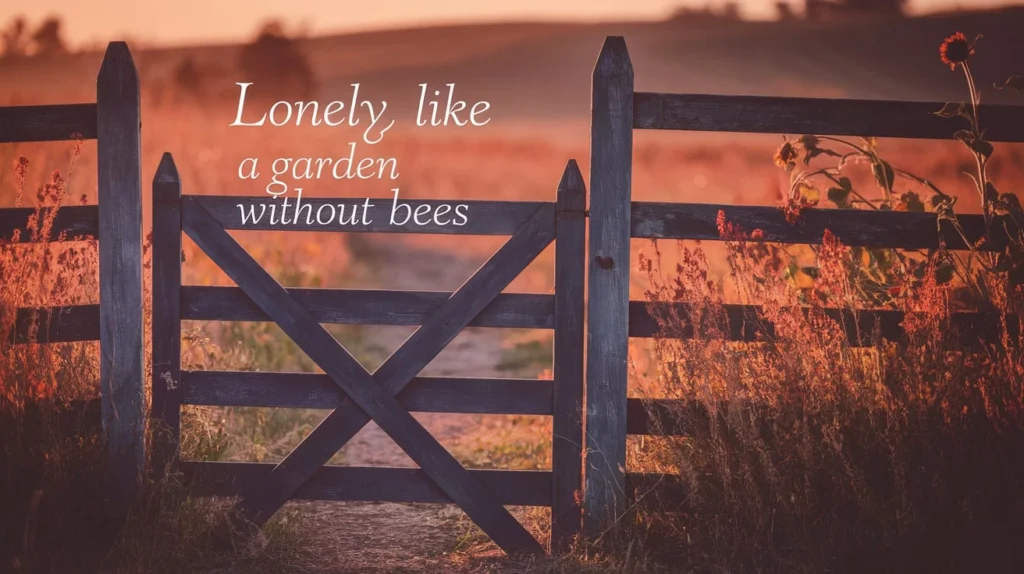
Meaning: Life without interaction or growth.
Usage Insight: Nature-based symbolic writing. Examples:
- She felt lonely like a garden without bees.
- His world looked lonely like a garden without bees.
- Love grew lonely like a garden without bees.
- The town felt lonely like a garden without bees.
- The metaphor blooms lonely like a garden without bees.
Lonely Like a Book No One Opens
Meaning: Being overlooked or ignored.
Usage Insight: Perfect for academic or literary tone. Examples:
- He felt lonely like a book no one opens.
- Her ideas sat lonely like a book no one opens.
- Knowledge felt lonely like a book no one opens.
- The library felt lonely like a book no one opens.
- The line reads lonely like a book no one opens.
Lonely Like a Road After Midnight
Meaning: Deep solitude and quiet reflection.
Usage Insight: Ideal for introspective endings. Examples:
- He walked lonely like a road after midnight.
- Her thoughts felt lonely like a road after midnight.
- The city slept lonely like a road after midnight.
- His journey felt lonely like a road after midnight.
- The story ends lonely like a road after midnight.
How to Use Similes Effectively in Writing
To use similes well, choose comparisons that match the emotion and tone of your writing. In poems and songs, focus on rhythm and imagery. In stories and essays, use similes to deepen emotional understanding without overusing them.
Academic writing benefits from clear, controlled comparisons, while creative descriptions can explore nature similes and symbolic language more freely. Always aim for clarity, relevance, and originality.
FAQs
1. What are powerful similes for loneliness?
They are comparisons that clearly express emotional isolation using vivid imagery.
2. How are similes different from metaphors?
Similes use like or as, while metaphors make direct comparisons.
3. Can similes be used in academic writing?
Yes, when used carefully to clarify ideas.
4. Why are nature similes effective?
Nature offers universal images that readers easily understand.
5. Are similes common in literature?
Yes, similes in literature are widely used to express complex emotions.
Conclusion
Loneliness does not have to remain silent or invisible. Through powerful similes for loneliness, writers can transform quiet emotions into vivid, relatable images.
These comparisons add clarity, emotional depth, and beauty to language, helping readers connect on a deeper level. Whether in poetry, stories, essays, or everyday writing, similes enrich expression and turn feeling into meaning with lasting impact.